Use the "CLAW" to Attack from the Back!
0
Jiu-Claw·TeachMeGrappling Coach Brian
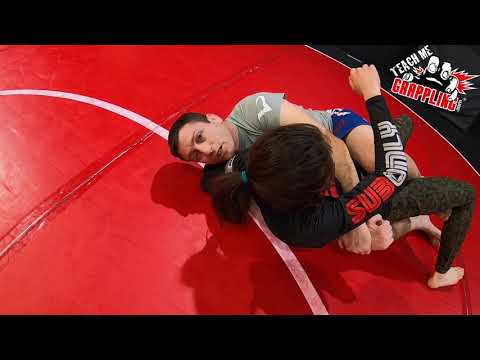
In this video I breakdown a "Claw" attack you can use from the back when your opponent starts to slide out from your con…
Translation: Jiu-Claw — a portmanteau of 'jiu-jitsu' and 'claw', referencing the claw-like hand grip applied to the opponent's face from the rubber guard, combining a face crank with neck submission potential
The Jiu-Claw is a 10th Planet Jiu-Jitsu submission from rubber guard where the attacker grips the opponent's face with an open-hand claw grip while the legs control posture, creating a combination face crank and neck submission that attacks the cervical spine through lateral and rotational forces applied via the jaw. [1] The technique is entered through the 'Kung Fu Move' sequence: from Mission Control (the foundational rubber guard position), the attacker threads one arm over the opponent's trapped arm and reaches for the face, gripping the chin and jaw with an open-hand claw — the fingers wrap around one side of the jaw while the thumb presses on the opposite side or above the nose. [1] Once the claw grip is established, the attacker uses the grip to rotate and laterally flex the opponent's neck by pulling the face toward the attacker's chest while the legs maintain the rubber guard posture control — the cervical spine is compressed and rotated beyond its comfortable range, creating intense pain and submission pressure. [1] The Jiu-Claw occupies an unusual position in grappling taxonomy: it is not a choke (no airway or blood vessel compression), not a standard joint lock (no single joint is isolated and hyperextended), and not a muscle compression — it is a CRANK, specifically a neck/spine crank that attacks the cervical vertebrae through the lever of the jaw. [1] Eddie Bravo included the Jiu-Claw in the Mastering the Rubber Guard system as an alternative finish when the opponent successfully defends the triangle, armbar, and Go-Go Plata from the Zombie position — the Jiu-Claw provides a fourth attack vector that requires no leg repositioning, only the hand grip on the face. [1] The technique is controversial in some grappling communities because face cranks are considered 'dirty' or unsportsmanlike — however, under most competitive rulesets (ADCC, EBI, Unified MMA), the Jiu-Claw is fully legal. [1] In IBJJF competition, face cranks without a choking component may be illegal depending on the referee's interpretation. [1]
The Jiu-Claw was developed by Eddie Bravo as part of the 10th Planet Jiu-Jitsu rubber guard submission system, providing a fourth attack vector from the Zombie position after the triangle, armbar, and Go-Go Plata. [1] The technique was documented in Mastering the Rubber Guard (2006) as part of the 'Kung Fu Move' sequence — the name 'Kung Fu Move' references the threading arm motion that Eddie Bravo likened to a martial arts movie hand movement. [1] The Jiu-Claw represents Bravo's pragmatic approach to grappling: while face cranks are considered unsportsmanlike in some traditional BJJ schools, Bravo argued that any legal technique that creates submission pressure should be part of a comprehensive system, and that refusing to use legal techniques in competition is a competitive disadvantage. [1] The technique has been controversial in the grappling community, with some practitioners and organisations (particularly IBJJF) viewing face cranks negatively, while others (ADCC, EBI) fully embrace them as legitimate submissions. [1]
The Jiu-Claw's effectiveness is primarily as a supplementary attack in the rubber guard submission chain: after the triangle, armbar, and Go-Go Plata have been attempted and defended, the Jiu-Claw provides a FOURTH vector that the opponent may not have the energy or defensive resources to handle. [1] The cumulative effect of defending three submissions followed by a face crank often produces a tap that no individual technique could achieve alone. [1] In MMA, the Jiu-Claw has additional effectiveness because the discomfort of a gloved hand cranking the jaw is more intense than a bare hand, and the ground-and-pound environment means the opponent is already dealing with strikes in addition to the submission threats. [1] The technique's main limitation is its controversial status in some competitions (IBJJF) and the difficulty of applying it cleanly without approaching illegal techniques (eye gouging). [1]
Eddie Bravo → 10th Planet Jiu-Jitsu rubber guard system → Jiu-Claw documented in Mastering the Rubber Guard (2006) → fourth attack in the Zombie submission chain. [1]
Used in EBI (Eddie Bravo Invitational) and ADCC competition. The Jiu-Claw has produced taps in professional no-gi competition when used as part of the full rubber guard submission chain. In MMA, face cranks from guard (functionally similar to the Jiu-Claw) have been used by multiple fighters in UFC competition. Controversial in IBJJF competition where referee interpretation varies.
No images yet for this technique.
Sign in to suggest an image.
In this video I breakdown a "Claw" attack you can use from the back when your opponent starts to slide out from your con…
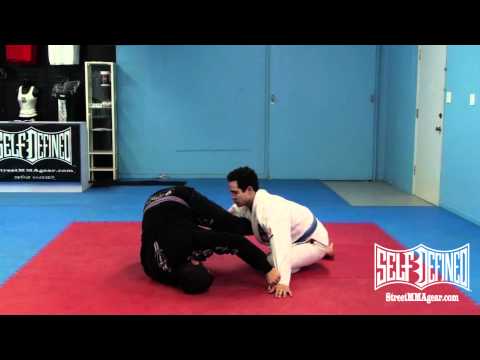
Jiu Jitsu submission from the 93 Guard position, Triangle choke and an Omaplata variation presented by Self Defined Fitn…
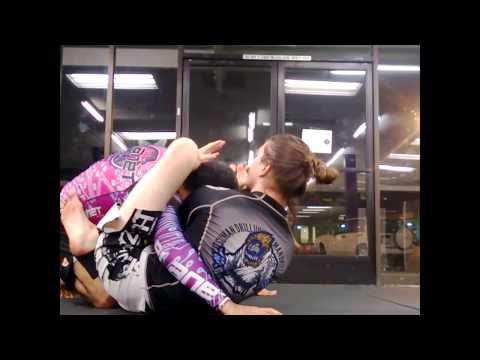
Ben Eddy of 10th Planet San Francisco and Kevin Berbrich of 10th Planet Vista showing some little known closed guard sub…
The Jiu-Claw is a back-control grip adapted from wrestling that combines an under-arm hook with a trapezius grip to maintain dominant positioning when standard seatbelt control breaks down. According to TeachMeGrappling Coach Brian, the claw grip functions as a structural control point when an opponent achieves double-under arm positioning through scrambling or deliberate maneuvering. The grip is executed by threading one arm under the opponent's arm and across their neck, then establishing a firm grip on the trapezius muscle. This positioning prevents the opponent from moving their shoulder upward (moving "north") and creates a mechanical block that resists arm-over-head escapes—a vulnerability that arises when the top player loses the seatbelt configuration. Coach Brian emphasizes the claw's utility in conjunction with leg control: when paired with inside leg weaving or butterfly hooks, it immobilizes the opponent and prevents rotation or bridging attempts. From this control, Coach Brian demonstrates multiple finishing pathways: the practitioner can re-establish back control by kicking out bridges and repositioning, transition to an arm triangle by moving into mount position, or attack the ankle-exposed leg with a triangle choke. The claw grip's wrestling origins provide particular value in jiu-jitsu back control scenarios where the opponent actively defends against traditional choke entries by escaping to bottom position.
Synthesized from 3 instructors
No instructional courses yet for this technique.
Sign in to suggest a course.
Risk of injury to the person this technique is applied to
The Jiu-Claw attacks the cervical spine through rotational and lateral flexion forces, which can cause: cervical ligament sprains, vertebral disc compression, facet joint irritation, and — in extreme cases — cervical subluxation. The face grip also causes significant discomfort to the jaw (temporomandibular joint compression) and the facial skin (the claw grip on the face can cause scratches and bruising). The technique must be applied with control in training — cervical spine injuries can be serious and long-lasting. [1]
Skill level needed to execute this technique reliably
Whether this technique is allowed under major competition rule sets
Mastering the Rubber Guard (Bravo, 2006)
description: [1] Bravo 2006 Jiu-Claw section
Standard katakana transliteration of Western martial arts terminology (外来語) — used in Japanese MMA, boxing, and BJJ communities
description: [1] Bravo 2006 Jiu-Claw section
Requires all the hip flexibility needed for rubber guard (the controlling legs must maintain posture-breaking control throughout)
Strong grip for the claw on the face
Forearm strength for the pulling motion
Arm dexterity for the Kung Fu Move threading entry
Ability to maintain composure while applying an uncomfortable technique (the Jiu-Claw can feel 'dirty' to some practitioners, requiring mental comfort with face-gripping techniques)
The Jiu-Claw is a 10th Planet Jiu-Jitsu grip/control position — part of the rubber guard advanced system. Used to control the opponent's posture from bottom position. (Bravo, Mastering the Rubber Guard, 2006)
According to Self Defined, if you feel a lot of pressure from your opponent, keep your initial grip through the triangle to control their chin. If you're not feeling much pressure, graduate to a second arm for better control.
Coach Brian (TeachMeGrappling) explains that when you have both arms under the armpits instead of a classic seat belt position, you can transition to the claw grip and use a vine grip for control instead of going directly to mount.
Coach Brian emphasizes keeping your head tight when applying the claw—this makes it very difficult for your opponent to maneuver out and retake the back.
If caught in the claw, bridge and push up to create space; your opponent will then need to decide whether to maintain their grip or transition to the claw grip itself.
The Jiu-Claw is a 10th Planet Jiu-Jitsu submission from rubber guard where the attacker grips the opponent's face with an open-hand claw grip while the legs control posture, creating a combination face crank and neck submission that attacks the cervical spine through lateral and rotational forces applied via the jaw. The technique is entered through the 'Kung Fu Move' sequence: from Mission Control (the foundational rubber guard position), the attacker threads one arm over the opponent's trapped arm and reaches for the face, gripping the chin and jaw with an open-hand claw — the fingers wrap around one side of the jaw while the thumb presses on the opposite side or above the nose.
The Jiu-Claw was developed by Eddie Bravo as part of the 10th Planet Jiu-Jitsu rubber guard submission system, providing a fourth attack vector from the Zombie position after the triangle, armbar, and Go-Go Plata. The technique was documented in Mastering the Rubber Guard (2006) as part of the 'Kung Fu Move' sequence — the name 'Kung Fu Move' references the threading arm motion that Eddie Bravo likened to a martial arts movie hand movement.
IBJJF: legal — Legal at all belt levels, gi and no-gi — chokes are the safest submission cat…; IJF: legal — Legal (shime-waza) — strangulation techniques are one of three permitted subm…; ADCC: legal — Legal; Unified MMA: legal — Legal — choke submissions are among the most common finishes in MMA; FIAS Sport Sambo: banned — All chokes prohibited in Sport Sambo; FIAS Combat Sambo: legal — Legal
Danger rating 7/10. The Jiu-Claw attacks the cervical spine through rotational and lateral flexion forces, which can cause: cervical ligament sprains, vertebral disc compression, facet joint irritation, and — in extreme cases — cervical subluxation. The face grip also causes significant discomfort to the jaw (temporomandibular joint compression) and the facial skin (the claw grip on the face can cause scratches and bruising). The technique must be applied with control in training — cervical spine injuries can be serious and long-lasting.
The standard setup chain: Closed guard → Break posture → Establish Mission Control (rubber guard) → Transition to Zombie (overhook + leg across shoulder/neck) → Attempt triangle → defended → Attempt armbar → defended → Attempt Go-Go Plata → defended → Kung Fu Move: thread the arm over the opponent's trapped arm → Reach for the opponent's face → Establish the claw grip on the jaw → Pull the face toward the chest → Cervical spine rotation + lateral flexion → Opponent taps from neck crank → If Jiu-Claw is defended → return to triangle attempt (the defensive movement against the claw often opens the triangle).
Standard counters include: Tuck the chin — tucking the chin against the chest prevents the claw from getting under the jaw / Turn the face — turning the face away from the gripping hand reduces the rotational leverage on the cervical spine / Strip the grip — using both hands to peel the claw grip off the face (this opens other submissions from rubber guard,… / Posture up — breaking the rubber guard's posture control removes the leg-based anchor that makes the Jiu-Claw effective.
Common variants: Standard Jiu-Claw (claw grip on the face from rubber guard, pulling toward t…); Deep Jiu-Claw (the hand reaches further across the face for a deeper gri…); Jiu-Claw to Go-Go Plata (using the claw grip to pull the head into position for a …); Jiu-Claw to triangle (using the discomfort of the claw to force the opponent to…); Two-hand Jiu-Claw (momentarily using both hands on the face for maximum cran…).
Used in EBI (Eddie Bravo Invitational) and ADCC competition. The Jiu-Claw has produced taps in professional no-gi competition when used as part of the full rubber guard submission chain.
Top errors to watch for: Attacking the eyes — the Jiu-Claw is a NECK CRANK via the jaw, NOT an eye gouge. Directing the fingers toward the eye… / Weak rubber guard maintenance — if the legs lose their posture-breaking control, the opponent turns their body and th… / Rushing the grip — reaching for the face before establishing the proper position (Kung Fu Move entry) results in a sl… / Not pulling toward the chest — the crank force comes from pulling the face toward the attacker's chest (not from sque….
The Jiu-Claw is also known as Jū Kurō, Jiu Claw, Claw Submission, Face Crank, Rubber Guard Claw.