Setup: Opponent Turtles from Side Control
When an opponent defends side control by turtling up and pushing on the attacker's shoulder to create space, the attacker follows them into a back position. This escape is viable primarily for opponents with strong turtle and back escape defense; weaker defenders risk allowing the attacker to establish control.
Establishing the Claw Position
Rather than using the seatbelt grip, the attacker comes underneath the opponent's armpit in the claw position, which is more effective against opponents skilled at back defense. The attacker must keep their leg up rather than having a knee down, as a grounded knee exposes them to a knee reaping submission.
Grip Options: Palm-to-Palm versus S-Grip
Two grip variations are available depending on equipment. With bare hands, the attacker uses a palm-to-palm grip with one palm facing down around the neck. With MMA gloves, an S-grip offers an alternative, though the principle remains: the attacking hand's palm must face toward the opponent's back.
Critical Timing and Momentum
The attacker must execute the roll immediately without lingering in the claw position, as a patient opponent can jump over the attacker's body and regain side control. The technique is momentum-based rather than strength-dependent, allowing it to function effectively regardless of size difference.
Rolling and Adjusting Position
As the attacker pulls their arm and scissors their legs, the opponent rolls over them. The attacker then makes sequential positional adjustments, maintaining pressure while transitioning toward a finishing position. Maintaining tight head contact throughout is essential for choke effectiveness.
Knee-on-Belly Finish
Once the opponent is rolled over, the attacker places their knee on the opponent's belly while maintaining the arm triangle grip. This positional control allows the choke to finish, with the entire technique functioning through momentum and timing rather than raw strength.
Positioning Errors and Corrections
The attacker must maintain control on the opponent's back rather than allowing them to rotate away. If the attacker's position is loose or off-angle, the choke lacks sufficient pressure, making proper alignment during the roll critical for submission success.
How to : Rolling Arm Triangle from Turtle Part 3
Key Takeaways
- •Setup: Opponent Turtles from Side Control
- •Establishing the Claw Position
- •Grip Options: Palm-to-Palm versus S-Grip
- •Critical Timing and Momentum
Join Ultimate MMA Plus Online University Now! https://ultimate-mma-and-jiu-jitsu-training-center.sparkuniversity.co/ Check out our gym in North Haven Ct for classes. https://ultimatemmact.com/ In todays video, Coach Andrew shows you a Rolling Arm Triangle when opponent goes to turtle position. Be sure to not just watch the moves, but also study every aspect of them so that you know how to do the technique properly. Connect WITH COACH ANDREW https://www.instagram.com/andrewcalandrellijr/ https://www.tiktok.com/@ultimatemmact Connect WITH PRO FIGHTER MARISA https://www.instagram.com/realspidermonkey/ https://www.facebook.com/SpiderMonkeyMarisa/ https://www.tiktok.com/@realspidermonkey Connect WITH UMMA & CB Boxing Club https://www.instagram.com/ultimatemmabjj/ https://www.instagram.com/cb_boxing_club/ https://www.facebook.com/UltimateMMACT/ https://www.facebook.com/CBBoxingClub/ #americana #nogi #jiujitsu #bjj #mma #fitness #ummact #mma #girlswhofight #ufc #invictafc #onefc #bellatormma #martialarts
Related Techniques
Frequently Asked Questions
What does this video teach about rolling arm triangle choke — from turtle?
This video covers setup: opponent turtles from side control, establishing the claw position, grip options: palm-to-palm versus s-grip. It provides detailed instruction from UltimateMMA Plus.
How long does it take to learn rolling arm triangle choke — from turtle?
The basic mechanics can be understood in a single session, but developing reliable execution requires consistent drilling over weeks of practice. This 7-part breakdown helps structure your training by isolating each phase of the technique.
What are the key details for finishing rolling arm triangle choke — from turtle?
Once the opponent is rolled over, the attacker places their knee on the opponent's belly while maintaining the arm triangle grip. This positional control allows the choke to finish, with the entire technique functioning through momentum and timing rather than raw strength.
Related videos
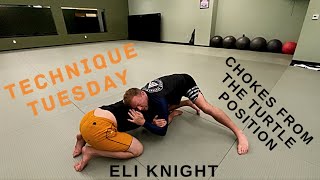
Technique Tuesday: Eli Knight - Chokes from turtle position
McDojoLife
Technique Tuesday: Eli Knight - Chokes from turtle position
McDojoLife
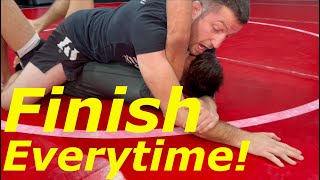
Knee on Belly to Arm Triangle!
TeachMeGrappling Coach Brian
Head and arm choke from half guard || The Jiu Jitsu Journal || BJJ Techniques
Prism Jiu Jitsu
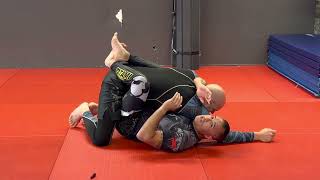
Arm Triangle From Closed Guard
Chosen Few BJJ