Introduction to Taekwondo Fundamentals
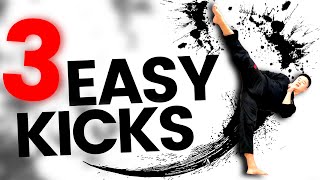
Taekwondo, meaning "the way of the hand and foot," emphasizes striking with both hands and feet. This instructional guide covers three essential kicks that form the foundation of effective Taekwondo practice.
Front Kick Execution and Applications
The front kick is one of the most practical kicks for self-defense. To execute: turn the base foot 30 degrees, lift the knee, pull the toes back, and strike with the ball of the foot using a spear-like motion. The front kick effectively disrupts an opponent's balance and can be used to draw attention before following with hand strikes or low attacks.
Side Kick: Rear Leg Technique
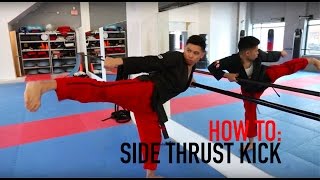
The side kick is highly effective for both competition scoring and self-defense. Start by lifting the knee and pulling the toes back to position the heel for striking. Pivot the base foot approximately 180 degrees to rotate the body fully, then extend and strike with the heel.
Side Kick: Front Leg Variation
For sparring applications, the front leg side kick offers superior speed compared to the rear leg version. Simply lift the knee to the chest and throw the kick out without the lengthy rotation required for rear leg execution. This faster approach is ideal for competitive sparring situations.
Roundhouse Kick: Fundamental Method
The roundhouse kick scores the most points in Taekwondo competition and is essential for any sparring toolbox. For competition, striking with the instep is required for point scoring. For self-defense applications, practitioners may use the shin at closer range or employ the ball of the foot using classical technique.
Roundhouse Kick: Rear Leg Execution
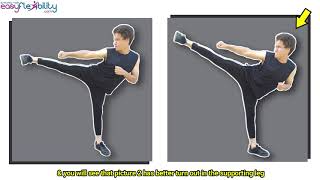
To execute a rear leg roundhouse kick, lift the leg straight up and pull the toes back to create a flat foot position. Rotate the base foot approximately 160 degrees while pointing the knees forward, then allow the foot to follow around naturally. This version prioritizes power over speed.
Roundhouse Kick: Front Leg Variation
The front leg roundhouse kick sacrifices power for speed, making it ideal for quick combinations in sparring. Practitioners should choose between rear leg roundhouse kicks for maximum power or front leg variations for rapid execution, depending on tactical objectives.
Taekwondo Basic Kicks
Key Takeaways
- •Introduction to Taekwondo Fundamentals
- •Front Kick Execution and Applications
- •Side Kick: Rear Leg Technique
- •Side Kick: Front Leg Variation
New to Taekwondo? Check out these three Taekwondo beginner kicks. See my other videos for more in-depth breakdowns of these kicks: Front Kick: https://youtu.be/63F9H1-puus Side Kick: https://youtu.be/epv2RbE5DUo Roundhouse Kick: https://youtu.be/bmTVYlFzEyI For free Taekwondo video courses, visit my website www.tkdguide.com
Related Techniques
Frequently Asked Questions
What does this video teach about hand-on-the-floor side kick?
This video covers introduction to taekwondo fundamentals, front kick execution and applications, side kick: rear leg technique. It provides detailed instruction from Taekwondo Guide .
How long does it take to learn hand-on-the-floor side kick?
The basic mechanics can be understood in a single session, but developing reliable execution requires consistent drilling over weeks of practice. This 7-part breakdown helps structure your training by isolating each phase of the technique.
What are the key details for finishing hand-on-the-floor side kick?
To execute a rear leg roundhouse kick, lift the leg straight up and pull the toes back to create a flat foot position. Rotate the base foot approximately 160 degrees while pointing the knees forward, then allow the foot to follow around naturally. This version prioritizes power over speed.