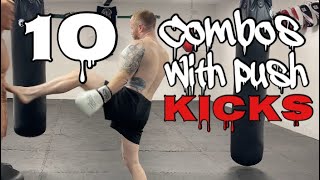
Protecting Your Attacking Leg
The primary concern when executing oblique front kicks is avoiding contact with the opponent's bent knee, which can cause significant pain to the kicker's foot. A defender's flexed knee creates a hard surface that disrupts the technique's effectiveness. Proper execution requires targeting areas beyond the knee's defensive range.
Strategic Advantages Over Head Strikes
The oblique kick system offers a pragmatic alternative to high-risk head strikes that carry concussion hazards. By targeting the knee instead, practitioners can effectively neutralize opponents while minimizing neurological damage. This tactical shift prioritizes long-term fighter health without sacrificing combat effectiveness.
Target Selection: Thigh vs. Knee
When the opponent's knee is bent and protected, the upper thigh becomes the optimal target for the oblique kick. This placement maintains offensive pressure while avoiding the defender's strongest structural defense. Attacking the thigh significantly limits the opponent's ability to execute counters during or immediately after the kick.
Exploiting the Extended Leg
A straight or extended leg represents the optimal moment to target the knee joint directly, as it becomes vulnerable from multiple angles—both frontal and lateral. When fatigue sets in during a fight, opponents are more likely to extend their legs, creating prime opportunities. An extended leg without protective flexion becomes a liability rather than an asset.
Footwork and Defensive Positioning
Opponents can defend against oblique kicks by stepping offline or angling their body to avoid direct contact. Consistent pressure and repeated attacks on the leg force defenders into reactive positions that limit their movement options. The key is maintaining offensive momentum while conditioning the opponent to anticipate and respect the technique.
Training Drill: Mutual Engagement
An effective training method involves both partners exchanging oblique kicks while moving laterally, building familiarity with distance and timing. This drill develops the confidence needed to commit fully to the technique, as hesitation creates openings for counter-strikes. Repetition in this controlled setting transfers directly to fight-ready execution.
Risk and Commitment
Hesitation when throwing the oblique kick leaves the kicker vulnerable to counter-strikes, particularly crosses. Full commitment and proper timing eliminate most counterattack opportunities before they develop. The psychological component of the technique relies on the opponent's respect for the threat.
Two Valid Execution Methods
The oblique kick can be executed in two ways: targeting soft tissue on the thigh with the heel while avoiding the knee, or striking the knee directly from a slight angle to maximize impact. Both approaches disrupt opponent movement and create cumulative damage over a fight. Selection depends on the opponent's stance and defensive positioning in real time.
Low Kicks for MMA - The Oblique Kick System with Mike Winkeljohn
Key Takeaways
- •Protecting Your Attacking Leg
- •Strategic Advantages Over Head Strikes
- •Target Selection: Thigh vs. Knee
- •Exploiting the Extended Leg
The Albuquerque based Jackson Wink MMA is one of the most famous and successful combat sports gyms in the world today. Fighters who have fought under their banner include the likes of UFC stand outs Jon Jones, Carlos Condit and Donald Cerrone. You will often see their athletes using Coach Mike Winkeljohn’s system for using oblique kicks in MMA. FOLLOW MIKE WINKELJOHN: @hwink FOLLOW JACKSON WINK MMA: @wink_mma JACKSON WINK MMA YOUTUBE CHANNEL: @onWinkMMAAcademy If you love great martial arts content like this SUBSCRIBE to Warrior Collective here: https://www.youtube.com/channel/UCpLH5tDGl_QiRJ1eDUTLFxQ?sub_confirmation=1 For another Low Kicks for MMA tutorial head here: https://www.youtube.com/watch?v=9E1hSWbpqR4 For more on Mixed Martial Arts head to this playlist: https://www.youtube.com/watch?v=5_ZJThSlQtk&list=PLdsrTklg8AVHEOWABnrh4nthzpN5LqqHZ Thanks for watching, I hope you enjoyed watching this Low Kicks for MMA video, please like, share and don't forget to SUBSCRIBE to Warrior Collective for more great videos each week!! WELCOME TO THE BEST ONLINE MARTIAL ARTS RESOURCE IN THE WORLD www.warriorcollective.co.uk GET THE BEST SELLING BOOK 'The Evolution of Martial Arts in Combat Sports' by Stuart Tomlinson right here: https://www.amazon.co.uk/Evolution-Martial-Arts-Combat-Sports-ebook/dp/B09HQ8F13Y/ref=sr_1_1?dchild=1&keywords=stuart+tomlinson Pre-order available for the e-book. Official release of both digital and physical is 23rd November 2021. JOIN THE WARRIOR COLLECTIVE COMMUNITY INSTAGRAM - https://www.instagram.com/warriorcollective/?hl=en FACEBOOK - https://www.facebook.com/warriorcolle... TWITTER - https://twitter.com/Warriorcollect WARRIOR COLLECTIVE COURSES - https://www.warriorcollective.co.uk/product-category/digital-download/ #muaythai #muaythailowkicks #warriorcollective
Related Techniques
Frequently Asked Questions
What does this video teach about oblique front kick?
This video covers protecting your attacking leg, strategic advantages over head strikes, target selection: thigh vs. knee. It provides detailed instruction from Stuart Tomlinson.
How long does it take to learn oblique front kick?
The basic mechanics can be understood in a single session, but developing reliable execution requires consistent drilling over weeks of practice. This 8-part breakdown helps structure your training by isolating each phase of the technique.
What are the key details for finishing oblique front kick?
Hesitation when throwing the oblique kick leaves the kicker vulnerable to counter-strikes, particularly crosses. Full commitment and proper timing eliminate most counterattack opportunities before they develop. The psychological component of the technique relies on the opponent's respect for the threat.