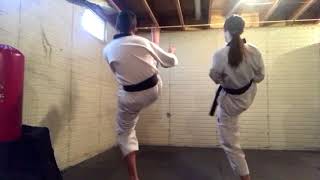
Introduction to Forward Leg Front Kick in Place
The forward leg front kick in place is a fundamental Krav Maga technique that differs significantly from its back leg counterpart. This instructional guide addresses the most common execution error that practitioners encounter when learning this technique.
Identifying the Most Common Mistake
The primary error occurs when practitioners inadvertently shift their base foot forward before executing the kick. This subtle movement is often unnoticed by the student and even by observers, but it fundamentally changes the technique from a front kick in place to a front kick with an advancing step.
Understanding the Distinction Between Techniques
While an advancing front kick is a valid technique with specific applications, it is not the same as a front kick in place. The distinction matters because the forward leg front kick in place requires maintaining a stationary base foot throughout the entire movement.
Why This Mistake Occurs
Students shift their base foot forward instinctively to maintain balance when executing the kick. Proper balance requires the hip to align vertically above the base foot, and many practitioners unconsciously step forward to achieve this positioning rather than using the correct method.
The Correct Hip Alignment Method
The proper technique involves shifting the hips backward while maintaining a stationary base foot. This creates the necessary alignment of the hip directly above the supporting leg, enabling balanced execution without any forward foot movement.
Solution One: Adjust Starting Distance
Practitioners should begin closer to their target than they would for a back leg front kick, as the forward leg provides less reach. Starting at least one foot closer forces proper technique execution and prevents the instinctive forward foot shift that occurs when the distance is too great.
Solution Two: Hip Shift Mechanics
The correct motion involves pushing off with the forward leg while planting the heel of the back foot and shifting the hips backward. This coordinated movement establishes proper hip positioning without requiring any forward base foot movement.
Four-Stage Training Drill
Break the kick into four distinct stages: chamber the leg with proper hip positioning, execute the strike, extend and recoil the kick, and return the leg to the ready position. This methodical approach reinforces correct mechanics and improves balance while preventing forward foot shifting.
Mirror and Partner Training Methods
Practice the technique in front of a mirror to maintain visual control of base foot positioning. When training with a partner holding pads, request feedback to ensure the base foot remains stationary throughout the execution.
Application and Importance of Precision
Eliminating unnecessary movements streamlines technique and prevents experienced opponents from exploiting telegraphed actions during sparring or combat situations. Maintaining a stationary base foot in the forward leg front kick in place demonstrates technical excellence and prevents predictable patterns that adversaries can exploit.
Krav Maga - Forward Leg Front Kick in Place (Most Common Mistake to Avoid)
Key Takeaways
- •Introduction to Forward Leg Front Kick in Place
- •Identifying the Most Common Mistake
- •Understanding the Distinction Between Techniques
- •Why This Mistake Occurs
In this #KravMaga Student Section video we go over the most common mistake to avoid while performing the Forward Leg Front Kick in Place (Level 2 technique). This video addresses the following: 1. What the most common mistake is when executing this kick. 2. Two reasons why this mistake happens. 3. Different ways to prevent the mistake. 4. A kicking drill to avoid the mistake and improve your balance. 5. Two other training drills to monitor your technique while doing this kick. 6. Why this mistake may create problems for you when you are sparring more experienced fighters. Additional videos and information about our self defense, fighting, and fitness programs are available at http://www.kravmagatraining.com/ The videos on this YouTube channel are NOT a replacement for actual instruction. They do not teach techniques, but instead isolate and fix problems within the technique or its individual components. The videos are designed to help the student who has already learned the technique under the instruction of a qualified instructor. Important Note: These videos are specific to the techniques and curriculum taught to the students at our facility. Students from other Krav Maga schools and organizations are more than welcome to watch and use these videos and we hope they find them useful! However, variations may be taught that are different from the techniques taught at other Krav Maga locations. This doesn't mean one variation is wrong or the other is right. They are just variations...plain and simple. The most important question for any technique or defense should be this: Does it work for the individual who is performing it? As long as it does, then the technique or variation has merit, regardless of where it comes from! That's the number one principle that we emphasize at our school.
Related Techniques
Frequently Asked Questions
What does this video teach about instep angular front kick?
This video covers introduction to forward leg front kick in place, identifying the most common mistake, understanding the distinction between techniques. It provides detailed instruction from Krav Maga Worldwide - Fort Lauderdale, Florida.
How long does it take to learn instep angular front kick?
The basic mechanics can be understood in a single session, but developing reliable execution requires consistent drilling over weeks of practice. This 10-part breakdown helps structure your training by isolating each phase of the technique.
What are the key details for finishing instep angular front kick?
Practice the technique in front of a mirror to maintain visual control of base foot positioning. When training with a partner holding pads, request feedback to ensure the base foot remains stationary throughout the execution.