Understanding the Back Kick
The back kick is a distinct technique often confused with a turning side kick. The fundamental difference lies in the execution: a turning side kick involves chambering and extending outward, while a back kick maintains a compact motion with knees aligned and drives power directly backward. Understanding this distinction is essential for proper technique development.
Anatomical Mechanics: Hip Rotation
In a side kick, the hip bone rotates outward perpendicular to the body. In contrast, the back kick requires the hip to rotate downward and backward, directing power behind the body like an uppercut in boxing. This anatomical difference enables the back kick to generate significant force over a short distance, making it highly efficient in close-range combat situations.
The Compact Kick Structure
The back kick motion resembles an animal's rear-leg strike—compact and explosive rather than extended. The knees remain relatively close together while the hips drive backward, creating a powerful thrusting motion. This structure differentiates the back kick from side kicks and prevents the overextension that compromises balance and invites counter-attacks.
Fundamental Drill: Turn and Step
Beginners should practice a simple progression: turn around, take a step backward, then execute a flicking motion. This drill establishes proper weight transfer and body mechanics before adding full extension. Practitioners should gradually reconstruct the complete technique—turn, ground placement, step back, extend—ensuring smooth integration of each component.
Identifying Spinning Errors
Excessive spinning is a common technical flaw that compromises the back kick's effectiveness. Practitioners who spin rather than turn will overshoot the centerline with their foot placement and expose their midsection to counter-attacks. Proper execution requires a controlled turn with deliberate weight placement, not rotational momentum.
Advanced Technique: Simultaneous Pivot and Extension
Rather than executing the back kick in sequential steps, advanced practitioners can pivot and extend simultaneously, similar to the back-leg roundhouse kick. By setting weight on the front leg and pushing through the back while turning the shoulders, the practitioner maintains a tighter stance and reduces telegraphing. This simultaneous motion delivers greater speed while maintaining defensive positioning.
3 RANT TIPS FOR BACK KICK
Key Takeaways
- •Understanding the Back Kick
- •Anatomical Mechanics: Hip Rotation
- •The Compact Kick Structure
- •Fundamental Drill: Turn and Step
Not a tutorial this time guys. JUST 3 TIPS. This one is kinda..random
Related Techniques
Frequently Asked Questions
What does this video teach about downward back kick?
This video covers understanding the back kick, anatomical mechanics: hip rotation, the compact kick structure. It provides detailed instruction from HwarangSam.
How long does it take to learn downward back kick?
The basic mechanics can be understood in a single session, but developing reliable execution requires consistent drilling over weeks of practice. This 6-part breakdown helps structure your training by isolating each phase of the technique.
What are the key details for finishing downward back kick?
Excessive spinning is a common technical flaw that compromises the back kick's effectiveness. Practitioners who spin rather than turn will overshoot the centerline with their foot placement and expose their midsection to counter-attacks. Proper execution requires a controlled turn with deliberate weight placement, not rotational momentum.
Related videos
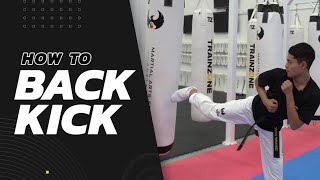
How to Back Kick | Martial Arts Spirit Tutorials
Martial Arts Spirit

Be More CONFIDENT With Your SPINNING Back Kick Set Up
MMA COACH
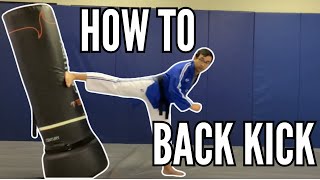
How To Back Kick Tutorial | Catholic Karate Lesson
ᴶᴹᴶ Dojo Go ! | Online Kids Martial Arts & Karate
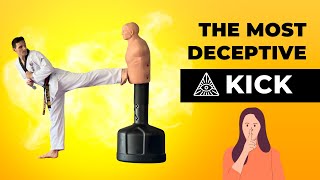
How to Do a Taekwondo Back Kick
Taekwondo Guide
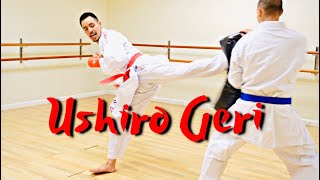
USHIRO GERI TUTORIAL (Spinning Back Kick)
ULTIMATE KARATE