Double Collar Tie Fundamentals
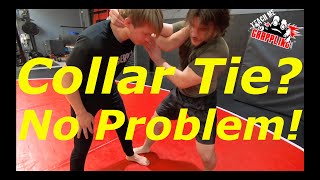
The double collar tie, also called the Thai plum, is a clinch position where the opponent controls both sides of the head with clasped hands behind the neck. A poor version features flared elbows and a grip on the neck rather than the head, while a strong version keeps elbows tight and applies downward head pressure with the opponent's head elevated for leverage.
Swimming to the Inside
The primary escape method involves swimming one hand up the inside to reach the back of the opponent's head while pulling the defender's own head upward. This fighting-to-the-inside principle aims to transition into a half collar tie and regain upright posture, creating space for subsequent striking or wrestling techniques.
Shoulder Dip for Elbow Clearance
When the opponent's elbows are held tight and the swimming motion is blocked, dipping the shoulder to the inside can clear the opponent's elbow. This allows the defender to continue swimming up and establishing their own control.
Chest and Face Pressure
If direct swimming is ineffective, pushing on the opponent's chest or face can create space. Pressing on the face is often more effective than chest pressure, particularly against larger opponents, and should target the area below the eyebrows including the nose and jawline for maximum effect.
Forearm Ridge Prying Technique
Rather than using hand pressure alone, the defender can press the forearm ridge and bone across the opponent's face and head to create better leverage and discomfort. This bone-structure approach provides advantages for smaller practitioners dealing with larger opponents.
Head Position Adjustment
When the opponent tucks their head to defend against face pressure, the defender should transfer the pushing angle to the opposite side of the head where the opponent's face is turned. This adjustment maintains pressure and prevents the opponent from easily tucking further.
Ear Pull and Cow Bite
The ear pull technique involves reaching around to grab the far side of the opponent's head, neck, jaw, or ear while creating a cow bite grip. The defender then pulls the elbow downward toward the hips while walking the chest forward, collapsing the opponent's shoulder and creating postural breakdown.
Double Arm Ear Pull for Larger Opponents
Against significantly larger opponents, the ear pull can be doubled by swinging one arm over the head while hooking the opponent's elbow with the other arm. Pulling with both arms while advancing the hips and chest creates additional breakdown and separation.
Dealing with Double Collar Ties
Key Takeaways
- •Double Collar Tie Fundamentals
- •Swimming to the Inside
- •Shoulder Dip for Elbow Clearance
- •Chest and Face Pressure
Here's a look at a few concepts/approaches that have served me well over the years for dealing with a double collar tie. These require training, and work really when when you add in movement, striking, and other elements as well. Check it out, enjoy, play, explore. Join me for training and keep up with our calendar by visiting the link below: https://taplink.cc/jannettiaaron IG: @jannettiaaron and @knifecontrolconcepts Facility: Endeavor Defense and Fitness in Columbus, OH
Related Techniques
Frequently Asked Questions
What does this video teach about double collar tie-thai plum?
This video covers double collar tie fundamentals, swimming to the inside, shoulder dip for elbow clearance. It provides detailed instruction from Aaron Jannetti.
How long does it take to learn double collar tie-thai plum?
The basic mechanics can be understood in a single session, but developing reliable execution requires consistent drilling over weeks of practice. This 8-part breakdown helps structure your training by isolating each phase of the technique.
What are the key details for finishing double collar tie-thai plum?
The ear pull technique involves reaching around to grab the far side of the opponent's head, neck, jaw, or ear while creating a cow bite grip. The defender then pulls the elbow downward toward the hips while walking the chest forward, collapsing the opponent's shoulder and creating postural breakdown.
Related videos

Muay Thai Clinch Escape: How to Escape Double Collar Tie
Muay Thai PROS

5 Collar Tie Shots That Work at Every Level (D1 wrestler explains)
Christian Tanefeu

Judo VS Irish collar and elbow
Chadi
BEAT the Collar Tie!... Anton Kalista's Throw by
TeachMeGrappling Coach Brian

How To Escape the 50-50 Head Control Tie up - Core JKD
corejkd