Introduction to the 12 Basic Strikes
Modern Arnis is built upon twelve fundamental strikes that form the foundation of the system. These strikes target various points on the body and can be executed from multiple angles and trajectories. Mastery of these basic strikes is essential before advancing to more complex techniques.
The Twelve Strike Patterns
The strikes are systematically numbered: forehand strike to the head (1), backhand strike to the head (2), forehand strike to the body or arm (3), backhand strike to the body (4), upward thrust to the chest (5), downward thrust to the chest (6), strike to the opposite side of the chest (7), forehand strike to the leg (8), backhand strike to the leg (9), strike to one eye (10), strike to the opposite eye (11), and downward strike to the top of the head (12). Each strike can be modified based on target availability and positioning.
The Twelve-Strike Drill Structure
The fundamental drill serves dual purposes: the striker gains accuracy in strike placement while the defender experiences the reality of stick strikes. For safety, the non-striking partner calls out the strike numbers to ensure both participants are synchronized. This practice prevents accidental contact and reinforces the numbering system.
Striking Variations and Control
Strikes can be executed with three distinct styles: controlled strikes with minimal follow-through, strikes with full follow-through, and rebound techniques where the stick is drawn back immediately after contact. These variations develop different aspects of timing, power generation, and defensive recovery.
Footwork Fundamentals: Lift and Push
Proper footwork is built on the lift-and-push principle, not the commonly misunderstood step-and-drag method. The practitioner maintains consistent distance between the feet throughout movement, stepping at a 45-degree angle when moving laterally. The leading foot in the direction of movement initiates the step, while maintaining proper stance geometry.
Offensive Stepping with Strikes
When executing the twelve strikes offensively with movement, the practitioner steps in coordination with each strike. For angular strikes, the 45-degree step angle is maintained directionally. For linear strikes (such as the five and twelve), stepping direction can vary based on tactical positioning and environmental obstacles.
Defensive Positioning and Checks
Defensively, the practitioner steps offline while performing a check with the weapon to intercept the incoming strike. The checking distance must remain close enough to allow the free hand to grab or control the opponent's weapon arm. The arm position should never fully extend, maintaining control and positioning for follow-up techniques.
The Live Hand: Integration and Application
The free hand, called the live hand, serves multiple critical functions throughout combat. It acts as a checking hand against incoming strikes, blocks and parries attacks, and targets the opponent with counter-strikes. The live hand remains positioned high and ready at all times to maximize defensive and offensive options.
Combining Strikes with Counter-Strikes
Effective technique requires a continuous cycle: the defender blocks or checks the incoming strike, then immediately counters with a strike of their own while the opponent is momentarily compromised. This immediate counter-strike stuns the opponent and creates opportunities for advanced techniques such as locks or additional strikes.
Bruce Chiu Teaching the 12 Basic Strikes of Modern Arnis
Key Takeaways
- •Introduction to the 12 Basic Strikes
- •The Twelve Strike Patterns
- •The Twelve-Strike Drill Structure
- •Striking Variations and Control
This is from his New Instructional DVD series Bruce Chiu Teaching the 12 Basic Strikes of Modern Arnis. This video was videotaped and edited by myself and my company Black and Blue Video Productions, Inc.
Related Techniques
Frequently Asked Questions
What does this video teach about angle two strike?
This video covers introduction to the 12 basic strikes, the twelve strike patterns, the twelve-strike drill structure. It provides detailed instruction from Black and Blue Video.
How long does it take to learn angle two strike?
The basic mechanics can be understood in a single session, but developing reliable execution requires consistent drilling over weeks of practice. This 9-part breakdown helps structure your training by isolating each phase of the technique.
What are the key details for finishing angle two strike?
The free hand, called the live hand, serves multiple critical functions throughout combat. It acts as a checking hand against incoming strikes, blocks and parries attacks, and targets the opponent with counter-strikes. The live hand remains positioned high and ready at all times to maximize defensive and offensive options.
Related videos
Basics Of Arnis | Cinco Terro Strike Blocks & Disarming. Arnis Stick / Kali/ Eskrima Training.
PG-2-GP Fitness
5 Stick Strikes & Counters In Martial Arts | Kali | Stick Defense| Arnis | Eskrima | PG-2-GP fitness
PG-2-GP Fitness
Kali Angles 1 & 2 | Easy Lesson to Begin FMA Training
Mark Anastacio
How to Create Striking Angles with Stephen WONDERBOY Thompson
Karate Combat
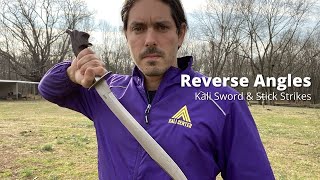
Reverse Striking Angles - Kali Sword and Stick Fighting Techniques | Arnis Eskrima
Kali Center