Introduction to Foundational Angles
This instructional guide covers Angle 1 and Angle 2, the universal foundation strikes taught across Filipino martial arts systems. While various Kali schools employ different strike counts (ranging from 5 to 14), nearly all systems converge on these two fundamental diagonal angles as the essential building blocks for beginners and experienced practitioners alike.
Understanding the X-Pattern Framework
Angle 1 and Angle 2 form a mirrored diagonal strike pattern, commonly referred to as the X-pattern, infinite strike, or figure-8 motion. Angle 1 represents a forehand strike traveling from upper right to lower left, while Angle 2 mirrors this motion from upper left to lower right, establishing two primary lines of attack separated by the body's center line.
Forehand and Backhand Mechanics
The center line divides the striker's body into two operational zones: forehand attacks originate from the right side moving toward center, while backhand attacks flow from center to the left side. This classification system creates two distinct angles of attack regardless of height, teaching practitioners to recognize and execute both directions with equal proficiency.
The Continuous Circular Strike Principle
A core principle taught through Angle 1 and Angle 2 is that one strike naturally leads into the next without requiring re-chambering. This flowing motion creates an infinite, circular pattern where practitioners feed Angle 1 into Angle 2 continuously until they choose to stop or their opponent creates an opening, establishing the non-stopping nature of committed slash attacks.
Strike as Block and Block as Strike
The fundamental principle that 'strike is block and block is strike' establishes reference points for technique development. While matching angles (Angle 1 to Angle 1, Angle 2 to Angle 2) creates theoretical interception opportunities, the physics of committed follow-through slashes means these angles will not naturally stop each other without modification or strategic adjustment.
Dissecting the Line in Sparring Applications
In practical sparring scenarios, each angle represents a distinct line of attack that can be intercepted or redirected based on timing, range, and intent. Rather than meeting opponent strikes head-on with matching angles, advanced practitioners alter their strike angle to target the hand or arm, effectively dissecting the incoming line and converting defensive mechanics into offensive opportunities.
Hand Target Priority Over Stick Contact
Scoring systems in Kali sparring award points for striking the hand or arm above waist level, shifting tactical focus from stick-to-stick contact toward hand targeting. This principle teaches practitioners to recognize that their opponent's stick represents their hand in training, requiring practitioners to adjust their Angle 1 and Angle 2 trajectories to intercept at the weapon-holding extremities rather than the weapon itself.
Kali Angles 1 & 2 | Easy Lesson to Begin FMA Training
Key Takeaways
- •Introduction to Foundational Angles
- •Understanding the X-Pattern Framework
- •Forehand and Backhand Mechanics
- •The Continuous Circular Strike Principle
TRAIN AT MY GYM: Union Martial Arts Academy - NW Calgary 102 - 345 Sage Valley Common NW Calgary, AB T3R 1T8 — CONNECT WITH ME: ➢ Instagram: https://www.instagram.com/mcanastacio ➢ Instagram: https://www.instagram.com/a8.mgmt ➢ For Business Inquiries: [email protected] ➢ HAYABUSA DISCOUNT CODE: MARK UNION MARTIAL ARTS: ➢ Instagram: https://www.instagram.com/unionmartialarts ➢ Instagram: https://www.instagram.com/anastaciokali ➢ Facebook: https://www.facebook.com/UnionMartialArts/ ➢ Calgary, AB: https://www.unionmartialartsyyc.com UNION UNIVERSITY: ONLINE TRAINING ➢ Instructionals: https://www.unionmartialartsyyc.com/university
Related Techniques
Frequently Asked Questions
What does this video teach about angle three strike?
This video covers introduction to foundational angles, understanding the x-pattern framework, forehand and backhand mechanics. It provides detailed instruction from Mark Anastacio.
How long does it take to learn angle three strike?
The basic mechanics can be understood in a single session, but developing reliable execution requires consistent drilling over weeks of practice. This 7-part breakdown helps structure your training by isolating each phase of the technique.
What are the key details for finishing angle three strike?
In practical sparring scenarios, each angle represents a distinct line of attack that can be intercepted or redirected based on timing, range, and intent. Rather than meeting opponent strikes head-on with matching angles, advanced practitioners alter their strike angle to target the hand or arm, effectively dissecting the incoming line and converting defensive mechanics into offensive opportunities.
Related videos

How to Create Striking Angles with Stephen WONDERBOY Thompson
Karate Combat

Reverse Striking Angles - Kali Sword and Stick Fighting Techniques | Arnis Eskrima
Kali Center
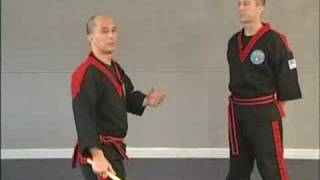
Bruce Chiu Teaching the 12 Basic Strikes of Modern Arnis
Black and Blue Video
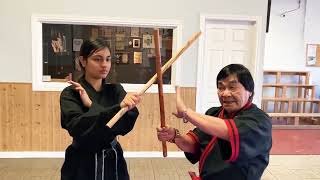
Basics Of Arnis | Cinco Terro Strike Blocks & Disarming. Arnis Stick / Kali/ Eskrima Training.
PG-2-GP Fitness

5 Stick Strikes & Counters In Martial Arts | Kali | Stick Defense| Arnis | Eskrima | PG-2-GP fitness
PG-2-GP Fitness