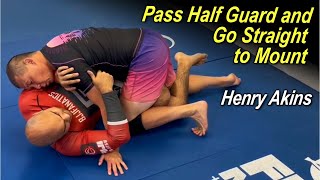
Half Guard Pass Setup
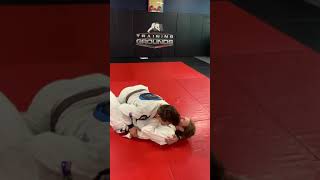
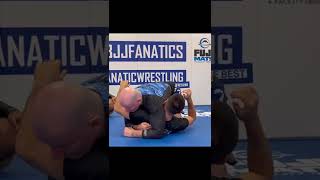
The instructor begins in top half guard position with the opponent's leg trapped. The first priority is controlling the far shoulder by underhooking the opponent's arm with the right hand while positioning the left arm behind the head, then clasping both hands together. This shoulder pressure prevents the opponent from sitting up and creating space.
Establishing Upper Body Control
Strong shoulder pressure into the face is maintained by keeping hands clasped with the underhooked position. The instructor emphasizes keeping legs pinched tight or locked to prevent the opponent from replacing their knee and escaping. Consistent pressure makes it difficult for the opponent to turn their hips out and create separation.
Positioning the Hooking Foot
To facilitate the pass, the instructor moves their hips to the left and drops the left hip down, opening up the opponent's knee. The left foot begins positioning to hook inside the opponent's knee by moving the left knee forward and dropping the hip before pivoting the knee over. The instructor maintains tight leg control with both knees locked in a triangle formation while pushing the hips down into the opponent's hip.
Executing the Knee Hook
The left knee slides up while the hip drops, allowing the leg to pivot over until the toes come behind the opponent's knee. The instructor must keep the legs locked and maintain constant pressure while positioning the toes, not the shin, behind the knee for optimal control. The weight distribution must be carefully balanced to avoid being rolled or losing pressure.
Elevating and Freeing the Back Leg
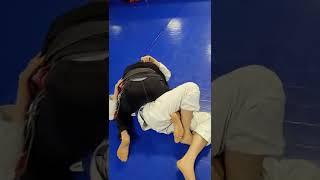
With the foot hooked, the instructor pushes the left toes into the floor to create pressure while lifting the hips into the air. This motion frees the back leg by driving the trapped leg down and creating space. The instructor transitions by bringing both knees down across either side of the opponent's hips in a butterfly mat position.
Transition to Mount Position
From the butterfly mat position with both shins on either side of the opponent's thighs, the instructor removes both knees simultaneously while arriving in a high mount. Grapevining the legs and controlling with the hands helps secure the position, though this is not essential. The instructor can also pop directly to a high mount position without going through butterfly mat if comfortable.
Flat Opponent Variation
When the opponent is relatively flat or turned slightly to the side, the instructor uses the same leg positioning principles but with adjusted hip movement. The left knee comes up while the hips break to the side, allowing the shin to pivot and toes to position behind the knee. The instructor bases the head on the floor if needed while pushing off with the right toes to elevate the hips.
Completing the Mount Pass
Both knees come across as the instructor comes up to mount, maintaining weight forward and tight control throughout. The instructor can base out and release the grip once in mount position, remaining ready to control the opponent's arms if they come up. This technique prioritizes keeping the opponent flat and preventing their hips from escaping to the side.
Fundamentals Syllabus - Week 4 - Technique 1 - Half Guard Pass to Mount
Key Takeaways
- •Half Guard Pass Setup
- •Establishing Upper Body Control
- •Positioning the Hooking Foot
- •Executing the Knee Hook
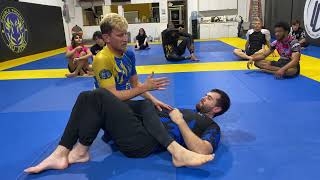
In this video, Oli Geddes demonstrates a simple method for passing the half guard and moving directly to the mount.
Frequently Asked Questions
What does this video teach about half mount pass?
This video covers half guard pass setup, establishing upper body control, positioning the hooking foot. It provides detailed instruction from Stronger Fitness and Martial Arts.
How long does it take to learn half mount pass?
The basic mechanics can be understood in a single session, but developing reliable execution requires consistent drilling over weeks of practice. This 8-part breakdown helps structure your training by isolating each phase of the technique.
What are the key details for finishing half mount pass?
When the opponent is relatively flat or turned slightly to the side, the instructor uses the same leg positioning principles but with adjusted hip movement. The left knee comes up while the hips break to the side, allowing the shin to pivot and toes to position behind the knee. The instructor bases the head on the floor if needed while pushing off with the right toes to elevate the hips.