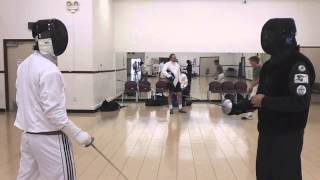
Octave Guard Position Fundamentals
The octave parry belongs to the same family of defensive positions as sixte, maintaining consistent distance and blade geometry. The fencer establishes octave by rotating the hand inward approximately halfway from the initial point position. This defensive stance protects the lower line while maintaining proper blade contact and distance control.
Proper Distance and Blade Alignment
Correct octave positioning requires maintaining adequate distance to prevent the opponent's blade from contacting the hand. The fencer must keep the blade fully extended and properly angled to deflect incoming attacks cleanly. Excessive proximity to the opponent creates vulnerability and compromises defensive effectiveness.
Transitioning from Octave to Attack
After establishing a solid octave parry, the fencer executes an immediate counterattack by extending forward with a direct lunge. The attack must originate from a neutral guard position without telegraphing or excess movement. Timing the transition between parry and riposte is essential for clean execution.
Sixte to Octave Conversion Sequence
When the opponent attacks from sixte, the defender responds by converting their guard from sixte to octave through controlled blade rotation. This circular parrying motion maintains blade contact throughout the transition, preventing the opponent's point from finding an opening. The movement must be economical and fluid to execute at fencing tempo.
Circling Sixth to Octave Preparation
The fencer initiates a preparatory circular movement from sixte, sweeping the blade downward to engage the opponent's blade in octave. This circular preparation sets up both defensive position and offensive transition simultaneously. The movement establishes blade contact while positioning for an immediate attacking response.
Octave Lunge Execution After Parry
Following a successful octave parry, the fencer delivers a direct lunge with proper extension and footwork. The attack travels upward and forward, targeting the upper line while maintaining blade control from the parried position. Coordination between blade extension and foot advance ensures maximum reach and scoring potential.
Sixte Line Mechanics and Hand Position
In sixte, the hand position protects the upper line with the blade elevated in proper alignment. The fencer maintains consistent height and angle to defend the entire upper target area effectively. Proper hand geometry in sixte prevents opening transitions to octave when executed with control.
Blade Change and Circular Progression
The circular blade change from sixte through octave demonstrates the natural progression of defensive positioning in response to varying attack angles. By maintaining contact during the transition, the fencer controls the opponent's blade throughout the defensive movement. This flowing technique builds into immediate offensive opportunity through the same circular path.
Foil Fencing Parry Octave, Octave Lunge(attack), Circ-Sixth Octave lunge Preparation(attack)specific
Key Takeaways
- •Octave Guard Position Fundamentals
- •Proper Distance and Blade Alignment
- •Transitioning from Octave to Attack
- •Sixte to Octave Conversion Sequence
Frequently Asked Questions
What does this video teach about parry of octave?
This video covers octave guard position fundamentals, proper distance and blade alignment, transitioning from octave to attack. It provides detailed instruction from Chim Theara.
How long does it take to learn parry of octave?
The basic mechanics can be understood in a single session, but developing reliable execution requires consistent drilling over weeks of practice. This 8-part breakdown helps structure your training by isolating each phase of the technique.
What are the key details for finishing parry of octave?
In sixte, the hand position protects the upper line with the blade elevated in proper alignment. The fencer maintains consistent height and angle to defend the entire upper target area effectively. Proper hand geometry in sixte prevents opening transitions to octave when executed with control.