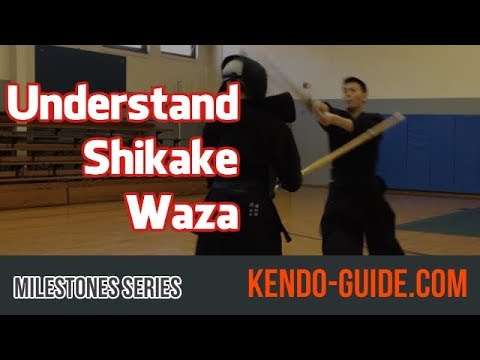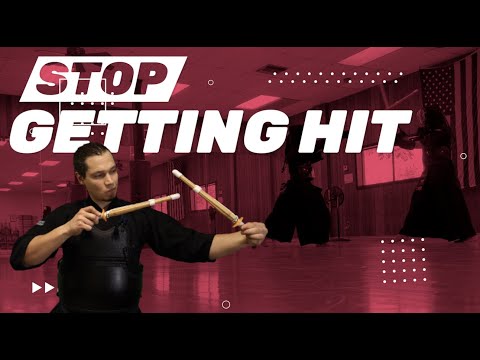
Shikake waza made simple: the key to kendo and winning
0
Shikake Waza·Kendo Tips
#kendo #剣道 [he concept of Shikake Waza, emphasizing it as a mindset rather than just a technique. He discusses the impo…
Translation: Initiating Techniques
Shikake Waza (initiating techniques) are the offensive tactics in kendō where the attacker creates an opening in the opponent's guard and strikes first, including debana-waza (striking as the opponent begins to move), harai-waza (sweeping the opponent's shinai aside and striking), and renzoku-waza (continuous combination attacks). [1] Shikake waza require the practitioner to seize the initiative (sen) through pressure, feints, or timing to create opportunities. [1],[2] Mastering shikake waza is essential for kendō competitors because proactive attack with correct form and spirit is the primary path to scoring ippon. [2],[3]
Shikake waza concepts derive from classical kenjutsu principles of sen (initiative) and have been formalised within the AJKF's kendō pedagogy as one of two fundamental tactical categories alongside ōji-waza. [1] The systematic classification of attacking techniques was standardised in modern kendō textbooks and grading criteria. [2],[3]
Shikake waza (offensive techniques) encompasses all attack-initiating actions in kendo: tobikomi-waza (direct attacks), harai-waza (sweeping the opponent's shinai), debana-waza (attacking at the moment of the opponent's initiation), and hiki-waza (retreating attacks from close range). [1] Mastery of shikake waza is considered the mark of an aggressive, initiative-seizing kendoka. [2]
Shikake waza (initiative techniques) represent the attacking category of kendo techniques, where the practitioner creates the opening rather than waiting for it. [1]
Shikake waza are the primary offensive techniques in kendo competition, with men-uchi and kote-uchi being the most commonly scored. [1]
No images yet for this technique.
Sign in to suggest an image.
#kendo #剣道 [he concept of Shikake Waza, emphasizing it as a mindset rather than just a technique. He discusses the impo…
Download a checklist to pass 1 dan, 2 dan and 3 dan at https://www.kendo-guide.com. And you can start the free course, "…
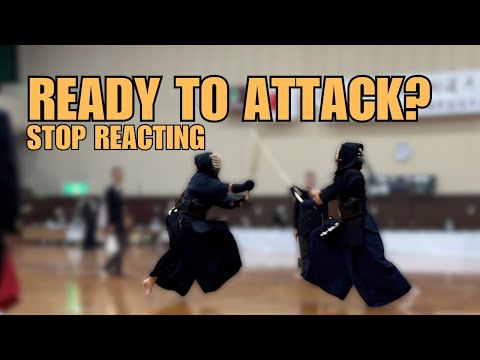
#kendo #剣道 #samurai When doing Oji waza in kendo many people become reactive and this is why they often get hit. Here …
Shikake Waza represents the offensive initiative in kendo, defined not as a specific technique but as a mindset and foundational skill for striking first. All three instructors—Kendo Tips (two videos) and Kendo Guide (Hiro)—align on the core principle: shikake waza requires the practitioner to create and maintain pressure on the opponent, forcing a reactive response that the striker can exploit. Kendo Tips emphasizes that pressure derives from intent projected through movement, body positioning, and mindset, with success depending on understanding opponent reactions (flinching, retreating, rushing) and recognizing corresponding openings (shinai tip elevation for kote, center abandonment for men, stepping back for do, raised hands for tsuki). Timing and distance control are essential; practitioners should anticipate openings rather than wait passively. Kendo Guide reinforces the foundational concept of deciding strike timing based on opponent proximity and movement—particularly when the opponent enters striking distance—and introduces the transition from shikake waza to counter-techniques like degashira men. Both sources stress that shikake waza mastery requires deliberate practice during kihon and jigeiko, focusing on what occurs before the strike itself: footwork, posture control, and smooth transitions from approach to execution without hesitation. Kendo Tips additionally identifies tame (composure and controlled breathing) as an advanced element that refines pressure application at higher levels. The three instructors agree that solid shikake waza practice is prerequisite for learning oji waza (defensive counter-techniques), as it teaches practitioners to read and anticipate opponent behavior.
Synthesized from 3 instructors
No instructional courses yet for this technique.
Sign in to suggest a course.
Risk of injury to the person this technique is applied to
Edged weapons cause fatal lacerations; historical battlefield mortality rates >30% (Amberger 1999)
Skill level needed to execute this technique reliably
Whether this technique is allowed under major competition rule sets
The Book of Five Rings (Miyamoto Musashi, 1645)
Alias sources — [1] Japanese Swordsmanship (Warner & Draeger, 1982) [2] Japanese Swordsmanship (Warner & Draeger, 1982) [3] Japanese Swordsmanship (Warner & Draeger, 1982)
Effectiveness sources — [1] All Japan Kendo Federation, Kendo Official Manual (AJKF) [2] Warner, G. & Draeger, D., Japanese Swordsmanship: Technique and Practice (Weatherhill, 1982)
Established Japanese martial arts naming convention — native Japanese term (和語/漢語)
Alias sources — [1] Japanese Swordsmanship (Warner & Draeger, 1982) [2] Japanese Swordsmanship (Warner & Draeger, 1982) [3] Japanese Swordsmanship (Warner & Draeger, 1982)
Effectiveness sources — [1] All Japan Kendo Federation, Kendo Official Manual (AJKF) [2] Warner, G. & Draeger, D., Japanese Swordsmanship: Technique and Practice (Weatherhill, 1982)
wrist control for edge alignment, grip endurance, footwork precision
quick wrists, strong forearms, good posture
forearm extensors/flexors, deltoids, core, calves
Shikake Waza is not just a technique like Kote or Men; it's a mindset and foundation centered on taking the initiative. According to Kendo Tips, it means being the first to create pressure so your opponent reacts, giving you the upper hand.
Focus on what happens before the strike itself rather than just the technique. Simple actions like slightly closing the distance or fixing your posture can keep your opponent on edge and set the tone for your technique, especially during kihon practice.
Kendo Tips emphasizes getting in the habit of giving pressure and committing to attacks—feel when your opponent's guard is about to drop, then execute. Learn from mistakes by noting why your pressure didn't work or if the timing was wrong.
Find the sweet spot in your kamae where your attack feels instant yet relaxed, with your back leg engaged and shinai ready. Prioritize a smooth transition from kamae into your technique rather than being the fastest.
According to Kendo Guide (Hiro), knowing when to strike is essential, especially for higher ranks. You must understand both distance and timing—waiting until your opponent comes close enough so you can actually reach their target.
Shikake Waza (initiating techniques) are the offensive tactics in kendō where the attacker creates an opening in the opponent's guard and strikes first, including debana-waza (striking as the opponent begins to move), harai-waza (sweeping the opponent's shinai aside and striking), and renzoku-waza (continuous combination attacks). Shikake waza require the practitioner to seize the initiative (sen) through pressure, feints, or timing to create opportunities.
Shikake waza concepts derive from classical kenjutsu principles of sen (initiative) and have been formalised within the AJKF's kendō pedagogy as one of two fundamental tactical categories alongside ōji-waza. The systematic classification of attacking techniques was standardised in modern kendō textbooks and grading criteria.
FIK Kendo: legal — Legal, valid strike requires correct form (datotsu-bu), spirit (kiai), and fo…
Danger rating 9/10. Extreme — edged weapons cause fatal lacerations; historical battlefield mortality rates >30% (Amberger 1999)
The standard setup chain: Ready Position → Distance Control → Execute Technique → Return to Guard.
Standard counters include: Guard Position — return to a defensive ready stance / Distance Management — control the measure to avoid being in range / Counter-Attack — strike during the opponent's recovery or between movements.
Common variants: Standard cut (primary cutting angle from the ready stance); Thrust (tsuki) (straight thrust targeting the throat, chest, or face); Rising cut (kiri-age) (upward diagonal cut from low to high); Diagonal cut (kesa-giri) (downward diagonal cut following the kimono line).
Shikake waza are the primary offensive techniques in kendo competition, with men-uchi and kote-uchi being the most commonly scored.
Top errors to watch for: Attacking without seme (pressure) — shikake waza fails without the preparatory pressure that breaks the opponent's guard / Using only direct attacks without combinations — harai, nidan (two-step), and renzoku (continuous) attacks add deception / Telegraphing the shikake technique — the attack must be sudden; preparation should be invisible / Not reading the opponent before attacking — shikake waza must target real openings, not assumed ones.
The Shikake Waza is also known as Initiative Technique, Offensive Waza, Attack Technique — Kendo.