Kendo Kihon Waza Keiko Ho (Kendo Kata 1-9)
0
Kendo Waza·Dejan Stjepic
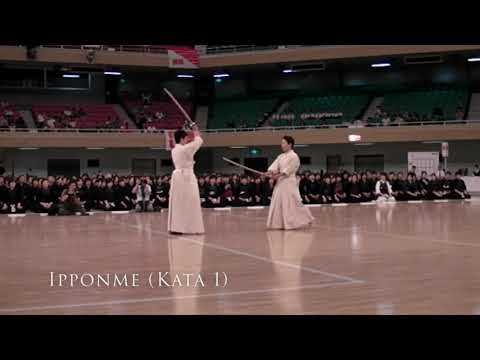
I have edited this video to help you practice the Kendo Kihon Waza Keiko Ho. . Contents: 0:00 ... 0:29 Ipponme (Kata 1) …
Translation: Kendo Techniques
The Kendō Waza subfamily covers the competitive techniques of kendō — the four valid target strikes (men, kote, dō, tsuki), the footwork that delivers them, and the tactical categories of shikake-waza (initiating techniques) and ōji-waza (counter techniques). [1] Each strike must satisfy the criteria of ki-ken-tai-ichi — the simultaneous expression of fighting spirit (kiai), correct blade contact (datotsu-bu), and body commitment (fumikomi) — to be awarded ippon by the referees. [1],[2] Kendō waza are trained through kihon drills, kata with bokutō, and applied in ji-geiko (free sparring), developing both technical skill and mental discipline. [2],[3]
The kendō waza system was standardised in the late nineteenth and early twentieth centuries as bōgu design was refined to safely receive strikes to the head, wrist, torso, and throat. [1] The Dai Nippon Butoku Kai and later the All Japan Kendo Federation codified the criteria for valid ippon, creating the modern competitive framework. [2],[3]
Kendo waza descended from kenjutsu (Japanese sword art) and were systematised when kendo was formalised as a modern budō discipline in the early 20th century by the Dai Nippon Butoku Kai. [1]
No images yet for this technique.
Sign in to suggest an image.
I have edited this video to help you practice the Kendo Kihon Waza Keiko Ho. . Contents: 0:00 ... 0:29 Ipponme (Kata 1) …
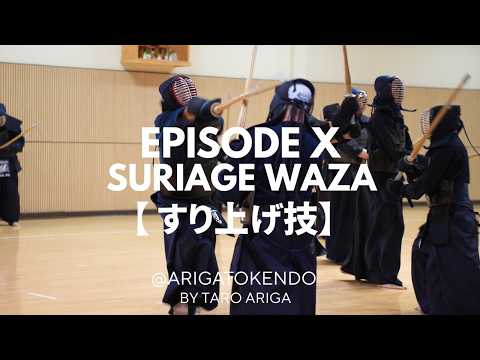
DO KENDO | ArigaToKendo | Episode X: Suriage Waza Explained (Kote Suriage Men, Men Suriage Men, Kote Suriage Kote) In t…
No instructional courses yet for this technique.
Sign in to suggest a course.
Risk of injury to the person this technique is applied to
Edged weapons cause fatal lacerations; historical battlefield mortality rates >30% (Amberger 1999)
Skill level needed to execute this technique reliably
Whether this technique is allowed under major competition rule sets
The Book of Five Rings (Miyamoto Musashi, 1645)
Alias sources — [1] Japanese Swordsmanship (Warner & Draeger, 1982) [2] Japanese Swordsmanship (Warner & Draeger, 1982) [3] Japanese Swordsmanship (Warner & Draeger, 1982)
Effectiveness sources — [1] Classical Budo (Draeger, 1973) [2] All Japan Kendo Federation guidelines
Established Japanese martial arts naming convention — native Japanese term (和語/漢語)
Alias sources — [1] Japanese Swordsmanship (Warner & Draeger, 1982) [2] Japanese Swordsmanship (Warner & Draeger, 1982) [3] Japanese Swordsmanship (Warner & Draeger, 1982)
Effectiveness sources — [1] Classical Budo (Draeger, 1973) [2] All Japan Kendo Federation guidelines
wrist control for edge alignment, grip endurance, footwork precision
quick wrists, strong forearms, good posture
forearm extensors/flexors, deltoids, core, calves
Every move, in any martial art, shares a few universal traits. Mix and match below to pinpoint the right tool — or compare equivalents across styles.
Ōji Waza (counter techniques) are defensive-offensive tactics in kendō where the defender responds to the opponent's attack with a parry, block, or evasion followed by an immediate counter-strike, including nuki-waza (avoiding and striking), suriage-waza (sliding parry and striking), and kaeshi-waza (block-and-return strike). [1] Ōji waza embody the principle of go-no-sen (seizing the initiative after the opponent moves), requiring superior timing, reading ability, and calm under pressure. [1,2] High-level kendō practitioners often favour ōji-waza because a successful counter demonstrates mastery of distance, timing, and composure. [2,3]
Shikake Waza (initiating techniques) are the offensive tactics in kendō where the attacker creates an opening in the opponent's guard and strikes first, including debana-waza (striking as the opponent begins to move), harai-waza (sweeping the opponent's shinai aside and striking), and renzoku-waza (continuous combination attacks). [1] Shikake waza require the practitioner to seize the initiative (sen) through pressure, feints, or timing to create opportunities. [1,2] Mastering shikake waza is essential for kendō competitors because proactive attack with correct form and spirit is the primary path to scoring ippon. [2,3]
Suriage waza involves blocking in front of you, then immediately striking in quick succession—often described as 'Pam-Pam' timing to ensure you can strike right away after the block.
Yes, suriage can be executed from the omotei (left) side as well as the standard position, giving you multiple angles of attack.
The Kendō Waza subfamily covers the competitive techniques of kendō — the four valid target strikes (men, kote, dō, tsuki), the footwork that delivers them, and the tactical categories of shikake-waza (initiating techniques) and ōji-waza (counter techniques). Each strike must satisfy the criteria of ki-ken-tai-ichi — the simultaneous expression of fighting spirit (kiai), correct blade contact (datotsu-bu), and body commitment (fumikomi) — to be awarded ippon by the referees.
The kendō waza system was standardised in the late nineteenth and early twentieth centuries as bōgu design was refined to safely receive strikes to the head, wrist, torso, and throat. The Dai Nippon Butoku Kai and later the All Japan Kendo Federation codified the criteria for valid ippon, creating the modern competitive framework.
FIK Kendo: legal — Legal, valid strike requires correct form (datotsu-bu), spirit (kiai), and fo…
Danger rating 9/10. Extreme — edged weapons cause fatal lacerations; historical battlefield mortality rates >30% (Amberger 1999)
The standard setup chain: Ready Position → Distance Control → Execute Technique → Return to Guard.
Standard counters include: Guard Position — return to a defensive ready stance / Distance Management — control the measure to avoid being in range / Counter-Attack — strike during the opponent's recovery or between movements.
Common variants: Standard cut (primary cutting angle from the ready stance); Thrust (tsuki) (straight thrust targeting the throat, chest, or face); Rising cut (kiri-age) (upward diagonal cut from low to high); Diagonal cut (kesa-giri) (downward diagonal cut following the kimono line).
Kendo competition is governed by the All Japan Kendo Federation (AJKF) and the International Kendo Federation (FIK). The World Kendo Championships have been held triennially since 1970, with Japan dominating the individual and team events.
Top errors to watch for: Training only shikake (attacking) without oji (counter) techniques — both categories are essential for complete kendo / Using waza without proper fundamentals — techniques must be built on correct cutting, footwork, and posture / Applying waza mechanically without reading the opponent — techniques must be adapted to the specific situation / Over-relying on one favourite technique — develop a repertoire of both shikake and oji waza.
The Kendo Waza is also known as Kendo Technique, Sword Technique, Waza.