A Variation of Breaking Alber and Ochs, a Dynamic Approach
0
Alber·NYHFA
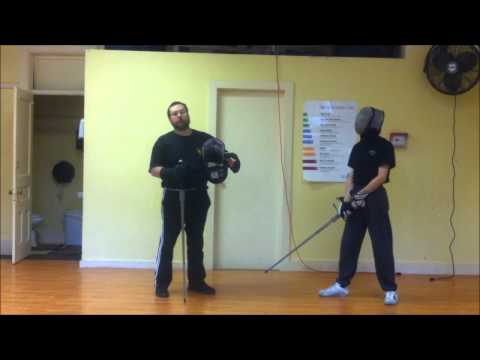
This approach sees Alber and Och as dynamic positions (transitions) rather than static guards and shows several possible…
Translation: alber (fool's guard)
Alber (the fool) is the low guard that positions the longsword with the point directed toward the ground in front of the fencer, arms extended downward. [1] Alber is considered a provocative or 'foolish' guard because it appears to leave the upper body completely open, inviting the opponent to attack — which is precisely its tactical purpose, as it sets up counter-cuts and Unterhau responses. [1],[2] Ringeck and von Danzig note that Alber is used to draw the opponent into over-committing to an attack. [2],[3]
Alber (Fool) positions the sword low with the point aimed at the ground, deliberately leaving the upper body apparently open to invite an attack. [1] It is a provocative guard designed to draw the opponent into an Oberhau or other descending cut, which can then be countered with an Unterhau, Absetzen (setting aside), or Zucken (pulling). [2] Despite its name suggesting foolishness, it is a sophisticated tactical position that baits overcommitment. [2]
Alber (fool) is a low guard in the Liechtenauer system, used in HEMA competition as an invitation to draw the opponent's attack. [1]
No images yet for this technique.
Sign in to suggest an image.
This approach sees Alber and Och as dynamic positions (transitions) rather than static guards and shows several possible…
TRAIN AT MY GYM: Union Martial Arts Academy - NW Calgary 102 - 345 Sage Valley Common NW Calgary, AB T3R 1T8 — CONNECT W…
TRAIN AT MY GYM: Union Martial Arts Academy - NW Calgary 102 - 345 Sage Valley Common NW Calgary, AB T3R 1T8 — CONNECT W…
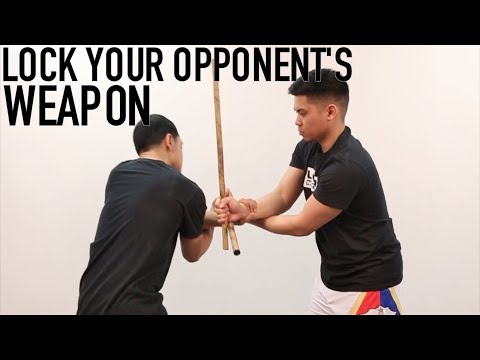
Alber is a fundamental guard position in Historical European Martial Arts (HEMA) longsword practice, characterized by an upright stance with the sword held high and the upper body exposed—a configuration that both NYHFA and conventional HEMA instruction recognize as requiring dynamic, rather than static, defensive understanding. NYHFA emphasizes that breaking Alber fails when approached as a stationary problem; instead, practitioners must recognize Alber as a transitional position within flowing exchanges. The group demonstrates that employing a Shidal How (an overhead cut that deviates from a standard Oberhau) prevents the attacker's blade from fully descending and freeing the defender's sword, allowing the attacker to remain positioned to counter the defender's expected response. NYHFA further notes that the same principles apply inversely: a defender in Alber can be broken most effectively when caught in transition, such as after a void, rather than while statically holding the guard. Mark Anastacio's contributions, though focused on Filipino Martial Arts stick work rather than HEMA longsword, address related principles of weapon control, footwork integration, and transitional positioning that reflect broader martial discipline. Both instructional approaches stress that guards must be understood within dynamic combat flow, where continuous movement and threat assessment determine tactical outcomes rather than isolated positional mechanics.
Synthesized from 3 instructors
No instructional courses yet for this technique.
Sign in to suggest a course.
Risk of injury to the person this technique is applied to
Edged weapons cause fatal lacerations; historical battlefield mortality rates >30% (Amberger 1999)
Skill level needed to execute this technique reliably
Whether this technique is allowed under major competition rule sets
The Art of Combat (Joachim Meyer, 1570)
Alias sources — [1] Sigmund Ringeck's Knightly Arts of Combat [2] Sigmund Ringeck's Knightly Arts of Combat [3] Sigmund Ringeck's Knightly Arts of Combat
Effectiveness sources — [1] Forgeng, J., The Art of Combat (Palgrave Macmillan, 2003) [2] Tobler, C., Fighting with the German Longsword (Freelance Academy Press, 2004)
Standard katakana transliteration of Western martial arts terminology (外来語) — used in Japanese MMA, boxing, and BJJ communities
Alias sources — [1] Sigmund Ringeck's Knightly Arts of Combat [2] Sigmund Ringeck's Knightly Arts of Combat [3] Sigmund Ringeck's Knightly Arts of Combat
Effectiveness sources — [1] Forgeng, J., The Art of Combat (Palgrave Macmillan, 2003) [2] Tobler, C., Fighting with the German Longsword (Freelance Academy Press, 2004)
wrist control for edge alignment, grip endurance, footwork precision
quick wrists, strong forearms, good posture
forearm extensors/flexors, deltoids, core, calves
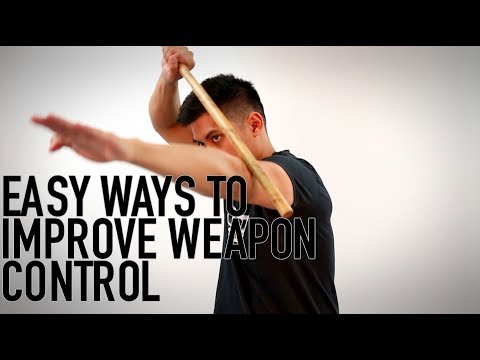
Mark Anastacio emphasizes that you want as little downtime as possible when switching from side to side—once you swing the weapon in, your receiving hand should be ready to grab it immediately to make the motion as smooth as possible.
Mark Anastacio stresses that the majority of the work should be done by the supporting hand or safety hand, not the live hand—the stick should ride the supporting hand over your head and around your neck.
The abuniko or fan strike drill teaches you the weight of your weapon and helps you analyze the amount of effort required to swing from one side to the other and transition from open to closed positions; adding power to the motion helps your body understand recovery effort.
Alber (the fool) is the low guard that positions the longsword with the point directed toward the ground in front of the fencer, arms extended downward. Alber is considered a provocative or 'foolish' guard because it appears to leave the upper body completely open, inviting the opponent to attack — which is precisely its tactical purpose, as it sets up counter-cuts and Unterhau responses.
Alber is one of the four principal guards of the Liechtenauer tradition, described in the glosses as a guard for the experienced fencer who can exploit the openings it creates in the opponent's approach. The name 'fool' reflects its deceptively vulnerable appearance.
Traditional martial arts: legal — Practiced in traditional kata/forms and weapon-specific competition under var…; IWUF: legal — Legal in wushu taolu if applicable; HEMA: legal — Legal in applicable historical weapon categories
Danger rating 9/10. Extreme — edged weapons cause fatal lacerations; historical battlefield mortality rates >30% (Amberger 1999)
The standard setup chain: Assume Guard (Kamae/Hut) → Measure Distance (Ma-ai) → Initiate Cut/Thrust → Follow Through (Zanshin).
Standard counters include: Parry (Absetzen) — deflect the incoming blade with a counter-displacement / Void (Step Back) — withdraw from measure to avoid the cutting arc / Counter-Cut (Nachreisen) — strike into the opponent's opening during their attack.
Common variants: Standard cut (primary cutting angle from the ready stance); Thrust (tsuki) (straight thrust targeting the throat, chest, or face); Rising cut (kiri-age) (upward diagonal cut from low to high); Diagonal cut (kesa-giri) (downward diagonal cut following the kimono line).
Alber (fool) is a low guard in the Liechtenauer system, used in HEMA competition as an invitation to draw the opponent's attack.
Top errors to watch for: Using Alber as a resting position — it is an active guard designed to provoke and counter / Not having a counter prepared when assuming Alber — the guard only works if the response to the expected attack is ready / Holding the sword too far from the body — the sword in Alber should be close enough to respond quickly / Staying in Alber against a patient opponent — if they don't attack, transition to a more aggressive guard.
The Alber is also known as Arubā, Fool Guard, Fool, Low Guard.