Introduction to Weapon Control Training
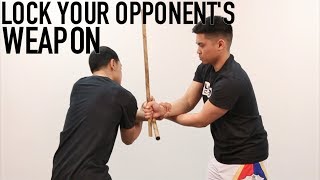
Weapon control is a fundamental skill in Filipino Martial Arts and weapon training generally. This instructional guide presents practical drills designed to enhance weapon proficiency through targeted exercises that complement regular practice.
Drill One: Cross-Body Inversion and Hand Transfer
The first drill involves holding the weapon across the body and executing a circular motion toward the chest, allowing the stick to invert and point back toward the opposite direction. The practitioner then transfers grip to the opposite hand with minimal transition time, emphasizing smooth, fluid hand-offs. This drill builds foundational control and coordination between both hands.
Drill Two: Behind-Back Rotation and Tabak-Toyo Position
Following the initial hand transfer, the practitioner rotates the stick behind the shoulder and establishes the tabak-toyo (nunchuk) grip with the opposite hand. This sequence—around, grab, behind, grab—builds weapon familiarity and shoulder mobility. The complete three-part motion should be performed with continuous flow and minimal hesitation between transitions.
Drill Three: Sumbrada and Roof Block Integration
The sumbrada motion is implemented by raising the weapon and executing a roof block as the stick travels across the tricep and elbow. The supporting hand, rather than the live hand, drives the motion over the head and around the neck. This technique emphasizes the role of the safety hand in controlling the weapon's arc and trajectory.
Drill Four: Basic Angle Progression with Footwork
Practitioners develop weapon familiarity by drilling basic angles in various patterns: X-formation, side-to-side, and reverse X. Once comfortable, footwork is gradually introduced while maintaining separation between upper and lower body movements. Drill variations include switching sides, taking a knee, and altering strike sequences to build adaptability.
Drill Five: Abuniko (Fan Strike) and Weight Recognition
The abuniko drill involves flicking the weapon side-to-side from multiple positions—front, closed, open, and overhead—with power and intention. This drill teaches the weapon's weight distribution and the physical effort required to transition between positions. Practitioners develop body awareness by understanding the effort necessary for recovery and directional changes.
Training Philosophy and Safe Practice
The most effective method for improving weapon skill remains consistent practice of established techniques under proper instruction. Practitioners should prioritize training with qualified partners in a safe, controlled environment while maintaining high training intensity. Regular, dedicated practice with fundamentals remains superior to isolated drills alone.
EASY DRILLS TO IMPROVE WEAPON CONTROL | TECHNIQUE TUESDAY
Key Takeaways
- •Introduction to Weapon Control Training
- •Drill One: Cross-Body Inversion and Hand Transfer
- •Drill Two: Behind-Back Rotation and Tabak-Toyo Position
- •Drill Three: Sumbrada and Roof Block Integration
TRAIN AT MY GYM: Union Martial Arts Academy - NW Calgary 102 - 345 Sage Valley Common NW Calgary, AB T3R 1T8 — CONNECT WITH ME: ➢ Instagram: https://www.instagram.com/mcanastacio ➢ Instagram: https://www.instagram.com/a8.mgmt ➢ For Business Inquiries: [email protected] ➢ HAYABUSA DISCOUNT CODE: MARK UNION MARTIAL ARTS: ➢ Instagram: https://www.instagram.com/unionmartialarts ➢ Instagram: https://www.instagram.com/anastaciokali ➢ Facebook: https://www.facebook.com/UnionMartialArts/ ➢ Calgary, AB: https://www.unionmartialartsyyc.com UNION UNIVERSITY: ONLINE TRAINING ➢ Instructionals: https://www.unionmartialartsyyc.com/university
Frequently Asked Questions
What does this video teach about alber?
This video covers introduction to weapon control training, drill one: cross-body inversion and hand transfer, drill two: behind-back rotation and tabak-toyo position. It provides detailed instruction from Mark Anastacio.
How long does it take to learn alber?
The basic mechanics can be understood in a single session, but developing reliable execution requires consistent drilling over weeks of practice. This 7-part breakdown helps structure your training by isolating each phase of the technique.
What are the key details for finishing alber?
The abuniko drill involves flicking the weapon side-to-side from multiple positions—front, closed, open, and overhead—with power and intention. This drill teaches the weapon's weight distribution and the physical effort required to transition between positions. Practitioners develop body awareness by understanding the effort necessary for recovery and directional changes.