Cut vs thrust in Military Sabre
0
Sabre Cut·Academy of Historical Fencing
Why do you not see much thrust work in military sabre fencing? This short lesson looks into why.
Translation: sabre cut
The Sabre Cut subfamily covers all cutting (slashing) attacks in sabre, where the fencer scores by striking the opponent's valid target area (above the waist) with the edge of the blade rather than the point. [1] Cutting attacks are the defining characteristic of sabre fencing — they make sabre the only Olympic fencing weapon where the edge scores, and they produce the explosive, sweeping attack actions that give sabre its distinctive visual character. [1],[2] Sabre cuts are classified by their target: head cut (to the top of the head), chest cut (to the torso), flank cut (to the side), and cheek cut (to the side of the mask), with each requiring different blade angles and arm mechanics. [2],[3]
Sabre cutting technique derives directly from military sabre and cavalry swordsmanship, where the primary attack was a cutting stroke from horseback. [1] The Italian and Hungarian sabre schools refined cutting technique for sport fencing, developing the precise, controlled cuts used in modern competition. [2],[3]
The competition sabre descended from military cavalry sabres, with the sporting version adapted for infantry officer training in the 19th century. [1]
No images yet for this technique.
Sign in to suggest an image.
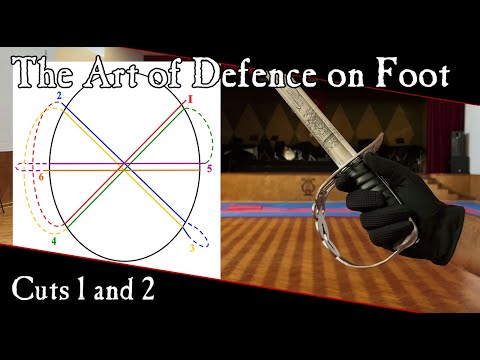
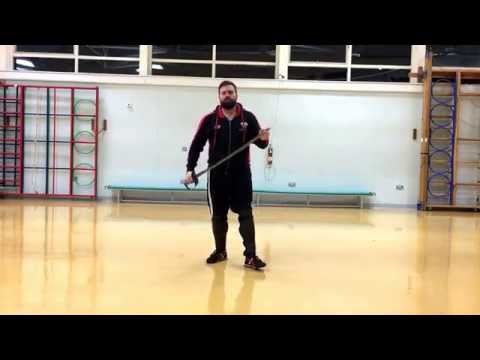
Why do you not see much thrust work in military sabre fencing? This short lesson looks into why.
Here's another video in our Roworth's "Art of Defence on Foot" series this time going over cuts 1 and 2. It should cover…
No instructional courses yet for this technique.
Sign in to suggest a course.
Risk of injury to the person this technique is applied to
Modern sport fencing uses blunted weapons and full protective gear; injury rate ~2.5 per 1000 exposures (Harmer 2008)
Skill level needed to execute this technique reliably
Whether this technique is allowed under major competition rule sets
The Art of Fencing (Luigi Barbasetti, 1932)
Alias sources — [1] FIE Rules of Competition [2] Classical Fencing (Rogers, 2014)
Effectiveness sources — [1] The Art and Science of Fencing (Evangelista, 1996) [2] FIE technical guidelines
Mixed Japanese-Western terminology — combines traditional Japanese terms with katakana loanwords
Alias sources — [1] FIE Rules of Competition [2] Classical Fencing (Rogers, 2014)
Effectiveness sources — [1] The Art and Science of Fencing (Evangelista, 1996) [2] FIE technical guidelines
explosive lunge speed, finger/wrist dexterity, cardiovascular endurance
long reach (tall, long arms), fast-twitch legs
quadriceps (lunge), calves, forearm/finger flexors, core
Every move, in any martial art, shares a few universal traits. Mix and match below to pinpoint the right tool — or compare equivalents across styles.
The Chest Cut delivers a horizontal or slightly diagonal cutting attack to the opponent's torso, typically targeting the chest area between the shoulders and waist. [1] The chest cut is executed by swinging the blade in a horizontal arc from outside to inside or inside to outside, making contact with the edge of the blade on the opponent's jacket-covered torso. [1,2] The chest cut is effective as a secondary attack option when the opponent defends the head, and it can be delivered from various angles to exploit openings in the opponent's parry positions. [2,3]
The Flank Cut delivers a cutting attack to the side of the opponent's torso, targeting the area below the arm on either the left or right flank. [1] The flank cut requires an upward or lateral blade trajectory to reach the side of the body, making it biomechanically different from the head and chest cuts which travel in downward or horizontal arcs. [1,2] The flank cut is one of the most difficult sabre attacks to defend because it targets a low area that requires the defender to drop their parry from the standard high guard position. [2,3]
The Head Cut delivers a vertical or near-vertical cutting attack to the top of the opponent's head (mask), which is the most commonly targeted area in sabre fencing. [1] The head cut is the fastest and most direct sabre attack because it travels the shortest distance from the en garde position to the target, following a direct downward path. [1,2] The head cut dominates sabre tactics as the primary attacking action — most sabre exchanges begin with one or both fencers launching a head cut, making it the foundational offensive technique around which all other sabre tactics revolve. [2,3]
From a martial perspective, cuts are favored because they can incapacitate or kill an opponent, whereas thrusts leave you vulnerable to dangerous after-blows if you miss. The Academy of Historical Fencing notes that the sabre's light weight and quick rotations make follow-up attacks particularly devastating, so cuts are a safer tactical choice.
Your grip and fingers need to be very supple and nimble to execute cuts effectively, especially when managing the tip's proximity to targets like the ear. Espada Negra emphasizes that maintaining this flexibility allows for smooth transitions between guard positions after each cut.
The Sabre Cut subfamily covers all cutting (slashing) attacks in sabre, where the fencer scores by striking the opponent's valid target area (above the waist) with the edge of the blade rather than the point. Cutting attacks are the defining characteristic of sabre fencing — they make sabre the only Olympic fencing weapon where the edge scores, and they produce the explosive, sweeping attack actions that give sabre its distinctive visual character.
Sabre cutting technique derives directly from military sabre and cavalry swordsmanship, where the primary attack was a cutting stroke from horseback. The Italian and Hungarian sabre schools refined cutting technique for sport fencing, developing the precise, controlled cuts used in modern competition.
FIE: legal — Legal fencing technique — governed by FIE rules for foil, épée, and sabre; HEMA: legal — Legal in historical fencing competition
Danger rating 2/10. Low — modern sport fencing uses blunted weapons and full protective gear; injury rate ~2.5 per 1000 exposures (Harmer 2008)
The standard setup chain: En Garde → Advance/Lunge Preparation → Attack → Recovery.
Standard counters include: Parry (Absetzen) — deflect the incoming blade with a counter-displacement / Void (Step Back) — withdraw from measure to avoid the cutting arc / Counter-Cut (Nachreisen) — strike into the opponent's opening during their attack.
Common variants: Simple attack (single blade action (disengage, beat, or direct) to score); Compound attack (multiple blade actions (feint then disengage) to create a…); Riposte (immediate counter after a successful parry); Counter-attack (attacking into the opponent's attack with priority or rig…).
Sabre has been an Olympic event since 1896. Hungarian fencers dominated early Olympic sabre, with Aladár Gerevich winning six consecutive Olympic golds (1932–1960).
Top errors to watch for: Using heavy, full-arm cuts — sport sabre cuts are light, fast wrist snaps / Cutting without arm extension — the arm must extend to establish right of way / Cutting at targets below the waist — the valid target is above the waist only / Using only one type of cut — develop head, chest, and flank cuts equally.
The Sabre Cut is also known as Sāburu Kiri, Coup de Sabre, Sabre Cutting Action.