In depth Judo Throw Tutorial: Drop Kata Guruma
0
Standard Kata Guruma·Jesse Butler
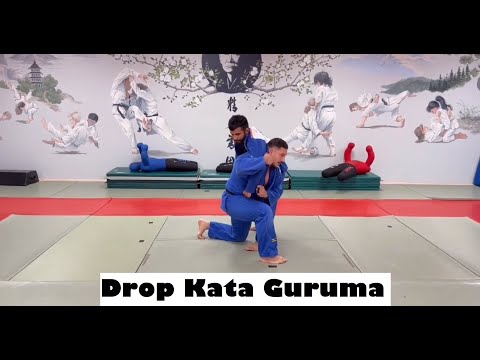
Here is my step by step guide on how to do a proper drop Kata Guruma for Judo. This is one of the harder throws, don't b…
Translation: shoulder wheel
Standard Kata Guruma executes the classical shoulder wheel where the thrower drops under the opponent, reaches between the legs with one arm and over the shoulder with the other, lifts the opponent across the shoulders, and rotates them over to the mat. [1] The lifting phase requires the thrower to generate significant upward force from a low position, elevating the opponent's entire body weight onto the shoulders. [1],[2] The wheeling action then rotates the opponent over the shoulder axis and drives them to the mat. [2],[3]
The standard form of kata guruma with the classical leg grip has been part of judo since the original gokyo, and it parallels the fireman's carry throw found in wrestling traditions worldwide. [1] In modern judo competition, the standard form is rarely seen due to leg-grab restrictions, though it remains part of the technical syllabus. [2],[3]
Kata guruma is one of the most powerful and dramatic throws in judo, lifting the opponent completely onto the thrower's shoulders before wheeling them to the mat, which almost always produces ippon when completed. [1] However, the technique requires significant strength and precise timing to execute the deep entry and lift, making it a high-risk, high-reward technique. [2]
Kata guruma was included in the original Kodokan gokyo no waza and is classified as a te-waza technique. [1] The technique parallels the fireman's carry throw found in wrestling traditions worldwide, suggesting independent development across multiple grappling cultures. [2] Under IJF rules adopted in 2010 banning leg grabs, the classical form of kata guruma with a leg grip was effectively prohibited in judo competition, though modified no-leg-grab versions persist. [3]
Before the 2010 IJF leg-grab ban, kata guruma was a frequently scored throw at World Championships and Olympic Games, particularly in the heavier weight categories. [1] The technique's restriction fundamentally changed modern judo competition, leading to the development of modified drop kata guruma variations that comply with current rules. [2]
No images yet for this technique.
Sign in to suggest an image.
Here is my step by step guide on how to do a proper drop Kata Guruma for Judo. This is one of the harder throws, don't b…
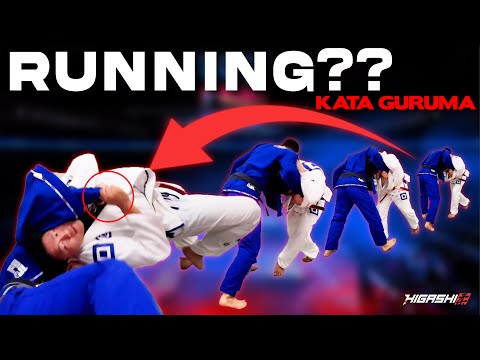
Learn two distinct concepts of Kata Guruma, including the dynamic Running Kata Guruma, and master these techniques to en…
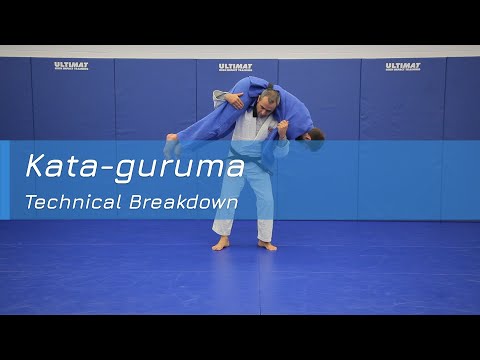
#efficientjudo #judo #judothrows Technical Breakdown from Kata-guruma, looking how to perform the classic technique, as …
Standard Kata Guruma is a shoulder throw executed by trapping the opponent's arm and torso against the thrower's head and shoulders, then rotating to flip them over. Efficient Judo emphasizes the classical structure: initiating with a lapel grip, pinning the opponent's arm between head and shoulder, achieving balance by tilting to break the opponent forward or onto their toes, and executing from standing or kneeling positions. Jesse Butler describes the throw as a judo-adapted fireman's carry modified post-2012 rule changes prohibiting leg grabs; he details the entry as a slide through with the forward leg, positioning the chest against the opponent's leg, wrapping the armpit around the neck, and critically tilting the elbow downward toward the mat for maximum leverage, followed by transitioning into a pin. Shintaro Higashi presents two dynamic concepts: the running Kata Guruma, where the thrower grabs the sleeve, ducks the head to the armpit, and drives backward before executing a barrel roll drop; and a variation using side-stepping and inside pressure for directional changes. All three instructors acknowledge IJF rule modifications eliminating leg contact, requiring alternative gripping strategies. They converge on the necessity of tight arm control, deep entry positioning, and proper weight distribution directly beneath the opponent's center of gravity. Higashi adds that understanding push-pull dynamics and feint patterns increases tactical effectiveness on the international circuit.
Synthesized from 3 instructors
No instructional courses yet for this technique.
Sign in to suggest a course.
Risk of injury to the person this technique is applied to
Seoi-Nage family; high amplitude with rotation over tori's shoulder (Kano 1986)
Skill level needed to execute this technique reliably
Whether this technique is allowed under major competition rule sets
Kodokan Judo — Official Nage-waza Classification
Traditional Judo throwing technique terminology (Kodokan Institute)
Official Kodokan ground technique classification system
Standard Japanese martial arts terminology (kanji/hiragana)
Established Japanese martial arts naming convention — native Japanese term (和語/漢語)
Traditional Judo throwing technique terminology (Kodokan Institute)
explosive turning speed, arm pulling power, deep level change
shorter stature for getting under the opponent, strong back
deltoids, trapezius, quadriceps, core
Trapping the hand prevents your opponent from basing (putting their hand down to defend), which removes a key defense and makes the throw more effective. Shintaro Higashi emphasizes that this grip denial is a foundational concept of the technique.
According to Jesse Butler, you want your chest pressed tightly against your opponent's leg to generate maximum leverage for the throw. Keep your grip tight, maintain good balance with a small step, and ensure you're sitting on their foot with one leg straight and one bent.
Jesse Butler explains that following up on top ensures you can transition into a pin and score a full point (ippon) rather than just a half point (wazari). This gives you the best possible advantage after the throw.
Efficient Judo teaches that your center of gravity must be positioned directly below your opponent's center of gravity while keeping the throw tight, which allows you to control and flip them effectively.
Standard Kata Guruma executes the classical shoulder wheel where the thrower drops under the opponent, reaches between the legs with one arm and over the shoulder with the other, lifts the opponent across the shoulders, and rotates them over to the mat. The lifting phase requires the thrower to generate significant upward force from a low position, elevating the opponent's entire body weight onto the shoulders.
The standard form of kata guruma with the classical leg grip has been part of judo since the original gokyo, and it parallels the fireman's carry throw found in wrestling traditions worldwide. In modern judo competition, the standard form is rarely seen due to leg-grab restrictions, though it remains part of the technical syllabus.
IJF: legal — Legal throwing technique; IBJJF: legal — Legal at all belt levels; UWW: legal — Legal in both freestyle and Greco-Roman; Unified MMA: legal — Legal throwing technique; ADCC: legal — Legal; FIAS Sport Sambo: legal — Legal; FIAS Combat Sambo: legal — Legal
Danger rating 6/10. High — Seoi-Nage family; high amplitude with rotation over tori's shoulder (Kano 1986)
The standard setup chain: Grip Setup (Kumi-kata) → Off-Balance (Kuzushi) → Entry (Tsukuri) → Execution (Kake).
Standard counters include: Lower Centre of Gravity — bend knees and drop hips to make the throw harder to execute / Grip Break — deny the thrower their preferred gripping configuration / Stiff-Arm — maintain distance with straight arms to prevent the entry.
Common variants: Morote seoi nage (two-handed shoulder throw with both hands gripping); Ippon seoi nage (one-arm shoulder throw loading the arm over the shoulder); Drop seoi nage (dropping to the knees for a lower entry point); Korean-style shoulder throw (modified entry with deeper level change).
Before the 2010 IJF leg-grab ban, kata guruma was a frequently scored throw at World Championships and Olympic Games, particularly in the heavier weight categories. The technique's restriction fundamentally changed modern judo competition, leading to the development of modified drop kata guruma variations that comply with current rules.
Top errors to watch for: Not ducking low enough — your head must pass under their armpit to get the loading position / Trying to lift before the opponent is fully on the shoulders — stand up only when they are loaded / Not pulling the opponent forward first — they must be leaning forward for the duck-under to work / Lifting with the back instead of the legs — this causes injuries and weak throws.
The Standard Kata Guruma is also known as Kata Guruma, Classical Shoulder Wheel, Standard Fireman's Carry, Kihon Kata Guruma.