Overview: Modified Fireman Carry for Judo
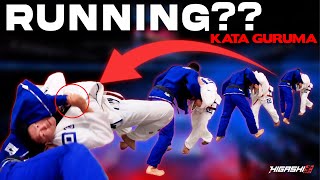
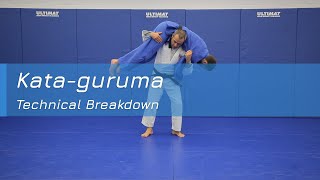
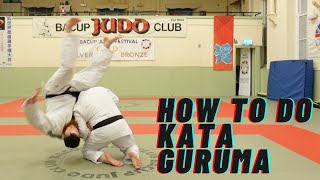
Kata Guruma is a judo adaptation of the traditional fireman carry, modified to comply with 2012 rule changes that prohibit touching the opponent's legs. This throw enables practitioners to execute a leg-based technique while maintaining legal contact points, making it an effective alternative for achieving back control and scoring opportunities.
Grip Setup and Positioning
The throw begins from a squared stance with two key grips: the right hand positioned on the outside of the opponent's arm near the armpit for leverage, and the left hand controlling the sleeve. This unorthodox grip configuration allows the practitioner to simultaneously break the opponent's lapel grip while maximizing throwing leverage.
Entry Mechanics: The Sliding Step
The throw initiates with a small preparatory step using the back foot, followed by a forward slide of the lead leg between the opponent's feet. The practitioner should sit their hips directly onto the opponent's foot while maintaining a straight lead leg and bent rear leg with active toes for driving power.
Body Positioning and Chest Contact
During the slide-through phase, the practitioner's chest should press firmly against the opponent's leg to generate maximum leverage for the throw. The bent rear leg provides a stable base while the straight lead leg maintains contact with the mat for balance and control throughout the technique.
Arm Wrap and Head Positioning
As the practitioner slides through, the opponent's arm wraps tightly around the head and neck, creating a secure frame for the throw. This arm positioning is critical—the grip must be snug enough to control the opponent's upper body while the practitioner drives upward with leg and hip power.
The Finishing Movement: Elbow Drive
The key finishing detail involves driving the right elbow toward the mat in a controlled arc, which dramatically increases leverage and forward rotation. This downward elbow motion, combined with the weight distribution through the chest and hips, creates the force necessary to complete the throw and place the opponent on their back.
Execution Variations and Timing
The throw can be executed with or without the preparatory step; the step provides additional balance for beginners, while experienced practitioners can perform the slide and throw in one continuous motion. Both variations follow the same fundamental mechanics of hip positioning, arm wrap, and elbow drive.
Competition Follow-Through and Pin Transition
To ensure maximum scoring in competition, the practitioner must immediately follow the opponent onto their back and transition into a pin rather than leaving them in a vulnerable position. Maintaining the tight arm grip while stepping up and over the opponent establishes top position necessary for a decisive ippon score.
In depth Judo Throw Tutorial: Drop Kata Guruma
Key Takeaways
- •Overview: Modified Fireman Carry for Judo
- •Grip Setup and Positioning
- •Entry Mechanics: The Sliding Step
- •Body Positioning and Chest Contact
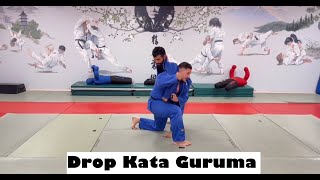
Here is my step by step guide on how to do a proper drop Kata Guruma for Judo. This is one of the harder throws, don't be intimidated if you can't get it first try. Please note that this throw was modified for competition since we can't touch the legs. Check me out: https://linktr.ee/jbutler.90
Related Techniques
Frequently Asked Questions
What does this video teach about standard kata guruma?
This video covers overview: modified fireman carry for judo, grip setup and positioning, entry mechanics: the sliding step. It provides detailed instruction from Jesse Butler.
How long does it take to learn standard kata guruma?
The basic mechanics can be understood in a single session, but developing reliable execution requires consistent drilling over weeks of practice. This 8-part breakdown helps structure your training by isolating each phase of the technique.
What are the key details for finishing standard kata guruma?
The throw can be executed with or without the preparatory step; the step provides additional balance for beginners, while experienced practitioners can perform the slide and throw in one continuous motion. Both variations follow the same fundamental mechanics of hip positioning, arm wrap, and elbow drive.