Strike & defenceLocksClose rangeFighting multiple people
Distance
CloseMiddleLong
Body target
Upper bodyMiddle bodyLower body
Overview
Standard Sasae Tsurikomi Ashi executes the classical propping foot block where the thrower places the sole against the opponent's advancing ankle, preventing the step from completing, while the tsurite lifts and the hikite pulls to rotate the opponent forward over the blocked foot. [1] The blocking foot does not sweep or reap but acts as a fulcrum around which the opponent is wheeled by the hand action. [1],[2] Timing is critical — the block must arrive before the opponent's weight settles on the advancing foot, catching them in a moment of committed forward motion. [2],[3]
The standard form of sasae tsurikomi ashi has been taught since the earliest days of Kodokan judo and remains a core technique in the beginner curriculum. [1] It is frequently used as an opening attack and as a combination setup in competition judo. [2],[3]
Sasae tsurikomi ashi is effective as both a direct scoring technique and as a setup for combination attacks, since the blocking foot action forces the opponent to change direction and creates openings for follow-up throws. [1] Its propping mechanic makes it one of the safest ashi-waza to attempt, as the thrower maintains balance throughout. [2]
Lineage
Sasae tsurikomi ashi was included in the original 1895 Kodokan gokyo no waza as a first-set technique. [1] It is demonstrated in the Nage no Kata as a fundamental ashi-waza. [2]
Competition Record
The standard sasae tsurikomi ashi is a regular technique in IJF competition. [1]
Images
No images yet for this technique.
Sign in to suggest an image.
Biomechanical Mechanism
Primary Action — Pulling and lifting with the arms to load the opponent over the shoulder or upper back
Joints Involved — Attacker's shoulders (loading point), elbows (pulling action), hips (turning under the opponent)
Force Vector — Forward and downward rotation — the pulling arm creates circular momentum while the body turns underneath
Kuzushi (Off-balancing) — Forward — breaking the opponent's balance forward over their toes allows the turning entry
Position & Entry
From judo grip — Use push-pull timing (kuzushi) to catch the opponent as they step, sweep the support foot in the direction of their movement
From clinch (collar tie) — Push or pull to make the opponent step, sweep the stepping foot at the exact moment it lifts off the mat
Variants
Forward sweep — sweeping the foot in the direction the opponent is stepping
Rear sweep — sweeping the foot backward as the opponent retreats
Combination sweep — chaining sweeps to both feet
Counter sweep — timing the sweep as the opponent initiates their own attack
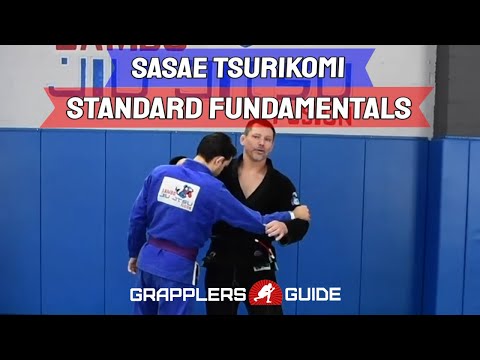
Sasae Tsurikomi Course - Standard Fundamentals by Vladislav Koulikov
0
Standard Sasae Tsurikomi Ashi·The Grapplers Guide by Jason Scully
The Grapplers Guide is the longest running and most recommended premium BJJ and grappling learning site ever created. L…
1 / 2
3 videos
What Instructors Say
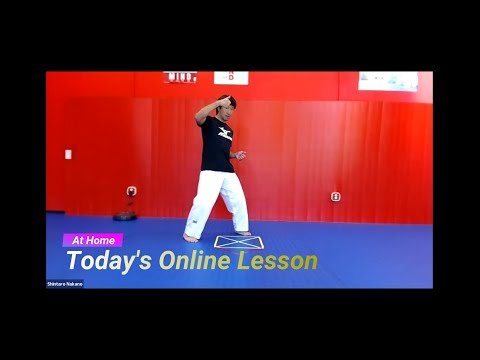
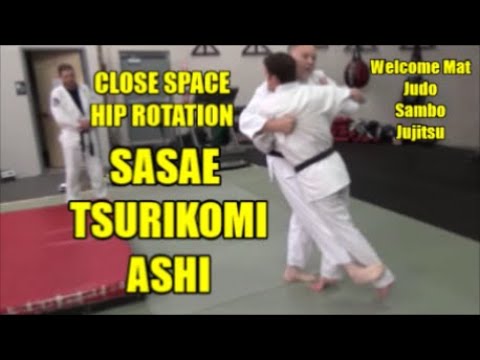
Sasae tsurikomi ashi is a foot-leg throwing technique that combines hand pulling with leg placement and hip rotation. All three instructors—Shintaro Nakano, welcomematstevescott, and Jason Scully (via Vladislav Koulikov)—emphasize that despite being classified as a foot technique, hand action is essential to complete the throw. Nakano stresses the importance of footwork positioning: stepping to the side with toes facing the opponent to enable body rotation, placing the right foot below the opponent's knee, and using a pulling hand motion that travels diagonally upward to break balance. The finishing motion involves hip rotation described as "turning the wheel," with the thrower pushing the opponent's elbow upward while rotating the torso. Welcomematstevescott highlights a variant using close body space and tight hip rotation, where the foot "blocks" or "props" the ankle as a final action after pulling the opponent into the thrower's hip. Scully's instruction reinforces the core mechanics: stepping into the opponent's body, applying an upward hand pull ("upper cuff-like action"), and blocking the opponent's recovery leg with the foot sole. All three agree on the fundamental sequence: break balance through hand action, step into position, place the foot to stop the opponent's recovery, and complete the throw with strong hip rotation and body torque.
Synthesized from 3 instructors
Shintaro Nakano — Sasae tsurikomi ashi 1/2 | Online Judo Lesson You Can Do At Home Alone!: Detailed foot placement (below the knee), footwork mechanics (side step with toes facing opponent), hand pulling technique (diagonal upward pull), and hip rotation finish ("turning the wheel"). Described both sweeping and dropping variants.
welcomematstevescott — CLOSE SPACE HIP ROTATION SASAE TSURIKOMI ASHI: Emphasized tight body space positioning, close-range grip technique (sideways grip around deltoid), and the importance of pulling the opponent into the thrower's hip. Highlighted foot action as a blocking/propping motion rather than a sweep, with strong hip rotation as the primary power source.
The Grapplers Guide by Jason Scully — Sasae Tsurikomi Course - Standard Fundamentals by Vladislav Koulikov: Explained the standard classical execution including stepping deep into the opponent's body, applying upward hand action ("upper cuff-like action"), blocking the fourth corner of the foot to stop the recovery leg, and maintaining connected posture through the finish. Noted applicability across multiple grappling styles.
Learn This Technique
No instructional courses yet for this technique.
Sign in to suggest a course.
Ratings
Danger Rating
Risk of injury to the person this technique is applied to
4
Moderate4/10
Foot sweeps use timing over force; lower impact but head strike risk remains
Difficulty
Skill level needed to execute this technique reliably
Advanced
Competition Legality
Whether this technique is allowed under major competition rule sets
✓Push the opponent slightly backward to create a forward reaction, then as they step forward, place the sole of your foot against their advancing ankle
✓Pull the opponent forward and upward with both hands while the foot blocks the ankle — they tip over the obstruction
✓The blocking foot is placed on the outside of the opponent's ankle with the sole pressed firmly
✓Drive your hands in a circular arc — up and over the blocking foot — to rotate the opponent
✓The throw relies on the opponent's own forward momentum combined with your pull — minimal strength is needed when timed correctly
✓Practise at walking pace first, gradually increasing speed as the timing develops
Common Mistakes
!Placing the foot too early, before the opponent steps, which warns them and allows adjustment
!Placing the foot too late, after weight has transferred — the block fails against a weighted leg
!Not pressing the sole firmly enough — the foot slides off the ankle
!Pulling downward instead of forward-and-up — the kuzushi must carry the opponent over the block, not pull them to the ground
!Using the instep instead of the sole, which provides less blocking surface
!Leaving the blocking foot on the ground instead of lifting it to the ankle — it must be placed, not left there
!Not continuing the throw through to completion — the hands must guide the opponent all the way to the mat
Standard Japanese martial arts terminology (kanji/hiragana)
4OtherJapanese Martial Arts Standard Terminology (武道用語)
Established Japanese martial arts naming convention — native Japanese term (和語/漢語)
5CitationKodokan Judo — Official Nage-waza Classification
Traditional Judo throwing technique terminology (Kodokan Institute)
Community
Athletics
Requires
precise timing, ankle coordination, upper body kuzushi ability
Favours
excellent balance and quick reflexes
Key muscles
tibialis anterior, calves, hip rotators, forearms (grip)
Frequently Asked Questions
How close should I be to my opponent when setting up sasae tsurikomi ashi?
You need to stay very close to your opponent with minimal space between your hip and theirs. Steve Scott emphasizes that there's 'not much space' in the starting position—it's a 'very short, compact grip type situation' where you pull your opponent directly into your hip before executing the technique.
What's the sequence of movements in the standard sasae tsurikomi ashi?
Pull your opponent up with your hands to lift them off balance, then step around with strong hip rotation, and the foot prop is the last action in the movement. Vladislav Koulikov's breakdown via The Grapplers Guide emphasizes: pull, jack up, and step with the opposite leg.
How should my body position be at the finish of the technique?
You want to end chest to chest with your opponent using complete hip and upper body rotation. Steve Scott stresses that you should rotate your whole body together rather than twisting back, maintaining strong torque throughout the finish.
Should I pull my opponent before stepping?
Yes. Shintaro Nakano advises to 'pull up for the first step' with your hand to get them off balance before executing the leg technique.
How does the Standard Sasae Tsurikomi Ashi work?
Standard Sasae Tsurikomi Ashi executes the classical propping foot block where the thrower places the sole against the opponent's advancing ankle, preventing the step from completing, while the tsurite lifts and the hikite pulls to rotate the opponent forward over the blocked foot. The blocking foot does not sweep or reap but acts as a fulcrum around which the opponent is wheeled by the hand action.
Where does the Standard Sasae Tsurikomi Ashi come from?
The standard form of sasae tsurikomi ashi has been taught since the earliest days of Kodokan judo and remains a core technique in the beginner curriculum. It is frequently used as an opening attack and as a combination setup in competition judo.
Is the Standard Sasae Tsurikomi Ashi legal in competition?
IJF: legal — Legal throwing technique; IBJJF: legal — Legal at all belt levels; UWW: restricted — Legal in freestyle, banned in Greco-Roman (no leg attacks below waist); Unified MMA: legal — Legal throwing technique; ADCC: legal — Legal; FIAS Sport Sambo: legal — Legal; FIAS Combat Sambo: legal — Legal
How dangerous is the Standard Sasae Tsurikomi Ashi?
Danger rating 4/10. Moderate — foot sweeps use timing over force; lower impact but head strike risk remains
How do I set up the Standard Sasae Tsurikomi Ashi?
The standard setup chain: Grip Setup (Kumi-kata) → Off-Balance (Kuzushi) → Entry (Tsukuri) → Execution (Kake).
How do I defend against the Standard Sasae Tsurikomi Ashi?
Standard counters include: Lower Centre of Gravity — bend knees and drop hips to make the throw harder to execute / Lift the Targeted Leg — raise the foot being attacked above the sweeping action / Counter-Throw — exploit the attacker's committed weight to throw them instead / Grip Break — deny the thrower their preferred gripping configuration.
What are the variants of the Standard Sasae Tsurikomi Ashi?
Common variants: Forward sweep (sweeping the foot in the direction the opponent is stepping); Rear sweep (sweeping the foot backward as the opponent retreats); Combination sweep (chaining sweeps to both feet); Counter sweep (timing the sweep as the opponent initiates their own attack).
How effective is the Standard Sasae Tsurikomi Ashi in competition?
The standard sasae tsurikomi ashi is a regular technique in IJF competition.
What are common mistakes when doing the Standard Sasae Tsurikomi Ashi?
Top errors to watch for: Placing the foot too early, before the opponent steps, which warns them and allows adjustment / Placing the foot too late, after weight has transferred — the block fails against a weighted leg / Not pressing the sole firmly enough — the foot slides off the ankle / Pulling downward instead of forward-and-up — the kuzushi must carry the opponent over the block, not pull them to the….
What are other names for the Standard Sasae Tsurikomi Ashi?
The Standard Sasae Tsurikomi Ashi is also known as Sasae Tsurikomi Ashi, Classical Propping Drawing Ankle, Standard Ankle Block Throw.