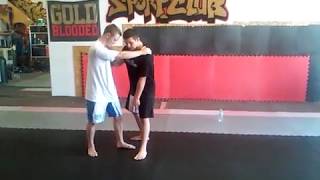
Introduction to Sasae Tsurikomi Ashi Fundamentals
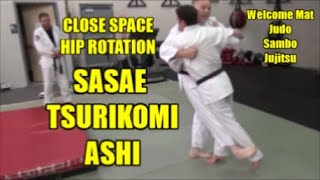
The instructor establishes that this foundational instruction focuses on classical execution principles rather than stylistic variations. Understanding core mechanics and power sources enables practitioners to adapt the technique across different contexts while maintaining identical throwing mechanics.
Grip and Stance Positioning
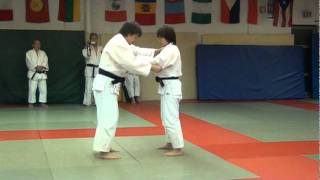
The standard grip follows conventional judo posture with the collar and sleeve. The instructor can position the blocking foot either between the opponent's legs or on the outer side, with both approaches equally valid depending on individual preference.
Entry and Torque Generation
As the instructor steps into the opponent's body, significant rotational power is generated through torque. This stepping motion creates substantially greater force than a stationary position, establishing the kinetic foundation for the throw.
Upper Body Mechanics: Pulling and Lifting
The left hand executes a pulling action while the right hand applies an upward cuff-like motion, transferring the opponent's weight onto their toes. The right hand lifts through either a straight vertical path or wrist rotation, depending on positioning and mechanics.
Foot Placement and Blocking Technique
Rather than executing a sweeping motion from the outside, the instructor blocks the opponent's forward corner using the sole of the foot. The sole directly contacts and stops the opponent's advancing step, preventing their recovery balance.
Body Alignment and Posture Control
The instructor maintains aligned shoulders and hips while keeping the torso separated from the opponent's body, creating an angular letter-like position. This structural alignment optimizes leverage and control throughout the technique.
Completion and Follow-Through
The instructor rotates backward over the shoulder while maintaining connected gripping throughout the throw. Rather than releasing grip completely, the instructor preserves connection for potential follow-up techniques or ground transitions.
Foot Position and Cross-Discipline Application
While pointing the toes extends the foot's reach when catching opponents in barefoot judo contexts, this becomes irrelevant in wrestling styles such as freestyle, sambo, and Mongolian wrestling where athletes wear shoes. Practitioners should adapt foot positioning based on their specific sporting context.
Sasae Tsurikomi Course - Standard Fundamentals by Vladislav Koulikov
Key Takeaways
- •Introduction to Sasae Tsurikomi Ashi Fundamentals
- •Grip and Stance Positioning
- •Entry and Torque Generation
- •Upper Body Mechanics: Pulling and Lifting
The Grapplers Guide is the longest running and most recommended premium BJJ and grappling learning site ever created. Learn first hand from top BJJ experts and submission grapplers in the world! We have thousands of members from over 102 countries and growing. Here is list of just SOME of the experts you get access to who have shared over 7,000 video with the Grapplers Guide community! Get your lifetime membership - https://grapplersguide.com Grapplers Guide Instagram: https://www.instagram.com/the_grapplers_guide/ Grapplers Guide FB Group: https://www.facebook.com/groups/grapplersguidemembers Craig Jones Michelle Nicolini Lachlan Giles Mikey Musumeci Josh Hinger Vladislav Koulikov Jonathan Thomas Reilly Bodycomb Andris Brunovskis Jason Scully Jared Weiner Michael Perez Dan Covel Aaron Milam Travis Stevens Shintaro Higashi Wilson Reis Emily Kwok JM Holland Zach Maslany Trenton Cooke Isaac Doederlien Michael Liera Jr. Alex Ecklin And More! Join for life now at https://grapplersguide.com
Frequently Asked Questions
What does this video teach about standard sasae tsurikomi ashi?
This video covers introduction to sasae tsurikomi ashi fundamentals, grip and stance positioning, entry and torque generation. It provides detailed instruction from The Grapplers Guide by Jason Scully.
How long does it take to learn standard sasae tsurikomi ashi?
The basic mechanics can be understood in a single session, but developing reliable execution requires consistent drilling over weeks of practice. This 8-part breakdown helps structure your training by isolating each phase of the technique.
What are the key details for finishing standard sasae tsurikomi ashi?
The instructor rotates backward over the shoulder while maintaining connected gripping throughout the throw. Rather than releasing grip completely, the instructor preserves connection for potential follow-up techniques or ground transitions.