Strike & defenceLocksClose rangeFighting multiple people
Distance
CloseMiddleLong
Body target
Upper bodyMiddle bodyLower body
Overview
The Standard Kani Basami executes the fundamental crab scissors where the attacker drops to the mat beside the opponent, extends one leg behind the opponent's ankles and the other in front of the opponent's knees, and scissors the legs together to sweep the opponent sideways to the ground. [1] The attacker typically enters by stepping to one side of the opponent, then dropping and swinging the legs into the scissor position in a single explosive motion. [1],[2] The simultaneous opposing forces — one leg pushing forward at knee level and the other pulling backward at ankle level — create a rotational force that topples the opponent laterally. [2] Execution requires commitment and precise leg placement to avoid injury to both the attacker and the opponent. [2],[3]
Also known as
Standard Crab Scissors[1]Kani Basami Takedown[2]Leg Scissors Takedown[3]
The standard kani basami was practised in judo competition until its IJF ban in 1980, and it remains one of the most dramatic takedown techniques in grappling. [1] Sambo competitors and no-gi grapplers continue to train and compete with this technique where rulesets permit. [2],[3]
Country of origin· shown in random order
🇯🇵Japan蟹挟(Kani Basami)Judo, Brazilian Jiu-Jitsu
🇷🇺RussiaSambo
🇧🇷BrazilMMA, Brazilian Jiu-Jitsu
🇺🇸USAMMA
🇨🇳China— Japanese name read in ChineseShuai Jiao
Effectiveness
Kani basami is a spectacular but high-risk technique that can produce clean takedowns due to the scissoring action that attacks both legs simultaneously. [1] However, the technique was banned in IJF judo competition in 1980 due to the risk of serious knee injuries to the opponent when the scissoring legs strike the knee joint. [1] Where legal (sambo, some no-gi rulesets), kani basami remains effective as an unorthodox attack that opponents rarely train to defend. [2]
Lineage
Kani basami is a traditional Kodokan judo technique, classified in the Shinmeisho no Waza (newly accepted techniques) in 1982 despite its earlier competition ban. [1] The technique has historical roots in classical jujutsu. [1] It is preserved in sambo competition and was notably used in submission grappling by Imanari Masakazu, whose flying scissor entries (Imanari roll) influenced modern leg lock systems. [2]
Competition Record
Kani basami was banned from IJF judo competition in 1980 after several serious knee injuries. [1] In sambo, the technique remains legal and is used at World Championship level. [2] In MMA, variations of the scissor takedown have been used by fighters such as Rousimar Palhares and Imanari Masakazu to enter leg lock positions. [3]
Images
No images yet for this technique.
Sign in to suggest an image.
Biomechanical Mechanism
Primary Action — Penetrating step and level change to attack the opponent's legs — disrupting their base of support
Joints Involved — Attacker's knees and hips (level change), opponent's knee or ankle (controlled point)
Force Vector — Forward and downward — closing distance and driving through the opponent's lower body
Takedown Mechanic — Removing one or both legs from the opponent's base forces them to fall or be driven to the mat
Position & Entry
From clinch range — Establish upper body control (collar tie, underhook, or body lock), obstruct the support leg with a trip or sweep, and drive the opponent to the mat
From grip fighting — Use push-pull action to shift the opponent's weight, then attack the loaded leg with the trip
Variants
Standard trip — blocking or sweeping the support leg while driving the upper body
Combination trip — chaining an inside trip with an outside trip when the opponent adjusts
Counter trip — using the trip as a counter when the opponent attacks
Clinch trip — executing the trip from a tight clinch position
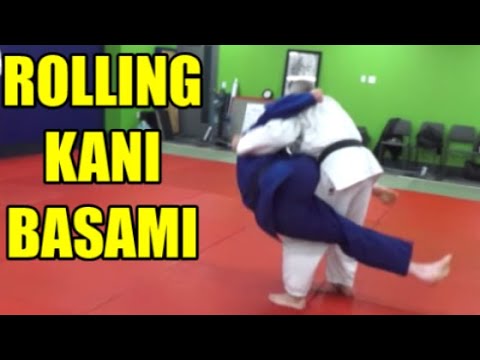
ROLLING KANI BASAMI Sambo's Approach to the Crab Scissors Throw
0
Standard Kani Basami·welcomematstevescott
Here's one of the ways we do the scissors throw in sambo. The focus here is to get points for the throw, but just as imp…
1 / 2
3 videos
What Instructors Say
Standard kani basami is a scissor-based takedown executed by inserting one leg as a hook behind the opponent's knee while simultaneously placing the second leg behind that same leg, then rolling backward to drive the opponent to the ground. Shintaro Higashi emphasizes a safe entry initiated from a cross-grip position with an underhook baiting, where the attacking leg is placed with the shoelaces hooked behind the knee and hamstring before the hand plants on the mat to unweight the body, allowing the second leg to land safely behind the opponent's knee. Nick Ortiz Jiu Jitsu stresses proper hand placement on the mat as essential to distributing weight away from the opponent's knee joint, contrasting this with the common error of jumping directly onto the leg with full body weight, and advocates for rolling over the shoulder while maintaining upward gaze to prevent head spiking. Welcome Mat Steve Scott frames kani basami through a sambo-influenced rolling approach rather than the judo chop style, emphasizing rounded, controlled scissoring motion over linear striking action, and highlights the importance of clamping the back heel against the upper thigh for control before rolling. All three instructors agree that proper hand placement and controlled rolling mechanics are critical safety measures, and that leg lock or ankle lock transitions typically follow the takedown. The technique is noted as banned in competitive judo due to injury history, though safe execution through these methods mitigates risk.
Synthesized from 3 instructors
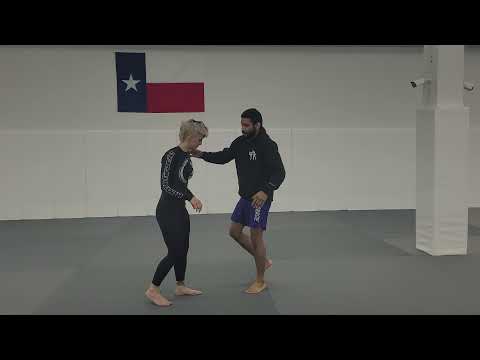
Shintaro Higashi — Kani basami: Detailed setup from cross-grip and underhook baiting; introduced the safe execution method of proactive leg hook placement with hand stabilization before secondary leg insertion; demonstrated knee bar finish from mounted leg position.
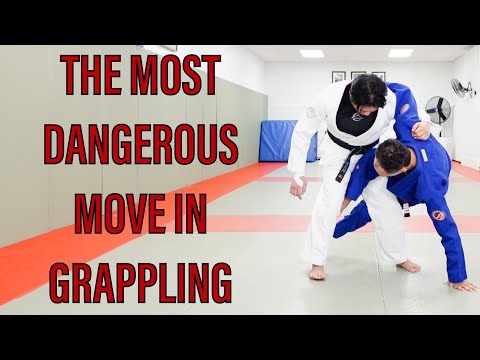
Nick Ortiz Jiu Jitsu — Nick Ortiz teaching an alternative to the Kani Basami (rolling into the legs from single leg defense): Identified the critical error of jumping directly to the leg without proper hand placement; emphasized hand-to-mat contact as mechanism for unweighting the attacking leg; stressed upward gaze during rolling to prevent head injuries; presented entry from single-leg defensive position.
Welcome Mat Steve Scott — ROLLING KANI BASAMI - Sambo's Approach to the Crab Scissors Throw: Contrasted sambo rolling approach with judo chopping style; emphasized staying round during execution to prevent linear impact injuries; detailed back-of-heel clamping against opponent's thigh; stressed proper grip around deltoid/shoulder for control before entry.
Learn This Technique
No instructional courses yet for this technique.
Sign in to suggest a course.
Ratings
Danger Rating
Risk of injury to the person this technique is applied to
10
Extreme10/10
Broke Yasuhiro Yamashita's fibula at 1980 All Japan Championships. Scissoring action fractures bones and tears ligaments instantaneously with no opportunity to tap. Banned from judo, IBJJF, and ADCC. [1,2,3]
Difficulty
Skill level needed to execute this technique reliably
Advanced
Competition Legality
Whether this technique is allowed under major competition rule sets
Illegal
IBJJF— Banned at all belt levels, all ages, gi and no-gi — Item ...
Standard Japanese martial arts terminology (kanji/hiragana)
4OtherJapanese Martial Arts Standard Terminology (武道用語)
Established Japanese martial arts naming convention — native Japanese term (和語/漢語)
5CitationKodokan Judo — Official Nage-waza Classification
Traditional Judo throwing/takedown terminology (Kodokan Institute)
Community
Athletics
Requires
timing, balance, upper body control for push-pull
Favours
good coordination and sense of opponent's weight distribution
Key muscles
core stabilisers, hip adductors/abductors, calves
Frequently Asked Questions
What's the most common mistake people make when attempting the Kani Basami?
According to Nick Ortiz, most people tend to jump to the leg without properly placing their hand on the mat to unweight their back leg, which can lead to injury. Instead of jumping, you should roll into the move smoothly.
How should I execute the rolling motion safely to avoid spiking my head?
Nick Ortiz emphasizes that you should maintain confidence and look up towards the ceiling as you roll, never looking down at the mat. Roll over your shoulder with your gaze directed upward to prevent accidentally spiking your head.
What's the difference between a safe and unsafe approach to the Kani Basami?
Welcome Mat Steve Scott notes that using a Sambo approach—staying round and wrapping to roll smoothly—is safer than a Judo approach. The key is to stay round and wrap rather than chop, as chopping is where injuries typically occur.
When attacking from a single leg, where should my hands be positioned?
Nick Ortiz teaches that you should take your top hand up towards your opponent's lap while controlling both ends of their torso with your hands—one hand controlling one lat and the other hand controlling the opposite hand.
How does the Standard Kani Basami work?
The Standard Kani Basami executes the fundamental crab scissors where the attacker drops to the mat beside the opponent, extends one leg behind the opponent's ankles and the other in front of the opponent's knees, and scissors the legs together to sweep the opponent sideways to the ground. The attacker typically enters by stepping to one side of the opponent, then dropping and swinging the legs into the scissor position in a single explosive motion.
Where does the Standard Kani Basami come from?
The standard kani basami was practised in judo competition until its IJF ban in 1980, and it remains one of the most dramatic takedown techniques in grappling. Sambo competitors and no-gi grapplers continue to train and compete with this technique where rulesets permit.
Is the Standard Kani Basami legal in competition?
IBJJF: Banned at all belt levels, all ages, gi and no: banned — gi — Item #23 in Technical Fouls table; IJF: Banned since 1980: banned — classified as Kinshi Waza (prohibited technique) after Yasuhiro Yamashita's f…; UWW: Banned in all freestyle and Greco: banned — Roman competition — scissors of anything other than one leg or arm is prohibited; ADCC: Banned in all Open divisions except adult advanced: banned — due to extreme knee injury risk; Unified MMA: Legal but rarely used due to extreme injury risk {src:Unified Rules of MMA, August 2025|/sources/Unified: legal — MMA-Rules-August-2025.pdf}; FIAS Sport Sambo: Legal: legal — all takedowns permitted under FIAS rules; FIAS Combat Sambo: Legal: legal — all takedowns permitted, strikes also allowed; NCAA Folkstyle: Legal on single leg, awarded 2 points: legal — figure four or scissors of anything other than one leg or arm is prohibited
How dangerous is the Standard Kani Basami?
Danger rating 10/10. Extreme — broke Yasuhiro Yamashita's fibula at 1980 All Japan Championships. Scissoring action fractures bones and tears ligaments instantaneously with no opportunity to tap. Banned from judo, IBJJF, and ADCC.
How do I set up the Standard Kani Basami?
The standard setup chain: Establish Contact → Create Off-Balance → Execute the Takedown → Follow to Ground.
How do I defend against the Standard Kani Basami?
Standard counters include: Sprawl — drop hips back and drive weight down to stuff the takedown attempt / Underhook — establish inside position to control distance and prevent the takedown entry / Post and Circle — post on the attacker's head and circle away to break their angle / Level Change Defence — recognize the shot early and react with appropriate hip defence.
What are the variants of the Standard Kani Basami?
Common variants: Standard trip (blocking or sweeping the support leg while driving the up…); Combination trip (chaining an inside trip with an outside trip when the opp…); Counter trip (using the trip as a counter when the opponent attacks); Clinch trip (executing the trip from a tight clinch position).
How effective is the Standard Kani Basami in competition?
Kani basami was banned from IJF judo competition in 1980 after several serious knee injuries. In sambo, the technique remains legal and is used at World Championship level.
What are common mistakes when doing the Standard Kani Basami?
Top errors to watch for: Dropping in front of the opponent, putting yourself directly under them as they fall / Legs not at the correct heights: back leg should be behind ankles, front leg should be at knee level / Releasing the upper body grip during the drop, losing all control of where they fall / Scissoring too slowly, giving the opponent time to jump over or step out.
What are other names for the Standard Kani Basami?
The Standard Kani Basami is also known as Kani Basami, Standard Crab Scissors, Kani Basami Takedown, Leg Scissors Takedown.