Strike & defenceLocksClose rangeFighting multiple people
Distance
CloseMiddleLong
Body target
Upper bodyMiddle bodyLower body
Overview
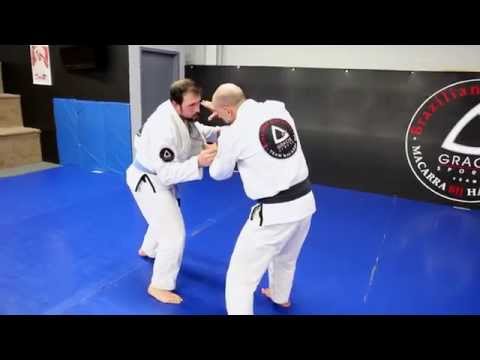
The Standard Inside Ankle Trip executes the fundamental inside ankle hook-and-trip where the attacker, from a clinch position, steps between the opponent's legs, hooks the near ankle with the instep, and pulls it forward while simultaneously pushing the opponent's upper body backward. [1] The hook-and-push creates a lever system: the ankle is pulled forward (fulcrum) while the shoulders are driven backward (force), causing a rotational fall. [1],[2] The technique requires the attacker to time the hook with a moment when the opponent's weight is on the targeted foot. [2] The standard inside ankle trip is one of the most reliable close-range takedowns. [2],[3]
Also known as
Standard Inner Ankle HookBoxing[1]Inside Heel Trip[2]Ko Uchi Gake TakedownJP[3]
The standard inside ankle trip has been a fundamental technique in wrestling and judo for generations, valued for its simplicity and high completion rate from clinch positions. [1] The technique is taught at beginner level across most grappling disciplines. [2],[3]
Country of origin· shown in random order
🇬🇷GreeceWrestling
🇺🇸USAWrestling, MMA
🇧🇷BrazilMMA
🇷🇺RussiaSambo
🇨🇳ChinaShuai Jiao
Effectiveness
The inside ankle trip is effective in both gi and no-gi contexts because it attacks the opponent's base from an unexpected angle using the foot rather than the hands. [1] The technique requires good timing and proper hand-fighting to create the weight shift necessary for the trip to work. [1]
Lineage
The standard inside ankle trip is the fundamental version of ko uchi gari, taught in judo and wrestling. [1]
Standard Japanese martial arts terminology (kanji/hiragana)
4OtherJapanese Martial Arts Standard Terminology (武道用語)
Established Japanese martial arts naming convention — native Japanese term (和語/漢語)
5CitationKodokan Judo — Official Nage-waza Classification
Traditional Judo throwing/takedown terminology (Kodokan Institute)
Community
Athletics
Requires
timing, balance, upper body control for push-pull
Favours
good coordination and sense of opponent's weight distribution
Key muscles
core stabilisers, hip adductors/abductors, calves
Frequently Asked Questions
How do I know when the inside ankle trip is working?
You'll know the trip is effective once your partner takes a step back and gets their weight onto that back foot, which creates the opportunity to successfully pick the foot up.
What's the key to initiating an inside ankle trip?
Initiate the inside trip and get your partner to take a step back; once their weight is on the back foot, you'll have a lot of success with the technique.
How does the Standard Inside Ankle Trip work?
The Standard Inside Ankle Trip executes the fundamental inside ankle hook-and-trip where the attacker, from a clinch position, steps between the opponent's legs, hooks the near ankle with the instep, and pulls it forward while simultaneously pushing the opponent's upper body backward. The hook-and-push creates a lever system: the ankle is pulled forward (fulcrum) while the shoulders are driven backward (force), causing a rotational fall.
Where does the Standard Inside Ankle Trip come from?
The standard inside ankle trip has been a fundamental technique in wrestling and judo for generations, valued for its simplicity and high completion rate from clinch positions. The technique is taught at beginner level across most grappling disciplines.
Is the Standard Inside Ankle Trip legal in competition?
IJF: legal — Legal (ashi-waza) — trips executed without grabbing opponent's legs are permi…; IBJJF: legal — Legal at all belt levels, scored as takedown (2 points); UWW: restricted — Legal in freestyle, restricted in Greco-Roman (leg-to-leg contact prohibited); Unified MMA: legal — Legal takedown technique; ADCC: legal — Legal, scored 2-4 points in second half of match; FIAS Sport Sambo: legal — Legal — all takedowns permitted; FIAS Combat Sambo: legal — Legal; NCAA Folkstyle: legal — Legal, scored as takedown (2 points)
How dangerous is the Standard Inside Ankle Trip?
Danger rating 5/10. High — Ko-Uchi-Gari style; backward fall risk
How do I set up the Standard Inside Ankle Trip?
The standard setup chain: Establish Grip → Off-Balance (Kuzushi) → Execute the Reap/Sweep.
How do I defend against the Standard Inside Ankle Trip?
Standard counters include: Sprawl — drop hips back and drive weight down to stuff the takedown attempt / Lift the Targeted Leg — raise the foot being attacked to avoid the reap or sweep / Step Over — lift the targeted leg over the sweeping limb to evade / Counter-Throw — use opponent's committed weight shift to execute a counter technique.
What are the variants of the Standard Inside Ankle Trip?
Common variants: Standard trip (blocking or sweeping the support leg while driving the up…); Combination trip (chaining an inside trip with an outside trip when the opp…); Counter trip (using the trip as a counter when the opponent attacks); Clinch trip (executing the trip from a tight clinch position).
How effective is the Standard Inside Ankle Trip in competition?
Regularly scored in IJF judo competition.
What are common mistakes when doing the Standard Inside Ankle Trip?
Top errors to watch for: Hooking with the toe instead of the instep — the instep wraps the ankle more securely / Not stepping deep enough between their feet, so the hook can't reach / Pushing and pulling in the same direction instead of opposite directions / Hooking the ankle when the opponent's weight is on the other foot — they just lift the hooked foot.
What are other names for the Standard Inside Ankle Trip?
The Standard Inside Ankle Trip is also known as Uchigake (Ashikubi), Standard Inner Ankle Hook, Inside Heel Trip, Ko Uchi Gake Takedown.