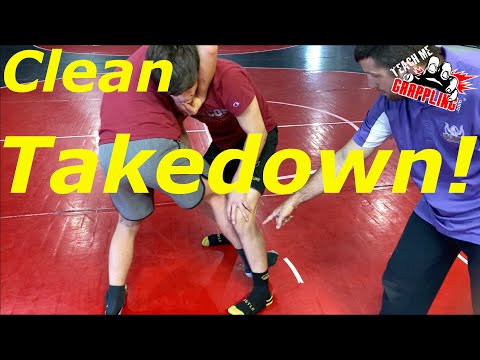
AWESOME Inside Trip TAKEDOWN!!
0
Inside Trip·TeachMeGrappling Coach Brian
This video I breakdown the inside trip off of a front headlock position with the help of the Munoz Brothers. Check out …
Translation: inside trip/reap
The Inside Trip family covers techniques where the attacker uses their leg to trip the opponent from the inside — threading the tripping leg between or inside the opponent's legs to hook, reap, or block the ankle or lower leg. [1] Inside trips exploit the close-range clinch position where the attacker's legs naturally have access to the inside of the opponent's stance. [1],[2] The family includes inside ankle trips and ko uchi gari (minor inner reap), both of which attack the opponent's base from an interior angle while upper body control directs the fall. [2] Inside trips are among the most commonly used clinch takedowns in both wrestling and judo. [2],[3]
Inside trips appear across virtually all wrestling traditions, with judo's ko uchi gari and wrestling's inside trip representing the most refined modern forms. [1] The inside angle of attack has been a fundamental principle of standing grappling for centuries across Asian, European, and Middle Eastern martial arts. [2],[3]
No images yet for this technique.
Sign in to suggest an image.
This video I breakdown the inside trip off of a front headlock position with the help of the Munoz Brothers. Check out …
No instructional courses yet for this technique.
Sign in to suggest a course.
Risk of injury to the person this technique is applied to
Ko-Uchi-Gari style; backward fall risk
Skill level needed to execute this technique reliably
Whether this technique is allowed under major competition rule sets
Kodokan Judo — Official Nage-waza Classification
Traditional Judo throwing/takedown terminology (Kodokan Institute)
Official Kodokan ground technique classification system
Standard Japanese martial arts terminology (kanji/hiragana)
Established Japanese martial arts naming convention — native Japanese term (和語/漢語)
Traditional Judo throwing/takedown terminology (Kodokan Institute)
timing, balance, upper body control for push-pull
good coordination and sense of opponent's weight distribution
core stabilisers, hip adductors/abductors, calves
Every move, in any martial art, shares a few universal traits. Mix and match below to pinpoint the right tool — or compare equivalents across styles.
The Inside Ankle Trip subfamily specifically targets the opponent's ankle from the inside, using the attacker's foot to hook or block the ankle while upper body pressure drives the opponent over the trapped foot. [1] The attacker typically uses a collar tie, underhook, or clinch position to control the opponent's upper body, then steps inside and hooks the near ankle with the instep or heel. [1,2] Pulling the hooked ankle forward while driving the opponent's shoulders backward creates a sharp rotational fall. [2,3]
The Ko Uchi Gari Trip subfamily applies judo's minor inner reap as a takedown, where the attacker reaps the opponent's inner ankle or lower leg from the inside while directing the upper body backward over the reaped leg. [1] Ko uchi gari uses a small, sharp reaping action — the attacker's foot hooks the inside of the opponent's heel or ankle and pulls it forward, destroying the opponent's rear base. [1,2] The upper body simultaneously drives the opponent's weight backward over the leg being reaped. [2] Ko uchi gari is one of judo's most versatile techniques, used both as a primary attack and as a setup for other throws. [2,3]
The inside trip appears in 20 passages across 6 books including the US Army Hand-to-Hand Combat manual (FM 3-25.150). The attacker hooks the opponent's leg from the inside while driving forward. One of the most natural and instinctive takedowns — commonly seen in self-defense situations. (6 books; US Army FM 3-25.150)
Coach Brian emphasizes controlling the underhook by covering your opponent's hand with your chin—this locks the arm in place and prevents it from coming out during the technique.
Coach Brian recommends combining a club dig with a snap down to set up the inside trip, as this combination helps establish control and balance before executing the takedown.
The Inside Trip family covers techniques where the attacker uses their leg to trip the opponent from the inside — threading the tripping leg between or inside the opponent's legs to hook, reap, or block the ankle or lower leg. Inside trips exploit the close-range clinch position where the attacker's legs naturally have access to the inside of the opponent's stance.
Inside trips appear across virtually all wrestling traditions, with judo's ko uchi gari and wrestling's inside trip representing the most refined modern forms. The inside angle of attack has been a fundamental principle of standing grappling for centuries across Asian, European, and Middle Eastern martial arts.
IJF: legal — Legal (ashi-waza) — trips executed without grabbing opponent's legs are permi…; IBJJF: legal — Legal at all belt levels, scored as takedown (2 points); UWW: restricted — Legal in freestyle, restricted in Greco-Roman (leg-to-leg contact prohibited); Unified MMA: legal — Legal takedown technique; ADCC: legal — Legal, scored 2-4 points in second half of match; FIAS Sport Sambo: legal — Legal — all takedowns permitted; FIAS Combat Sambo: legal — Legal; NCAA Folkstyle: legal — Legal, scored as takedown (2 points)
Danger rating 5/10. High — Ko-Uchi-Gari style; backward fall risk
The standard setup chain: Establish Grip → Off-Balance (Kuzushi) → Execute the Reap/Sweep.
Standard counters include: Sprawl — drop hips back and drive weight down to stuff the takedown attempt / Lift the Targeted Leg — raise the foot being attacked to avoid the reap or sweep / Step Over — lift the targeted leg over the sweeping limb to evade / Counter-Throw — use opponent's committed weight shift to execute a counter technique.
Common variants: Standard trip (blocking or sweeping the support leg while driving the up…); Combination trip (chaining an inside trip with an outside trip when the opp…); Counter trip (using the trip as a counter when the opponent attacks); Clinch trip (executing the trip from a tight clinch position).
Inside trips are frequently scored in judo (as ko uchi gari) and MMA competition, and are a standard technique in wrestling.
Top errors to watch for: Not stepping close enough — if your hips are far away, you can't reach the inside of their ankle / Tripping without pushing their upper body, so there's no force to topple them / Hooking too high (behind the knee) when the ankle gives better leverage / Trying to trip from outside position — this is specifically an inside technique.
The Inside Trip is also known as Uchigake, Inside Reap, Uchi Waza, Inner Trip.