LEG LACING ASHI GARAMI FUNDAMENTALS
0
Standard Sasae Tsurikomi Ashi·welcomematstevescott
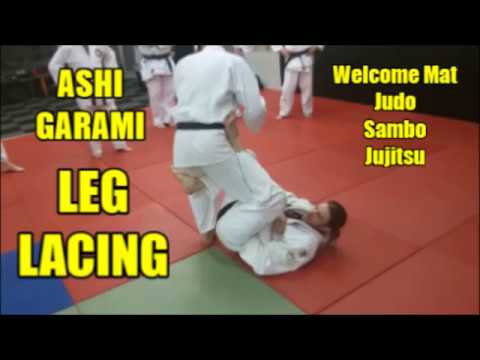
Ashi Garami (Leg Entanglement) is also known as Leg Lacing. This video shows the basics of this lower body submission sk…
Translation: standard propping drawing ankle throw
The Standard Sasae Tsurikomi Ashi executes the fundamental propping ankle block where the attacker uses the sole of the foot to block the opponent's advancing ankle while applying a strong upward-and-circular pull with the hands to rotate the opponent's body forward over the blocked foot. [1] The hand action is critical — the tsurite (lifting hand) pulls the opponent forward and upward while the hikite (pulling hand) drives in a circular arc, creating a wheeling motion around the blocked foot. [1],[2] The opponent, unable to complete their step because the foot is blocked, rotates forward over their own ankle and falls. [2] The technique is most effective when initiated as the opponent takes a natural step forward, loading weight onto the foot that will be blocked. [2],[3]
Standard sasae tsurikomi ashi has been a cornerstone of judo instruction and competition since the art's earliest days. [1] The technique is frequently used in combination with other throws, serving as either a primary attack or a setup for transitions in judo and adapted grappling contexts. [2],[3]
Sasae tsurikomi ashi is effective as a propping foot technique that blocks the opponent's advancing foot while pulling them over the obstruction. [1] Unlike sweeping techniques, sasae uses a static block rather than a sweeping motion, which can catch opponents who have learned to lift their feet against sweeps. [1] The technique is particularly effective when combined with strong pulling actions (tsurikomi) that commit the opponent's weight forward. [2]
The standard sasae tsurikomi ashi is a regular scoring technique in IJF competition. [1]
No images yet for this technique.
Sign in to suggest an image.
Ashi Garami (Leg Entanglement) is also known as Leg Lacing. This video shows the basics of this lower body submission sk…
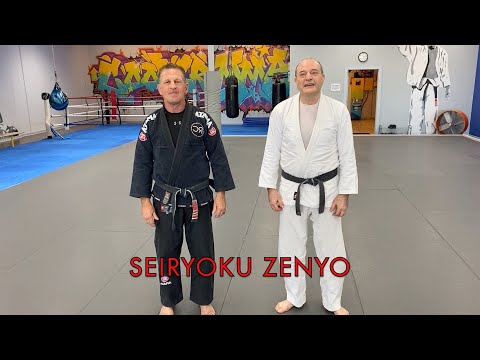
Mark Gilston, 4th degree judo black belt, discusses and demonstrates uses for two basic foot sweeps in judo and BJJ. htt…
"Do you feel as if your Judo training is NOT getting you to the level you want to be? " -- WORK WITH YOU -- Working clo…
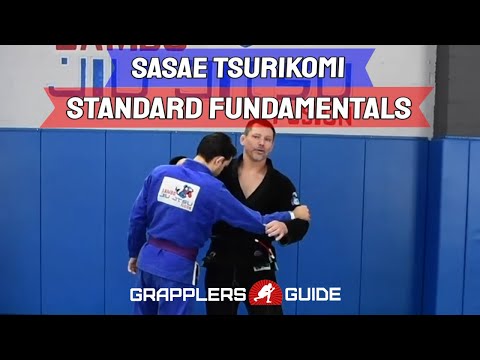
The Grapplers Guide is the longest running and most recommended premium BJJ and grappling learning site ever created. L…
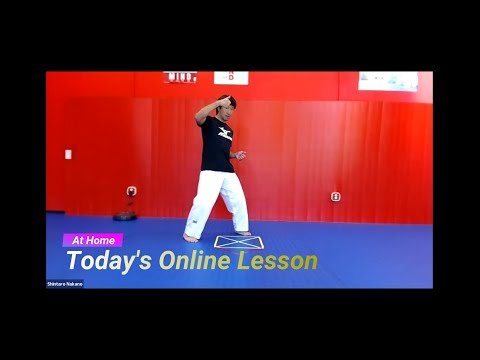
Standard Sasae Tsurikomi Ashi is a foot-sweep throwing technique executed through coordinated hand and leg actions. Shintaro Nakano emphasizes the foundational two-step approach: first, stepping to the side of the opponent while pulling the right hand upward to break balance; second, placing the right foot below the opponent's knee to drop or sweep the leg while simultaneously pushing the elbow upward and rotating the torso (described as 'turning the wheel') to complete the throw. Nakano stresses maintaining close distance, keeping the toes pointed toward the opponent during entry to enable proper body rotation, and bending the knee on the entry step while keeping the sweeping leg straight. The Grapplers Guide by Jason Scully reinforces these principles, noting that the technique involves stepping into the body (either between the legs or to the outer side), applying an upward pull with the right hand while stepping with the opposite leg, and then blocking the foot from the inner side—not sweeping from the outer edge. Scully emphasizes the 'torquing movement' created by stepping in, the importance of maintaining connection and proper body positioning (resembling the letter 'T'), and notes that toe-pointing is less critical in styles where competitors wear shoes. Seiryoku Zenyo's Mark Gilston addresses related foot sweeps (Ashi Barai and Harai Tsuri Komi Ashi), providing tactical context: these are timing techniques best executed during opponent movement, requiring the defender to keep the sweeping foot low and pointed for maximum power, and to coordinate the sweep with sharp downward hand pulls and upward elbow lifts. All instructors agree on the primacy of hand-and-body coordination over leg action alone.
Synthesized from 4 instructors
No instructional courses yet for this technique.
Sign in to suggest a course.
Risk of injury to the person this technique is applied to
Timing-based sweep; lower force than trips
Skill level needed to execute this technique reliably
Whether this technique is allowed under major competition rule sets
Kodokan Judo — Official Nage-waza Classification
Traditional Judo throwing/takedown terminology (Kodokan Institute)
Official Kodokan ground technique classification system
Standard Japanese martial arts terminology (kanji/hiragana)
Established Japanese martial arts naming convention — native Japanese term (和語/漢語)
Traditional Judo throwing/takedown terminology (Kodokan Institute)
timing, balance, upper body control for push-pull
good coordination and sense of opponent's weight distribution
core stabilisers, hip adductors/abductors, calves
You should stay close to your opponent—don't come out or create distance. Shintaro Nakano emphasizes staying in near contact throughout the technique.
Pull up with your right hand to lift your opponent off their heels and get them off balance before stepping in with the opposite leg. Shintaro Nakano stresses that you must pull for the first step to achieve the initial lift.
Keep your leg straight and point your toe to make that part of the foot stronger and generate more power in the sweep direction. Seiryoku Zenyo advises sweeping with the sole of your foot to avoid injuring your instep or your opponent's shin.
The foot sweep must be a genuine attack to evoke a real reaction from your opponent; a fake attempt won't work, especially against experienced practitioners. Seiryoku Zenyo notes that you can use this reaction to complete the throw, even if you don't fully commit yourself to the ground.
The Standard Sasae Tsurikomi Ashi executes the fundamental propping ankle block where the attacker uses the sole of the foot to block the opponent's advancing ankle while applying a strong upward-and-circular pull with the hands to rotate the opponent's body forward over the blocked foot. The hand action is critical — the tsurite (lifting hand) pulls the opponent forward and upward while the hikite (pulling hand) drives in a circular arc, creating a wheeling motion around the blocked foot.
Standard sasae tsurikomi ashi has been a cornerstone of judo instruction and competition since the art's earliest days. The technique is frequently used in combination with other throws, serving as either a primary attack or a setup for transitions in judo and adapted grappling contexts.
IJF: legal — Legal (ashi-waza) — trips executed without grabbing opponent's legs are permi…; IBJJF: legal — Legal at all belt levels, scored as takedown (2 points); UWW: restricted — Legal in freestyle, restricted in Greco-Roman (leg-to-leg contact prohibited); Unified MMA: legal — Legal takedown technique; ADCC: legal — Legal, scored 2-4 points in second half of match; FIAS Sport Sambo: legal — Legal — all takedowns permitted; FIAS Combat Sambo: legal — Legal; NCAA Folkstyle: legal — Legal, scored as takedown (2 points)
Danger rating 4/10. Moderate — timing-based sweep; lower force than trips
The standard setup chain: Establish Contact → Create Off-Balance → Execute the Takedown → Follow to Ground.
Standard counters include: Sprawl — drop hips back and drive weight down to stuff the takedown attempt / Underhook — establish inside position to control distance and prevent the takedown entry / Post and Circle — post on the attacker's head and circle away to break their angle / Level Change Defence — recognize the shot early and react with appropriate hip defence.
Common variants: Standard trip (blocking or sweeping the support leg while driving the up…); Combination trip (chaining an inside trip with an outside trip when the opp…); Counter trip (using the trip as a counter when the opponent attacks); Clinch trip (executing the trip from a tight clinch position).
The standard sasae tsurikomi ashi is a regular scoring technique in IJF competition.
Top errors to watch for: Applying the foot block without the lifting pull — the block alone does nothing / Pulling without blocking — they just take another step / Blocking the foot that's not advancing — target the foot that's about to step / Pushing the blocked foot backward (sweeping) instead of simply propping it.
The Standard Sasae Tsurikomi Ashi is also known as Sasae Tsurikomi Ashi, Standard Propping Ankle Block, Sasae Tsuri Ashi, Foot Prop Takedown.