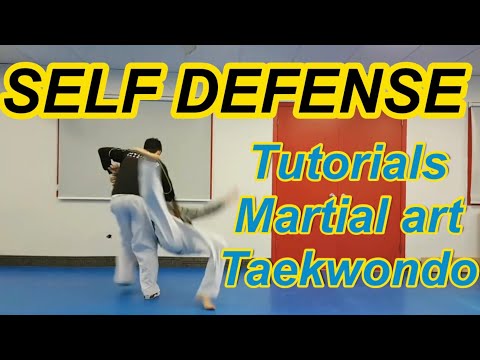
Self defense Taekwondo Martial art (Take down techniques) 태권도 호신술 테이크 다운
0
TKD Takedown·MASTER HAN TV전설의발차기
If you subscribe and hit like button, you are helping other YouTubers to enjoy this channel and the videos. 여러분의 '좋아요'와 …
Translation: Taekwondo takedown
The TKD Takedown family covers takedown techniques found within Taekwondo and related Korean martial arts — techniques that are less emphasised than kicks but exist within the complete curriculum for competition and self-defence application. [1] TKD takedowns include sweeps that exploit the opponent's kicking stance and momentum (hooking the support leg during a kick), reaps and trips that work from the clinch when fighters close distance in sparring, and sacrifice-style throws adapted from Korean wrestling (ssireum) influences. [1],[2] In modern World Taekwondo (WT/WTF) Olympic competition, certain takedowns are permitted and can score or create advantageous positions — pushing an opponent down with a legal technique is part of the competitive toolkit. [2],[3] While TKD takedowns are not as sophisticated as wrestling or judo takedowns, they serve an important role in the complete Korean martial arts curriculum. [3]
TKD takedowns are used in both WT and ITF competition, though they play a minor role compared to kicks. [1]
No images yet for this technique.
Sign in to suggest an image.
If you subscribe and hit like button, you are helping other YouTubers to enjoy this channel and the videos. 여러분의 '좋아요'와 …
No instructional courses yet for this technique.
Sign in to suggest a course.
Risk of injury to the person this technique is applied to
TKD takedowns are relatively low-amplitude; the primary risk is the falling impact on hard dojang floors (TKD is often practiced without mats for the standing/sparring portion)
Skill level needed to execute this technique reliably
Whether this technique is allowed under major competition rule sets
Encyclopedia of Taekwon-Do (Choi Hong Hi, 1983)
Description sources — [1] Encyclopedia of Taekwon-Do (Choi, 1983) [2] WT competition rules and TKD training methodology
Description sources — [1] Encyclopedia of Taekwon-Do (Choi, 1983) [2] WT competition rules and TKD training methodology
timing (exploiting the opponent's kicking moment), leg dexterity, balance
quick reactions, strong legs
legs (sweeping and tripping), core (pushing), arms (grabbing)
Every move, in any martial art, shares a few universal traits. Mix and match below to pinpoint the right tool — or compare equivalents across styles.
The TKD Double Leg Takedown adapts the wrestling double-leg for taekwondo practitioners, entering from the longer kicking range with a penetration step. [1]
The TKD Sacrifice Throw uses a falling-backward motion to throw the opponent over, adapted from judo sacrifice throws for TKD competition. [1]
The TKD Single Leg from Clinch transitions from a taekwondo-style clinch directly into a single-leg takedown. [1]
The TKD Takedown family covers takedown techniques found within Taekwondo and related Korean martial arts — techniques that are less emphasised than kicks but exist within the complete curriculum for competition and self-defence application. TKD takedowns include sweeps that exploit the opponent's kicking stance and momentum (hooking the support leg during a kick), reaps and trips that work from the clinch when fighters close distance in sparring, and sacrifice-style throws adapted from Korean wrestling (ssireum) influences.
Taekwondo takedowns derive from both traditional Korean wrestling (ssireum) influences and the practical need to counter kicking attacks in competition. General Choi Hong Hi's ITF Taekwondo included more extensive throwing and takedown techniques than modern WT Olympic Taekwondo.
IJF: legal — Legal takedown technique; IBJJF: legal — Legal at all belt levels, scored as takedown (2 points); UWW: legal — Legal in freestyle, may be restricted in Greco-Roman depending on technique; Unified MMA: legal — Legal takedown technique; ADCC: legal — Legal, scored 2-4 points in second half of match; FIAS Sport Sambo: legal — Legal — all takedowns permitted; FIAS Combat Sambo: legal — Legal; NCAA Folkstyle: legal — Legal, scored as takedown (2 points)
Danger rating 3/10. Low — TKD takedowns are relatively low-amplitude; the primary risk is the falling impact on hard dojang floors (TKD is often practiced without mats for the standing/sparring portion)
The standard setup chain: Identify Kicking Pattern → Wait for Kick → Close Distance → Execute → Follow Up.
Standard counters include: Not kicking predictably — varying kick timing prevents sweep timing / Strong base — maintaining balance during kicks / Distance management — keeping kicking distance prevents clinch takedowns.
Common variants: Support leg sweep (hooking the standing leg during the opponent's kick [1]); Push-down (shoving the opponent to the ground from close range); Inside reap (stepping inside and hooking the opponent's leg while pushing); Sacrifice throw (sacrifice-style takedown from Korean wrestling (ssireum) …); Kick catch to takedown (catching the opponent's kick and using it for a single-le…); Body grab and trip (grabbing the dobok or body and tripping from close range [2]).
TKD takedowns are used in both WT and ITF competition, though they play a minor role compared to kicks.
Top errors to watch for: Over-relying on TKD takedowns against grapplers — these techniques are designed for TKD-vs-TKD encounters; against tr… / Not timing the support leg sweep — sweeping randomly without waiting for the opponent's kick is easily resisted / Grappling too long in TKD sparring — WT rules penalise extended grappling; the takedown must be quick / Neglecting takedown skills entirely — even kicking-focused martial artists need basic takedown ability for self-defence.
The TKD Takedown is also known as Tekondō Teikudaun, Taekwondo Takedown, TKD Takedown, Korean Martial Arts Takedown.