John Smith teaches his legendary low single | 6x World & Olympic Champion
0
Standard Low Single·FloWrestling
John Smith shows how to get technically sound at hitting the low single -the move he developed and perfected. Website: …
Translation: standard low single
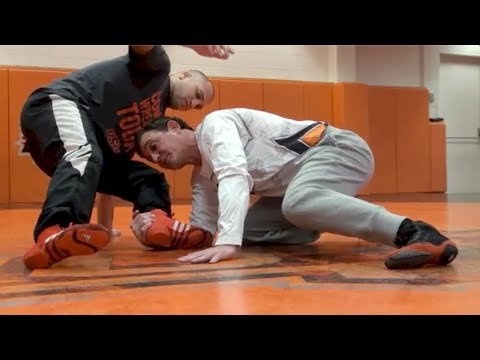
The Standard Low Single executes the fundamental low-level single leg where the attacker drops deeply — often to both knees — and reaches forward to capture the opponent's lead ankle or lower shin. [1] The attacker uses a quick level change and long reach to grab the ankle, then drives forward into the opponent while pulling the captured foot off the mat. [1],[2] The finish typically involves running the opponent's foot forward while their upper body falls backward, or transitioning to a traditional single-leg finish once the opponent is off-balance. [2] The standard low single is the archetype of deep-level-change attacks. [2],[3]
The low single leg is a high-speed, low-risk takedown entry that targets the ankle or lower leg from extended range. [1] Its effectiveness depends almost entirely on the speed of the level change and the element of surprise, as the attacker must cover more distance than a standard-level shot. [1] In MMA, the low single is valued because the attacker's head stays far from the opponent's hips, reducing clinch and guillotine counter risk. [2]
The low single leg gained worldwide prominence through the coaching of John Smith, who used it to win two Olympic gold medals (1988, 1992) and six World Championship titles. [1] Smith's low single became known as one of the most imitated techniques in wrestling history. [1] As head coach at Oklahoma State University (1991-present), Smith has continued to develop and teach the technique. [2]
No images yet for this technique.
Sign in to suggest an image.
John Smith shows how to get technically sound at hitting the low single -the move he developed and perfected. Website: …
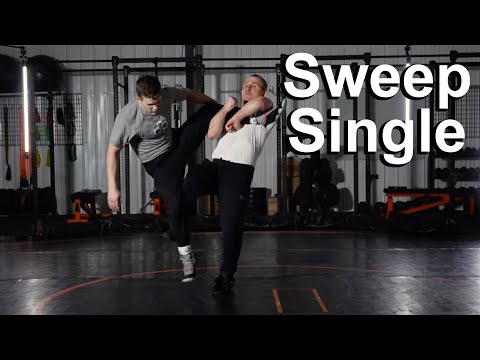
Cary Kolat teaches his Sweep Single to High Leg Finish Takedown for Collegiate or Freestyle Wrestling. Kolat teaches bot…
In this week’s Technique Tuesday, NCAA finalist Brock Hardy breaks down his signature low single leg attacks and how to …
The standard low single leg takedown is executed by penetrating below the opponent's knee while maintaining sound technical position. All three instructors emphasize that the shot originates from distance—approximately where the attacker can palm the opponent's head—which naturally limits setup variations and requires developed instinct for timing. FloWrestling's John Smith stresses splitting the opponent's body, keeping the attacking leg outside, and changing levels to shoot straight in rather than down. The critical hand position involves reaching for the far ankle rather than driving through the shin. Upon contact, the attacking wrestler plants a knee directly under the chest with the forehead making contact to the inside of the knee, maintaining a parallel forearm to the foot with elbows down. The trail leg then plants as the wrestler lifts using head pressure rather than hand manipulation to cave the opponent inward. Cary Kolat introduces the sweep single variant, emphasizing a heavy hit setup to create openings, hand placement on the mat (rather than locked hands) for mobility, and finishing with a punch motion to lift the knee while blocking foot stabilization. Brock Hardy's analysis highlights adaptive finishing: different techniques apply depending on whether the opponent is on their heel (picks work) or their toes (requiring pulls and alternative angles), with emphasis on immediate knee switches and proper neck-to-inside-knee positioning rather than head-first contact. All instructors agree on staying low during the finish and avoiding premature head elevation.
Synthesized from 3 instructors
No instructional courses yet for this technique.
Sign in to suggest a course.
Risk of injury to the person this technique is applied to
Single leg is one of the safest takedowns; controlled descent (John Smith methodology)
Skill level needed to execute this technique reliably
Whether this technique is allowed under major competition rule sets
Japanese amateur wrestling terminology
Japanese amateur wrestling terminology
Standard katakana transliteration of Western martial arts terminology (外来語) — used in Japanese MMA, boxing, and BJJ communities
Standard katakana transliteration used in Japanese wrestling (レスリング)
penetration step speed, upper body endurance for finishing, balance
longer arms for reach, quick hips for level change
quadriceps, hip flexors, shoulders, grip/forearms
John Smith emphasizes shooting from a distance where you can palm your opponent's head—this is the comfortable position where you want to hit the low single leg from, as shooting from distance minimizes the number of setups you can use and relies more on instinct.
John Smith stresses that you should change levels and shoot straight in rather than shooting down at the shot, while reaching out to snatch the far ankle instead of shooting your entire body into it.
John Smith advises staying down on the leg with your knees pointing down, using your head to cave the opponent over the shot while keeping your head in until the finish is complete—avoid popping your head up too quickly, as this leaves you vulnerable to scrambles.
Cary Kolat recommends not locking your hands on the single leg, as he found being mobile—especially in freestyle—to be more effective than the traditional shot-and-lock approach.
The Standard Low Single executes the fundamental low-level single leg where the attacker drops deeply — often to both knees — and reaches forward to capture the opponent's lead ankle or lower shin. The attacker uses a quick level change and long reach to grab the ankle, then drives forward into the opponent while pulling the captured foot off the mat.
The low single was famously used by John Smith to win Olympic gold medals in 1988 and 1992, establishing it as one of wrestling's premier techniques. Smith's low single system became a model for generations of wrestlers who incorporated deep-level attacks into their arsenals.
IJF: banned — Banned since 2010 leg grab prohibition — direct hansoku-make for touching opp…; IBJJF: legal — Legal at all belt levels, scored as takedown (2 points); UWW: restricted — Legal in freestyle (2-4 points), banned in Greco-Roman (no attacks below waist); Unified MMA: legal — Legal takedown technique; ADCC: legal — Legal, scored 2-4 points in second half of match; FIAS Sport Sambo: legal — Legal — all takedowns permitted; FIAS Combat Sambo: legal — Legal; NCAA Folkstyle: legal — Legal, scored as takedown (2 points)
Danger rating 3/10. Moderate — single leg is one of the safest takedowns; controlled descent (John Smith methodology)
The standard setup chain: Establish Contact → Create Off-Balance → Execute the Takedown → Follow to Ground.
Standard counters include: Sprawl — drop hips back and drive weight down to stuff the takedown attempt / Underhook — establish inside position to control distance and prevent the takedown entry / Post and Circle — post on the attacker's head and circle away to break their angle / Level Change Defence — recognize the shot early and react with appropriate hip defence.
Common variants: Inside single (shooting to the inside of the lead leg, head inside position); Outside single (attacking from the outside of the lead leg); High crotch (securing the thigh above the knee with head in the hip); Low single (attacking the ankle from outside range without deep penet…).
John Smith scored on the low single leg throughout his international career, winning Olympic gold in 1988 (Seoul) and 1992 (Barcelona) at 62 kg freestyle. The technique has since been adopted by numerous international freestyle wrestlers and MMA fighters.
Top errors to watch for: Not reaching far enough during the drop — the ankle is at floor level, you need to get your hand there / Staying on both knees after securing the ankle — you can't drive from your knees / Holding the ankle at arm's length instead of pulling it tight to your chest / Shooting from too close and crashing into the opponent's knees instead of reaching the ankle.
The Standard Low Single is also known as Rō Shinguru, John Smith Low Single, Standard Low-Level Single, Deep Low Single TD.