Definition and Positioning Fundamentals
The low single leg takedown is executed by penetrating below the knee, requiring exceptional technical precision to prevent opponents from circling and scoring defensively. Proper positioning is essential before building confidence with this technique, as poor mechanics create immediate vulnerabilities. The instructor emphasizes splitting the opponent's body, positioning half of one's own body to the outside of the target leg to establish control during penetration.
Entry Distance and Shot Recognition
The low single leg is a distance shot, typically initiated from arm's length away—approximately where the palm can reach the opponent's head. Due to this distance requirement, there are minimal setup variations available, making timing and instinct critical components of execution. Practitioners must develop the ability to recognize when the opponent's weight and foot positioning create optimal shooting opportunities through extensive drilling.
Level Change and Initial Penetration
The shooter must change levels by driving straight forward rather than shooting downward at the opponent's leg. The initial contact point is the far ankle, which the shooter reaches toward rather than driving their entire body into. This reaching motion with the trailing hand allows the wrestler to catch the heel while maintaining proper body positioning and control.
Knee Placement and Head Position
The lead knee (for right-leg leads, the right knee) drives directly underneath the chest and feeds into the inside of the opponent's knee, with the forehead making contact to the inner knee area. The forearm remains parallel to the opponent's foot with the elbow staying down—a critical detail that prevents the shooter from rising up prematurely. Maintaining a low base throughout the finish prevents opponents from establishing defensive counters.
Finishing Mechanics and Base Control
As the trailing leg plants, the knee must point downward rather than upward to maintain leverage and control. The finish relies on using the head and upper body to cave the opponent over the shot rather than attempting to sweep the ankle with the hands. This controlled finish from a low position maximizes the likelihood of a clean takedown while setting up additional scoring opportunities.
Head Position Management and Follow-Up Opportunities
The shooter should keep their head in contact with the leg until the takedown is completed, resisting the urge to pop the head up prematurely. If the opponent attempts to wrap around the waist or reach for a leg during the scramble, the shooter can elevate the head and begin searching for turns, pins, or further advantageous positions. Early head elevation increases vulnerability to defensive scrambles and reduces control.
Opponent Reaction and Dynamic Response
The available finishing options—including turns, pins, or straightforward takedowns—depend largely on how aggressively the opponent attempts to avoid being taken down. Opponents who remain tight over the top create different opportunities than those who belly out or reach for counterattacks. The skilled wrestler adapts their finish based on real-time feedback from the opponent's defensive effort.
Converting Takedowns into Advanced Scoring
The low single leg frequently provides the foundation for converting a two-point takedown into a five-point turn or pinning combination through proper follow-up positioning. When opponents cling aggressively to avoid the takedown or attempt to catch a leg, the wrestler is positioned to capitalize with turns or advanced techniques. This multiplier effect on scoring potential makes mastery of the low single leg essential for comprehensive wrestling excellence.
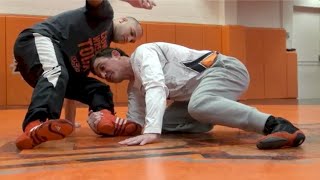
John Smith teaches his legendary low single | 6x World & Olympic Champion
Key Takeaways
- •Definition and Positioning Fundamentals
- •Entry Distance and Shot Recognition
- •Level Change and Initial Penetration
- •Knee Placement and Head Position
John Smith shows how to get technically sound at hitting the low single -the move he developed and perfected. Website: https://www.flowrestling.org Subscribe: http://bit.ly/2p4v31C Get the FloSports iOS app: http://bit.ly/FloWrestlingiOSApp_9 Follow FloWrestling Facebook: https://www.facebook.com/FloWrestling/ Twitter: https://twitter.com/flowrestling Instagram: https://www.instagram.com/flowrestling/
Related Techniques
Frequently Asked Questions
What does this video teach about standard low single?
This video covers definition and positioning fundamentals, entry distance and shot recognition, level change and initial penetration. It provides detailed instruction from FloWrestling.
How long does it take to learn standard low single?
The basic mechanics can be understood in a single session, but developing reliable execution requires consistent drilling over weeks of practice. This 8-part breakdown helps structure your training by isolating each phase of the technique.
What are the key details for finishing standard low single?
The available finishing options—including turns, pins, or straightforward takedowns—depend largely on how aggressively the opponent attempts to avoid being taken down. Opponents who remain tight over the top create different opportunities than those who belly out or reach for counterattacks. The skilled wrestler adapts their finish based on real-time feedback from the opponent's defensive effort.
Related videos

Brock Hardy Low Single Leg Attacks | Technique Tuesday
FloWrestling
Sweep Single Takedown - Cary Kolat Wrestling Moves
Cary Kolat
Low single set ups from a clinch, golf swing details, head on the outside for single leg takedowns
Ramsey Dewey
John Smith teaches his legendary low single | 6x World & Olympic Champion
FloWrestling
2 EASY Single Leg FINISHES!
TeachMeGrappling Coach Brian