Strike & defenceLocksClose rangeFighting multiple people
Distance
CloseMiddleLong
Body target
Upper bodyMiddle bodyLower body
Overview
The Standard Single Leg From Cage executes the fundamental cage-wall single leg where the attacker captures one leg from the clinch, typically by dropping the near arm to scoop behind the opponent's knee while maintaining upper body pressure against the wall. [1] The attacker then uses a combination of lifting, turning the corner, and driving forward to complete the takedown. [1],[2] Common finishes include running the pipe (driving forward while elevating the leg), tripping the standing leg, or using a dump by rotating the opponent over the captured leg. [2] The wall prevents the opponent from creating the distance needed for effective hopping defence. [2],[3]
Also known as
Cage Single TD[1]Wall Single Leg TakedownWrestling[2]Fence Single[3]
The cage single leg was refined by MMA fighters who adapted folkstyle and freestyle single-leg mechanics to the unique constraints and opportunities of the cage wall. [1] The technique is now considered a core component of MMA wrestling education. [2],[3]
Country of origin· shown in random order
🇧🇷BrazilMMA
🇺🇸USAMMA
Effectiveness
The single leg from the cage is effective because the wall limits the opponent's ability to circle away from the attack. [1] The attacker can use the cage for leverage while working to elevate the captured leg, making the finish easier than in open space. [1]
Lineage
The standard cage single leg is the baseline MMA adaptation of the open-mat single leg for cage fighting. [1]
Competition Record
Commonly used in UFC competition by wrestling-based fighters. [1]
Images
No images yet for this technique.
Sign in to suggest an image.
Biomechanical Mechanism
Primary Action — Isolation of one leg — controlling a single support point destabilises the opponent's base
Joints Involved — Attacker's lead knee (penetration step), hips (level change and lifting), opponent's knee and hip (controlled)
Force Vector — Lateral and upward — lifting or sweeping the captured leg while driving the shoulder into the opponent's body
Finishing Mechanic — Varies by finish — run-the-pipe (forward drive), trip (inside/outside foot trip), or lift (elevation of captured leg)
Position & Entry
From wrestling stance — Level change with a penetration step, drive head into opponent's hip, secure one leg and lift or drive to finish
From collar tie — Use head control to set up the shot, change levels and shoot to the lead leg
From reaction to opponent's attack — When opponent overcommits, catch the exposed leg and counter into the single-leg
Variants
Inside single — shooting to the inside of the lead leg, head inside position
Outside single — attacking from the outside of the lead leg
High crotch — securing the thigh above the knee with head in the hip
Low single — attacking the ankle from outside range without deep penetration
Drake Ayala Single Leg Takedown | Technique Tuesday
0
Standard Single Leg From Cage·FloWrestling
In this Technique Tuesday breakdown, Iowa Hawkeye Drake Ayala shows how to create clean scoring opportunities using his …
1 / 2
3 videos
What Instructors Say
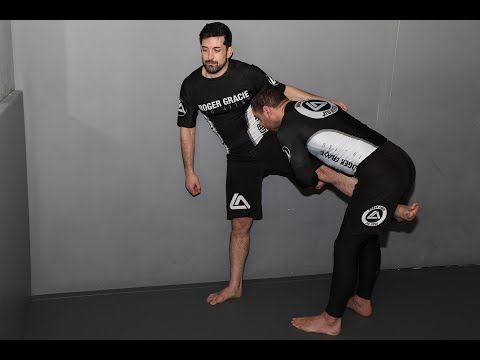
The standard single leg from cage is executed by establishing control against the cage before transitioning to a single-leg attack. Dean Bartholomew (Roger Gracey Academy) emphasizes the importance of reading the opponent's defensive positioning: when the opponent keeps their heel against the cage to prevent leg wraps, a gap opens between the knee and cage. The attacker drives their knee into this space, hooks the leg, then transitions to controlling the single by pinching the leg against their body and running the pike to drop the opponent. Coach Brian (TeachMeGrappling) provides fundamental mechanics for the single-leg shot itself, stressing the knee-over-toe footwork drill, proper level change, and stepping to the outside of the target leg with deep toe-to-toe penetration. He prioritizes positioning the head and chest into the opponent's torso rather than squeezing, maintaining an angled entry that makes sprawling difficult. Drake Ayala (FloWrestling) focuses on finishing mechanics once the leg is secured, emphasizing that the shooting hand must remain above the knee to prevent wizard escapes or sprawls. He advocates for shoulder pressure into the hip area, foot drive, and a controlled hopping motion while circling to trip the remaining leg. All three instructors agree on the importance of proper positioning and pressure application, though they emphasize different phases: cage control and entry (Bartholomew), foundational footwork and penetration (Coach Brian), and mat finishing technique (Ayala).
Synthesized from 3 instructors
Roger Gracey Academy — How to set up a Single Leg Takedown off the Wall - MMA Training with Dean Barthelemy: Explains how to recognize and exploit the gap between opponent's knee and cage when heel is pinned; demonstrates hooking the back leg and transitioning to single-leg control with pike finish
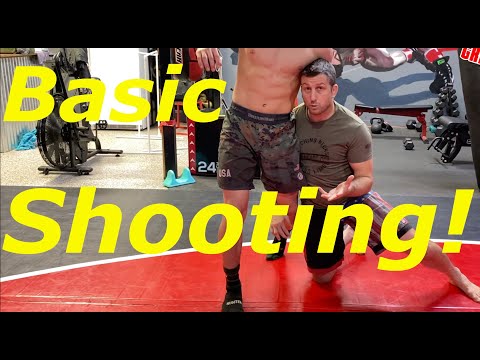
TeachMeGrappling — How to SHOOT the PERFECT Single Leg for Beginners!: Provides foundational shooting mechanics including knee-over-toe footwork drill, level change technique, proper stepping angles (toe-to-toe penetration), angled body position, and head/chest pressure during entry
FloWrestling — Drake Ayala Single Leg Takedown | Technique Tuesday: Details mat finishing sequence with emphasis on shooting hand placement above the knee, shoulder pressure into hip area, foot drive, and hopping/circling motion to trip the remaining leg
Learn This Technique
No instructional courses yet for this technique.
Sign in to suggest a course.
Ratings
Danger Rating
Risk of injury to the person this technique is applied to
4
Moderate4/10
Cage/wall-assisted takedowns; controlled descent against structure
Difficulty
Skill level needed to execute this technique reliably
Intermediate
Competition Legality
Whether this technique is allowed under major competition rule sets
Illegal
— IJF — Banned since 2010 leg grab prohibition — direct han...
1Level Change — lower your stance to penetrate below the opponent's arms
2Penetration Step — drive the lead knee between the opponent's feet
3Head Position — place head on the inside of the opponent's hip for control
4Grip the Leg — clasp hands behind the thigh or knee for a secure hold
5Drive and Finish — drive forward or angle off to complete the takedown
Sources & References
Primary Source
Japanese MMA standard terminology
1OtherJapanese Martial Arts Community Terminology
Japanese MMA standard terminology
2OtherJapanese Martial Arts Hybrid Terminology
Mixed Japanese-Western terminology — combines traditional Japanese terms with katakana loanwords
3CitationJapanese MMA standard terminology
Katakana transliteration used in Japanese MMA/Shooto
Community
Athletics
Requires
penetration step speed, upper body endurance for finishing, balance
Favours
longer arms for reach, quick hips for level change
Key muscles
quadriceps, hip flexors, shoulders, grip/forearms
Frequently Asked Questions
How deep should I step when shooting a single leg?
Coach Brian emphasizes stepping 'toe to toe' with your opponent—if you step too shallow, your opponent will step back and you'll miss the leg. You need to penetrate deep enough that you can't be easily escaped.
What's the knee over toe drill and why is it important?
The knee over toe drill involves stepping out at a 90-degree angle with your foot, then driving your knee over your toe as it touches the mat, before your back leg becomes the new front leg. Coach Brian stresses this drill is critical for building the leg strength needed for shooting, and notes that even athletic beginners find it awkward at first.
Should I pull my opponent or drive into him when finishing a single leg?
Coach Brian advises against standing up and pulling, as this wastes energy. Instead, drive toward your opponent with your head and body weight—if he pushes toward you, push back into him, which transfers his weight to his opposite leg and makes your target leg lighter to control.
Where should my grip hand be positioned when finishing a single leg?
Drake Ayala emphasizes that your shooting hand (the one on the leg) must be above the knee. If your hand is below the knee, your opponent can escape via a wizard, sprawl, or step over—just moving your hand up 4-6 inches eliminates these threats.
How should I position my shoulder when driving into a single leg finish?
Drake Ayala places his shoulder into the opponent's thigh/hip area, positioned almost on top of it rather than on the side. This creates heavy pressure that drives the opponent's entire body weight in the direction you want, making the finish more effective.
How does the Standard Single Leg From Cage work?
The Standard Single Leg From Cage executes the fundamental cage-wall single leg where the attacker captures one leg from the clinch, typically by dropping the near arm to scoop behind the opponent's knee while maintaining upper body pressure against the wall. The attacker then uses a combination of lifting, turning the corner, and driving forward to complete the takedown.
Where does the Standard Single Leg From Cage come from?
The cage single leg was refined by MMA fighters who adapted folkstyle and freestyle single-leg mechanics to the unique constraints and opportunities of the cage wall. The technique is now considered a core component of MMA wrestling education.
Is the Standard Single Leg From Cage legal in competition?
IJF: banned — Banned since 2010 leg grab prohibition — direct hansoku-make for touching opp…; IBJJF: legal — Legal at all belt levels, scored as takedown (2 points); UWW: restricted — Legal in freestyle (2-4 points), banned in Greco-Roman (no attacks below waist); Unified MMA: legal — Legal takedown technique; ADCC: legal — Legal, scored 2-4 points in second half of match; FIAS Sport Sambo: legal — Legal — all takedowns permitted; FIAS Combat Sambo: legal — Legal; NCAA Folkstyle: legal — Legal, scored as takedown (2 points)
How dangerous is the Standard Single Leg From Cage?
How do I set up the Standard Single Leg From Cage?
The standard setup chain: Level Change → Penetration Step → Head Position → Grip the Leg → Drive and Finish.
How do I defend against the Standard Single Leg From Cage?
Standard counters include: Sprawl — drop hips back and drive weight down to stuff the takedown attempt / Whizzer (Overhook) — overhook the attacking arm and drive hip pressure to kill the angle / Cross-Face — push the attacker's head across their body to break their grip and alignment / Limp Leg — pull the attacked leg free by going limp and circling away.
What are the variants of the Standard Single Leg From Cage?
Common variants: Inside single (shooting to the inside of the lead leg, head inside position); Outside single (attacking from the outside of the lead leg); High crotch (securing the thigh above the knee with head in the hip); Low single (attacking the ankle from outside range without deep penet…).
How effective is the Standard Single Leg From Cage in competition?
Commonly used in UFC competition by wrestling-based fighters.
What are common mistakes when doing the Standard Single Leg From Cage?
Top errors to watch for: Bending over to grab the leg instead of dropping your level with the knees — exposes the neck / Not lifting the leg high enough — they stay balanced on one leg and hop away / Staying against the cage after capturing the leg instead of creating space to finish / Ignoring the whizzer defense, letting the opponent use it to spin you off.
What are other names for the Standard Single Leg From Cage?
The Standard Single Leg From Cage is also known as Shinguru Reggu (Kēji kara), Cage Single TD, Wall Single Leg Takedown, Fence Single.