Clever Way to Do Monoplata From the Back with Chad Keel
0
Standard Monoplata·Bernardo Faria BJJ Fanatics·Added by Admin
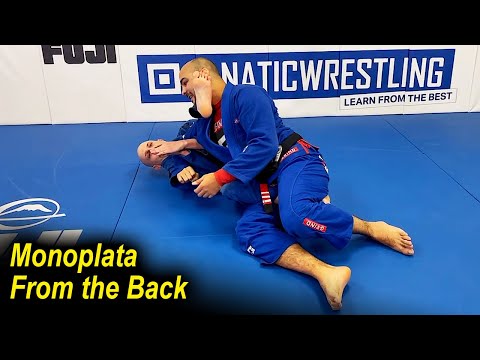
Monoplata From the Back - Chad Keel demonstrates how to do a Monoplata from the Back in this Jiu Jitsu techniques video.…
Translation: monoplata
The monoplata is a shoulder lock applied from top position (mount or side control) where the attacker traps the opponent's arm under their armpit using a single leg, then sits down to hyperextend the shoulder joint through forced internal rotation. [1] The name derives from combining 'mono' (single) with the '-plata' suffix from omoplata, indicating a single-leg shoulder lock variant. Unlike the omoplata (executed from guard), the monoplata is applied from dominant top positions, making it a valuable addition to the mount and side control attack arsenal. [2] Popularized by Marcelo Garcia and Jeff Glover in the late 2000s, the technique exploits the opponent's underhook attempts from bottom position.
Popularized in the late 2000s by Marcelo Garcia and Jeff Glover. A historical precedent exists with Tsunetane Oda (1892-1955), a judo newaza specialist shown demonstrating a similar technique on video. [1] The name combines 'mono' (single) with '-plata' from omoplata (Portuguese for shoulder blade). [2]
An underutilized submission from top position that catches many opponents off guard. Particularly effective against opponents who aggressively underhook from bottom mount or side control. In MMA, the combination of shoulder lock with free hands for strikes makes it a powerful positional weapon. [1]
Popularized by Marcelo Garcia and Jeff Glover (late 2000s). Possible judo antecedent via Tsunetane Oda. Part of the '-plata' shoulder lock family alongside omoplata, baratoplata, and tarikoplata.
Marcelo Garcia used the monoplata in high-level grappling competition. Jeff Glover demonstrated and competed with monoplata attacks. Less commonly seen as a finish in major competition compared to omoplata or kimura, but effective as a positional weapon and threat from top.
No images yet for this technique.
Sign in to suggest an image.
Monoplata From the Back - Chad Keel demonstrates how to do a Monoplata from the Back in this Jiu Jitsu techniques video.…
The Monoplata is one of the most devastating submissions in Jiu-Jitsu, and it translates very well for MMA. It's classic…
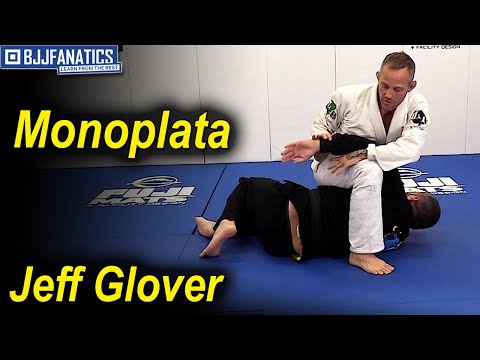
MONOPLATA https://bjjfanatics.com In this jiu jitsu techniques video, Jeff Glover teaches how to do the Monoplata techn…
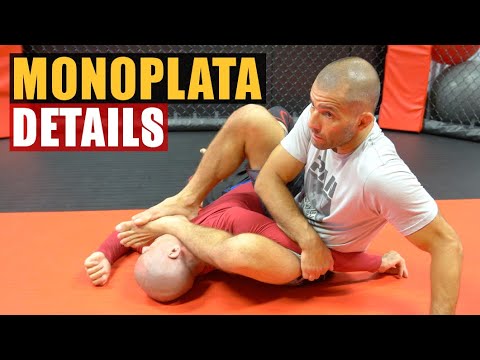
The standard monoplata is a shoulder lock submission executed from various positions, with instructors emphasizing different entry points and setups. Bernardo Faria and Chad Keel demonstrate a distinctive entry from the back control using what they term the "Khabib grip"—a one-handed figure-four grip that exploits space created when the opponent stretches to defend. The technique transitions through a praying-hand position to guide the opponent's arm across their body before hooking and executing the lock. MMA Leech teaches the classical application from mount position, where the attacker traps the opponent's arm by lifting one leg, creates separation by pushing the head down to break the grip, then drives the hand behind the neck while controlling the wrist and elbow. The finish involves either keeping the leg pinned or passing it over the opponent's face before hip-scooping to increase pressure. Jeff Glover emphasizes recognition of the underhook attempt from side control as the trigger point, executing a lean-and-swing motion to trap the arm with the top of the thigh and ribs rather than limb control, leaving hands and feet mobile for transitions to complementary attacks like guillotines, Kimuras, and Pete the Greek wrist locks. All three instructors stress the submission's versatility and interconnectedness with other techniques within their respective positions.
Synthesized from 3 instructors
No instructional courses yet for this technique.
Sign in to suggest a course.
Risk of injury to the person this technique is applied to
Shoulder lock with gradual pressure buildup — can cause shoulder dislocation or rotator cuff damage if opponent refuses to tap, but the slow grinding nature gives more time to tap compared to explosive submissions
Skill level needed to execute this technique reliably
Whether this technique is allowed under major competition rule sets
Evolve MMA — How To Perform The Monoplata in BJJ
Evolve MMA — How To Perform The Monoplata (evolve-mma.com) || BJJ World — Are You Hitting The Monoplata? (bjj-world.com) || BJJEE — The Monoplata Is The Missing Piece (bjjee.com) || BJJ Fanatics — Monoplata Attacks with Jeff Glover
Standard katakana transliteration of Western martial arts terminology (外来語) — used in Japanese MMA, boxing, and BJJ communities
Technique instruction — [1] Evolve MMA — monoplata technical breakdown
[2] BJJ World — setup analysis and competition application
Instructional — BJJ Fanatics — Monoplata Attacks with Jeff Glover
hip mobility for leg swing, understanding of top position mechanics
good hip flexibility
hip flexors, adductors, core stabilizers
MMA Leech recommends pressing the opponent's face down while keeping their elbow pulled up toward your body to secure the finish, though some practitioners prefer passing the leg over as an alternative finish depending on grip control.
Yes, according to MMA Leech, you can apply the monoplata from bottom by controlling your opponent's posture and wrapping their arm to prevent strikes, then hip escaping and getting a front hook to come on top into the submission.
Jeff Glover notes that when your opponent starts to posture up against you, that's your indicator to attack with the monoplata, especially if you couldn't control their underhook enough.
According to Bernardo Faria and Chad Keel, you can transition to an armbar from a loose monoplata position if your opponent escapes.
The monoplata is a shoulder lock applied from top position (mount or side control) where the attacker traps the opponent's arm under their armpit using a single leg, then sits down to hyperextend the shoulder joint through forced internal rotation. The name derives from combining 'mono' (single) with the '-plata' suffix from omoplata, indicating a single-leg shoulder lock variant.
Popularized in the late 2000s by Marcelo Garcia and Jeff Glover. A historical precedent exists with Tsunetane Oda (1892-1955), a judo newaza specialist shown demonstrating a similar technique on video.
IBJJF: legal — Legal at all belt levels; IJF: banned — Only elbow joint locks (kansetsu-waza) permitted in judo — all other joint lo…; ADCC: legal — Legal — all submissions legal in ADCC; Unified MMA: legal — Legal submission technique; FIAS Sport Sambo: legal — Legal; FIAS Combat Sambo: legal — Legal
Danger rating 6/10. Shoulder lock with gradual pressure buildup — can cause shoulder dislocation or rotator cuff damage if opponent refuses to tap, but the slow grinding nature gives more time to tap compared to explosive submissions
The standard setup chain: Establish Top Position → Recognize Underhook Attempt → Trap the Arm → Control Position → Sit Down to Finish.
Standard counters include: Defend the Underhook — don't expose the arm from bottom side control or mount / Roll Toward Attacker — relieve shoulder pressure by rolling into the direction of the lock / Frame and Create Space — prevent the leg from trapping the arm / Pull Trapped Arm Free — before the position consolidates, retract the arm.
Common variants: Mounted monoplata (applied from mount when opponent attempts underhook); Side control monoplata (applied when opponent deep underhooks from bottom side co…); Mounted monoplata with strikes (effective in MMA since hands remain free for ground-and-p…); Closed guard monoplata (setup via omoplata progression when opponent blocks); Armbar transition (switch to straight armbar if opponent's shoulder flexibil…).
Marcelo Garcia used the monoplata in high-level grappling competition. Jeff Glover demonstrated and competed with monoplata attacks.
Top errors to watch for: Not recognizing the underhook opportunity — the monoplata is a counter to the opponent's underhook, not a technique f… / Leg position too loose — the leg must tightly trap the arm to prevent escape / Not sitting down decisively — the finish requires committing to the sit-down motion / Allowing the opponent to roll toward you — must maintain positional control during the transition.
The Standard Monoplata is also known as Monopurata, Monoplata, Single-Leg Shoulder Lock, Mounted Monoplata.