Sneaky Bread Cutter Choke | Fundamental Jiu Jitsu | Performance Martial Arts Academy
0
Bread Cutter Choke·Performance Martial Arts Academy
The simple trick that you’re partners will hate.
Translation: Bread cutter choke — named for the slicing motion of the forearm across the throat, resembling cutting a loaf of bread
The Bread Cutter Choke is a gi-based submission applied from side control where the attacker reaches across the opponent's neck to grip the far collar, then drives the blade edge of the forearm across the throat while dropping body weight to create a cutting compression against the trachea and carotid arteries. [1] The technique derives its name from the slicing motion of the forearm across the neck — the sharp ulnar edge of the forearm acts like a bread knife, pressing into the soft tissue of the throat while the collar grip anchors one side and the body weight provides the downward force. [1],[2] Unlike many side control submissions that require threading an arm under the head or transitioning to a different position, the Bread Cutter is applied directly from a standard cross-face side control, making it one of the most accessible side control submissions in Brazilian Jiu-Jitsu. [1] The choke can function as both a blood choke (compressing the carotid arteries via the collar and forearm) and a windpipe choke (the forearm presses directly against the trachea), depending on the exact angle and depth of the forearm placement. [2] Saulo Ribeiro demonstrates this technique as a high-percentage attack from side control that chains naturally with the kimura, americana, and step-over choke when the opponent defends. [1] The technique gained widespread competition use in the 2010s as practitioners recognised its efficiency: it requires minimal positional adjustment from side control, provides strong pinning pressure while attacking, and finishes with mechanical advantage (the attacker's full body weight assists the choke). [2],[3]
The Bread Cutter Choke emerged as a named technique in Brazilian Jiu-Jitsu competition during the late 2000s and early 2010s, though forearm-across-throat chokes from side control have existed in judo newaza for decades. [2] The technique was popularised in instructional material by high-level BJJ practitioners including Saulo Ribeiro (in Jiu-Jitsu University, 2008), who presents it as a fundamental side control attack. [1] The name 'Paper Cutter' and 'Bread Cutter' appear to have been coined independently by different BJJ schools, both referencing the cutting motion of the forearm across the throat. [2] The technique gained significant traction in IBJJF competition as practitioners recognised that it combines positional dominance (maintaining side control) with a submission threat (the choke), meaning the attacker never risks losing position to attempt the finish — a key strategic consideration in points-based competition. [3]
The Bread Cutter is one of the highest-percentage submissions from side control in gi BJJ competition. [1],[2] Its primary advantage is that it can be applied without abandoning side control, meaning the attacker maintains their dominant position even if the choke fails. [1] The technique is particularly effective against opponents who flatten out under side control (the standard defensive response), because a flat-on-back position exposes the throat to the forearm blade. [1] The dual blood-choke and windpipe-choke mechanism means that even partial application causes significant discomfort, often forcing the opponent to move in ways that create other submission opportunities. [2]
Widely used in IBJJF Gi competition at black belt level. The technique's combination of positional safety and submission threat makes it a staple of competition-oriented BJJ. Specific high-profile finishes include multiple Mundials and Pan American championship matches where the Bread Cutter was used from side control.
No images yet for this technique.
Sign in to suggest an image.
The simple trick that you’re partners will hate.
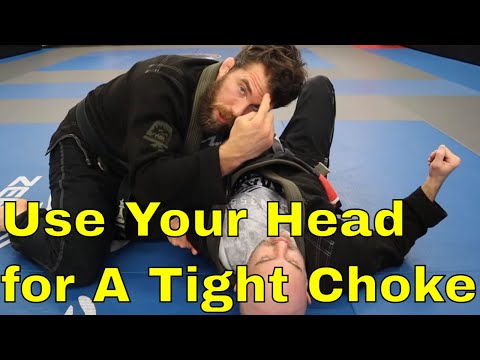
In today's video I'm going to show you a nasty adjustment on the bread cutter / paper cutter choke. If you watched me Sh…
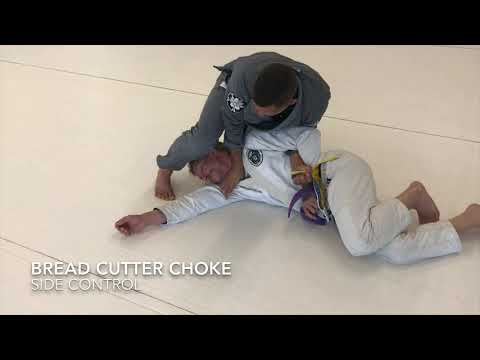
Watch as we go over the bread cutter choke from side control position. Enjoy!
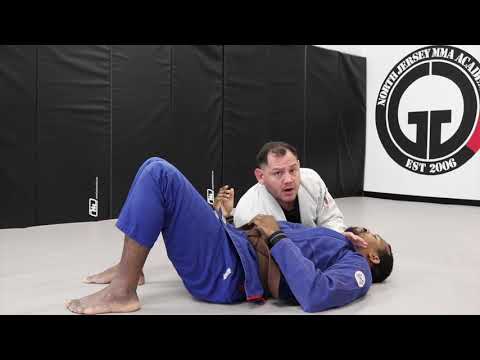
The bread cutter choke is a collar choke attack from side control that leverages the opponent's own lapel to create a tight finishing position. Performance Martial Arts Academy demonstrates the technique off a Camara setup, emphasizing the importance of isolating the opponent's arm, blocking the hips, and pummeling the knee over the inside shoulder before stepping over the head to pull the opponent onto their side. Garrett Goldsberry teaches similar positioning from side control but adds defensive considerations, noting that when opponents defend the traditional cross-collar grip, the attacker can establish a neck frame to keep the opponent's neck away, allowing for a capture as they turn back into the choke. Both instructors emphasize the hand placement—thumb in the collar with fingers gripping inside—and the finishing motion of dropping the hips with head-to-chest contact. Chewjitsu contributes a refinement for difficult finishes: when the opponent defends by gripping, the attacker can place their forehead over the grip hand and drive upward on their toes, using body weight and head pressure to increase choke pressure on the carotid artery. All three instructors stress proper grip placement over the Adam's apple rather than deep neck pressure, and agree that timing the finish as the opponent moves is critical to catching a tight choke.
Synthesized from 3 instructors
No instructional courses yet for this technique.
Sign in to suggest a course.
Risk of injury to the person this technique is applied to
Dual-mechanism choke (blood choke via carotid compression + windpipe choke via tracheal pressure) — the tracheal pressure component makes this particularly uncomfortable and potentially dangerous. The direct forearm-to-throat contact can cause tracheal bruising or cartilage damage if applied explosively. Onset of unconsciousness from the blood choke component is typically 4-8 seconds once fully locked.
Skill level needed to execute this technique reliably
Whether this technique is allowed under major competition rule sets
Jiu-Jitsu University (Ribeiro & Howell, 2008)
description: [1] Ribeiro 2008, [2] Danaher 2018
Standard katakana transliteration of Western martial arts terminology (外来語) — used in Japanese MMA, boxing, and BJJ communities
description: [1] Ribeiro 2008, [2] Danaher 2018
Requires good shoulder reach to grip the far collar while maintaining side control
Benefits from heavy top pressure (body weight is the primary finishing mechanism)
Strong cross-face control
Does not require exceptional grip strength (the collar provides a mechanical grip advantage)
Accessible to practitioners of all body types, though longer arms make the far collar grip easier
The bread cutter (paper cutter) choke uses one hand deep in the collar and the other arm pressing the opponent's own lapel against the back of their neck — a 'cutting' motion like slicing bread. Applied from side control. Documented in US Army FM 3-25.150 Combatives. (US Army FM 3-25.150; BJJ instructionals)
According to Chewjitsu, you want a little bit of slack in the collar initially, then position the hinge of your grip directly over the opponent's Adam's apple rather than going too deep, which can result in just cutting down on the neck.
Chewjitsu recommends getting up on your toes to transfer your weight onto the opponent's neck, and if they're defending, place your forehead over the top of your grip and drive forward—this uses your head to counterbalance their defense.
Garrett Goldsberry suggests waiting for the opponent to attempt a back escape or forcing it yourself with a hip switch, then stepping over and swimming back in to maintain position.
As your opponent starts to escape, block them and sneak your hand through to get your palms in the back of the collar, then lock them in shoulder to shoulder as they come back towards you, according to Garrett Goldsberry.
The Bread Cutter Choke is a gi-based submission applied from side control where the attacker reaches across the opponent's neck to grip the far collar, then drives the blade edge of the forearm across the throat while dropping body weight to create a cutting compression against the trachea and carotid arteries. The technique derives its name from the slicing motion of the forearm across the neck — the sharp ulnar edge of the forearm acts like a bread knife, pressing into the soft tissue of the throat while the collar grip anchors one side and the body weight provides the downward force.
The Bread Cutter Choke emerged as a named technique in Brazilian Jiu-Jitsu competition during the late 2000s and early 2010s, though forearm-across-throat chokes from side control have existed in judo newaza for decades. The technique was popularised in instructional material by high-level BJJ practitioners including Saulo Ribeiro (in Jiu-Jitsu University, 2008), who presents it as a fundamental side control attack.
IBJJF: legal — Legal at all belt levels, gi and no-gi — chokes are the safest submission cat…; IJF: legal — Legal (shime-waza) — strangulation techniques are one of three permitted subm…; ADCC: restricted — N/A (no-gi competition only — technique requires gi); Unified MMA: restricted — N/A (technique requires gi — not applicable in MMA); FIAS Sport Sambo: banned — All chokes prohibited in Sport Sambo; FIAS Combat Sambo: legal — Legal
Danger rating 8/10. Dual-mechanism choke (blood choke via carotid compression + windpipe choke via tracheal pressure) — the tracheal pressure component makes this particularly uncomfortable and potentially dangerous. The direct forearm-to-throat contact can cause tracheal bruising or cartilage damage if applied explosively. Onset of unconsciousness from the blood choke component is typically 4-8 seconds once fully locked.
The standard setup chain: Establish side control → Maintain heavy cross-face pressure to flatten the opponent → Reach the far hand across the neck to grip the far collar (four fingers deep inside) → Settle the forearm blade edge across the throat → Drop the shoulder and chest weight onto the forearm → Opponent taps from carotid/tracheal compression → If defended → Transition to kimura (if they push the choking arm) or step-over choke (if they turn away).
Standard counters include: Tuck the chin — blocking the forearm from crossing the throat by pressing the chin down / Strip the collar grip — using the far hand to peel the attacker's fingers out of the collar before the choke is set / Turn to the side — presenting the side of the neck instead of the front reduces the forearm's ability to compress the… / Frame against the shoulder — creating a frame with the arms against the attacker's choking shoulder prevents the body….
Common variants: Standard Bread Cutter (cross-face hand reaches to far collar, forearm drops acro…); Paper Cutter (reverse grip) (same mechanic but with the hand gripping palm-up instead …); Near-side Bread Cutter (gripping the near collar instead of the far collar, apply…); Bread Cutter from mount (transitioning from mount to a side position while maintai…); Bread Cutter to armbar (if the opponent pushes on the choking arm to defend, tran…).
Widely used in IBJJF Gi competition at black belt level. The technique's combination of positional safety and submission threat makes it a staple of competition-oriented BJJ.
Top errors to watch for: Gripping the near collar instead of the far collar — the near collar does not provide the correct angle for the forea… / Shallow collar grip — if only two fingers are inside the collar, the grip will slip under pressure; four fingers must… / Trying to squeeze with arm strength — the Bread Cutter finishes with body weight dropping through the forearm, not wi… / Lifting the hips while attacking — raising the hips creates space that allows the opponent to hip escape; the hips mu….
The Bread Cutter Choke is also known as Bureddo Kattā Chōku, Bread Slicer Choke, Paper Cutter Choke, Collar Pressure Choke, Cutter Choke.