Beginner's MMA Crash Course: Lesson 1 Basics
0
Standard Spinning Backfist·fightTIPS
Are you interested in MMA, but don't know where to begin? Here is a beginner's crash course, starting from lesson 1 with…
Translation: standard spinning backfist
The standard spinning backfist is the basic execution of a 360-degree rotational backfist, where the fighter pivots on the lead foot and whips the rear hand's knuckles into the opponent's head. [1] The technique was refined in American full-contact karate during the 1970s-1980s, where competitors discovered that the added rotational momentum could generate knockout power from the relatively light backfist. [1] In MMA, the standard spinning backfist has produced numerous knockouts, with Shonie Carter's spinning backfist KO of Matt Serra at UFC 31 (2001) being one of the earliest high-profile examples. [2]
The spinning backfist generates significant force through full-body rotation but sacrifices defensive positioning and visual contact with the opponent during the spin. [1] It is a high-risk, high-reward technique that is most effective when the opponent does not expect it or is moving into the strike's path. [1]
No images yet for this technique.
Sign in to suggest an image.
Are you interested in MMA, but don't know where to begin? Here is a beginner's crash course, starting from lesson 1 with…
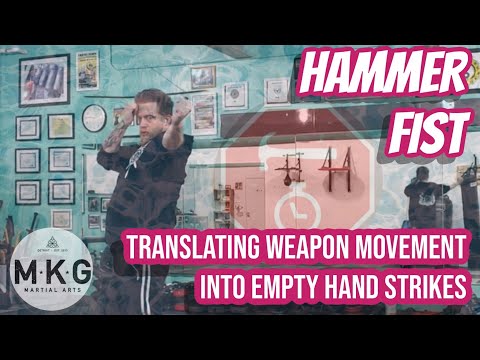
In Filipino Martial Art, the weapon “informs” the hand. This means the FMA Practitioner learns to use the weapon right a…
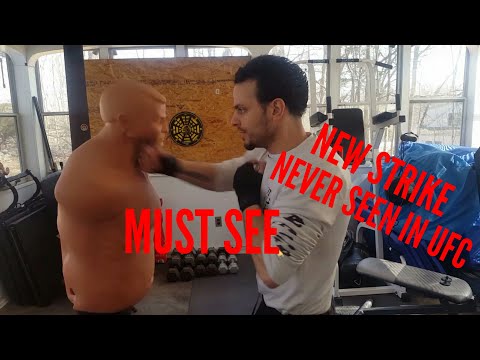
New strike never seen in mma ufc how to. As a amazon associate i earn money from eligible purchases. pride To purcha…
The spinning backfist is a striking technique that generates power through rotational hip and body mechanics, though instructors emphasize different applications and mechanics. PRIDE MARTIAL ARTS focuses on the standard backfist (non-spinning variant) as a practical MMA tool, positioning it as an underutilized strike that follows elbow strikes in clinch situations—particularly targeting the temple, jaw, and side of the head with short, snapping motions. This instructor emphasizes its value in combinations and as a follow-up technique when momentum from previous strikes is leveraged. Coach Kurt approaches the backfist through a weapons-based framework, analyzing it as a 'backhand' motion derived from stick-work mechanics, demonstrating multiple angles of delivery: horizontal slashes, diagonal upward and downward trajectories, and various loading positions (elbow up, elbow neutral). Coach Kurt stresses counter-rotation of the hips facilitated by pivoting on the ball of the foot to generate distance and snap. fightTIPS provides fundamental stance and footwork principles applicable to all striking techniques, establishing the basic fighting position and weight transfer mechanics that underpin power generation in punches and strikes, though it does not specifically address the backfist. All instructors agree that proper hip rotation, body alignment, and retraction mechanics are essential to effective striking, though PRIDE MARTIAL ARTS and Coach Kurt differ in their emphasis: the former prioritizes practical MMA application in close quarters, while the latter explores diverse geometric angles and weapon-derived biomechanics.
Synthesized from 3 instructors
No instructional courses yet for this technique.
Sign in to suggest a course.
Risk of injury to the person this technique is applied to
Spinning/standing backfist; metacarpal fracture risk to striker
Skill level needed to execute this technique reliably
Whether this technique is allowed under major competition rule sets
Karate-Do Kyohan: The Master Text (Gichin Funakoshi, 1935)
Alias sources — [1] Karate-Do Kyohan (Funakoshi, 1935) [2] Championship Fighting (Dempsey, 1950) [3] Kukkiwon Taekwondo Textbook (Kukkiwon, 2006)
Effectiveness sources — [1] Karate-Do Kyohan (Funakoshi, 1935)
Official karate technique names (和語/漢語)
Established Japanese martial arts naming convention — native Japanese term (和語/漢語)
Alias sources — [1] Karate-Do Kyohan (Funakoshi, 1935) [2] Championship Fighting (Dempsey, 1950) [3] Kukkiwon Taekwondo Textbook (Kukkiwon, 2006)
Effectiveness sources — [1] Karate-Do Kyohan (Funakoshi, 1935)
hand speed, hip rotation, wrist alignment on impact
proportional reach, strong wrists, fast-twitch shoulder muscles
deltoids, pectorals, triceps, core rotators, forearms
According to Pride Martial Arts, the backfist is a powerful strike to use when you have someone in the clinch after landing an elbow. It's particularly effective because when landed, it creates a memorable impact that surprises opponents.
Pride Martial Arts recommends targeting the temple, the back of the jaw, center of the jaw, or tip of the jaw—you'll have the most success if you land it flush to the temple or jaw.
After landing a short elbow and following through, snap back and deliver the backfist. Pride Martial Arts emphasizes keeping your forearms tight in the clinch to maintain control before releasing one hand to deliver the strike.
The fundamental spinning backfist executed by pivoting on the lead foot, rotating the body 360 degrees, and striking with the back of the fist at head level.
The standard spinning backfist is the basic execution of a 360-degree rotational backfist, where the fighter pivots on the lead foot and whips the rear hand's knuckles into the opponent's head. The technique was refined in American full-contact karate during the 1970s-1980s, where competitors discovered that the added rotational momentum could generate knockout power from the relatively light backfist.
Unified MMA: legal — Legal striking technique; WBC/Boxing: legal — Legal — punches are the core technique of boxing; WKF: legal — Legal, jodan/chudan punch scores 1 point (yuko) — controlled contact required; Kyokushin: restricted — Body punches legal at full power, head punches banned; WT: restricted — Punches to trunk only (1 point), punches to head banned; ITF: legal — Legal — hand techniques to head and body both permitted; WAKO: legal — Legal in Full Contact and Low Kick formats; K: legal — 1/GLORY — Legal — full power punches to head and body; IFMA: legal — Legal
Danger rating 5/10. High — spinning/standing backfist; metacarpal fracture risk to striker
The standard setup chain: Assume Fighting Stance → Generate Power → Execute Strike → Recover to Guard.
Standard counters include: Block — absorb the strike with a protective guard position / Evasion — move the target out of the strike's path / Counter-Attack — time an offensive response during the recovery phase of the strike.
Common variants: Standing backfist (snapping the back of the fist outward from a lead position); Spinning backfist (full rotation before striking with the back of the fist); Jumping spinning backfist (adding an airborne component for extra speed and power).
Shonie Carter's spinning backfist knockout of Matt Serra at UFC 31 (2001) was one of the first high-profile uses of the technique in MMA. More recently, fighters like Yoel Romero and Rafael Fiziev have scored notable spinning backfist knockouts in the UFC.
Top errors to watch for: Leaning away from the opponent during the spin, which reduces reach and power / Letting the arm go limp during rotation — the arm must be firm on impact to transfer force / Closing both eyes during the rotation out of disorientation / Attempting the spinning backfist when the opponent is already pressuring forward into clinch range — they will smothe….
The Standard Spinning Backfist is also known as Kaiten Uraken (Kihon-gata), Standard Uraken, Standard Spinning Back Fist, Standard Dwi Jireugi.