Chest Pressure North-South

Genus

胸圧迫南北(Mune Appaku Nanboku)

Hybrid

Translation: chest pressure north-south

Overview

The Chest Pressure North-South maximises the pinning pressure of the north-south position by driving the sternum directly into the opponent's sternum or diaphragm, using bodyweight to compress the bottom fighter's breathing. [1] The chest-to-chest pressure is the primary control mechanism in north-south, making breathing difficult for the bottom fighter and reducing their ability to generate the movement needed to escape. [1],[2] Effective chest pressure north-south requires proper weight distribution and hip positioning. [2],[3]

Also known as
Chest-to-Chest North-South[1]Heavy North-South[2]Pressure NS[3]

History & Origin

Chest pressure north-south represents the fundamental north-south control technique, emphasising the same chest-to-chest compression that makes judo's kami-shiho-gatame an effective pin. [1] It is the standard north-south control taught in both judo and BJJ. [2],[3]

Effectiveness

Chest pressure north-south maximises chest-to-chest weight distribution to exhaust the opponent and prevent escapes. [1]

Lineage

Chest pressure north-south is a control-focused variant developed in BJJ. [1]

Competition Record

Used in BJJ and MMA competition for exhaustion-based control. [1]

Images

No images yet for this technique.

Sign in to suggest an image.

Biomechanical Mechanism

Primary ActionEstablishing and maintaining a controlling position relative to the opponent
Joints InvolvedBody positioning determines which joints and limbs are available for control and attack
Force VectorVaries by position — gravity, frames, hooks, and pressure dictate control dynamics
Positional MechanicHierarchy of positions — each position offers different offensive and defensive capabilities

Position & Entry

From side control (walking around)Walk around the opponent's head from side control to north-south position, sprawling chest on their chest
From kimura attemptWhen the opponent defends the kimura from side control, transition to north-south to maintain pressure

Variants

Standard variationprimary positioning for control and attack
Offensive variationconfigured for submission or striking opportunities
Transitional variationpositioned for quick movement to the next position
Defensive variationprioritising stability and control over attack

Videos

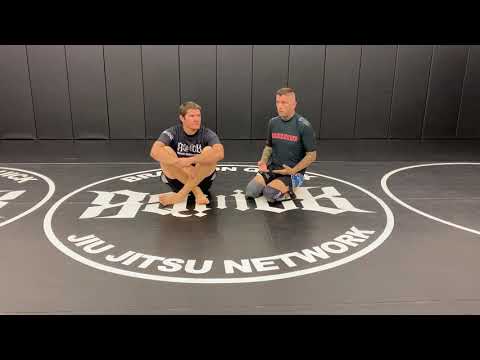
How to use chest pressure to take the back

0
Chest Pressure North-South·Brandon Quick·Added by Admin

This is one of my favorite Back Retention Drills www.BQuickJJ.com

1 video

Learn This Technique

No instructional courses yet for this technique.

Sign in to suggest a course.

Ratings

Danger Rating

Risk of injury to the person this technique is applied to

3
Moderate3/10

Top positions enable pressure and striking; rib compression risk under heavy pressure

Difficulty

Skill level needed to execute this technique reliably

Intermediate
Competition Legality

Whether this technique is allowed under major competition rule sets

IBJJF — Legal, mount scores 4 points — highest-scoring po...
IBJJF Rules Book v6.0, June 2024PDF
ADCC — Legal, mount scores 2 points
ADCC Rules Update, April 2025PDF
Unified MMA — Legal dominant position
Unified Rules of MMA, August 2025PDF
UWW — Legal, back exposure scores points, pin ends match ...
UWW International Wrestling Rules, January 2026PDF
FIAS Sport Sambo — Legal, pin scores points
FIAS International Sambo Competition RulesPDF

Training Notes

Chest pressure north-south maximizes the weight transfer from the top player into the opponent's chest — it is the most controlling north-south variation, used to exhaust and immobilize before attacking (Saulo Ribeiro, Jiu-Jitsu University, 2008)
Chest pressure north-south technique: relax the entire body weight into the chest, sprawl the legs back for maximum drive, and control the arms to prevent any framing
The sprawled legs act like anchors: they drive the chest forward and downward into the opponent
This variation is particularly effective against larger or stronger opponents: the concentrated chest pressure restricts breathing and movement
The opponent's only escape option from chest pressure north-south is to create an angle — if the top player follows the angle, the escape fails
Chest pressure north-south is a wearing position: holding it for 30-60 seconds exhausts the opponent before transitioning to submissions
The pressure should feel like a gradual increase: settle the weight, then progressively drive more force into the chest

Common Mistakes

!Not relaxing the body weight — tension reduces the pressure; relax and let gravity do the work
!Keeping the legs too close — sprawl the legs back and wide for maximum forward drive
!Not controlling the opponent's arms — free arms allow framing and escape
!Staying in chest pressure north-south indefinitely — use the exhaustion to set up submissions or transitions
!Not following when the opponent angles — stay aligned with their centreline
!Applying pressure with the shoulders instead of the chest — the full chest surface creates maximum pressure
!Not using chest pressure north-south strategically — it is a tool for tiring the opponent before attacking

Related Techniques

Counter Techniques

Setup Chain

1Achieve Positiontransition into this position through passing, sweeping, or scrambling
2Stabilizeestablish controlling grips and weight distribution
3Maintainadjust to the opponent's escape attempts to hold position
4Attacklaunch offensive techniques from the stabilized position

Sources & References

Primary Source

Mastering Jujitsu (Renzo Gracie & John Danaher, 2003)

1BookJiu-Jitsu University (Ribeiro, 2008)

Alias sources — [1] Jiu-Jitsu University (Ribeiro, 2008) [2] Mastering Jujitsu (Gracie & Danaher, 2003) [3] Mastering Jujitsu (Gracie & Danaher, 2003)

2BookBrazilian Jiu-Jitsu: Theory and Technique (Gracie & Gracie, 2001)

Effectiveness sources — [1] Jiu-Jitsu University (Ribeiro, 2008)

3OtherJapanese Martial Arts Hybrid Terminology

Mixed Japanese-Western terminology — combines traditional Japanese terms with katakana loanwords

4CitationJiu-Jitsu University (Ribeiro, 2008)

Alias sources — [1] Jiu-Jitsu University (Ribeiro, 2008) [2] Mastering Jujitsu (Gracie & Danaher, 2003) [3] Mastering Jujitsu (Gracie & Danaher, 2003)

5CitationBrazilian Jiu-Jitsu: Theory and Technique (Gracie & Gracie, 2001)

Effectiveness sources — [1] Jiu-Jitsu University (Ribeiro, 2008)

Community

Athletics

Requires

body awareness, stability, control of weight distribution

Favours

athletic build with good proprioception

Key muscles

core, hips, legs for base stability

Frequently Asked Questions

How do I use chest pressure to move my opponent's arm across their body?

According to Brandon Quick, you want to get behind your opponent's triceps and push in on your toes while getting higher in the mount, then turn into the pressure—this fundamental movement works for transitions to arm bars or S-mount positions.

Can I apply chest pressure from side control to take the back?

Yes, Brandon Quick explains that from side control you can get behind your opponent's shoulder and chest, then push in hard with your arms free until they turn slightly, allowing you to step into a back-taking position.

What should I focus on when using chest pressure?

Brandon Quick emphasizes pushing to force your opponent's hip grip one way or another—either your belly puts their arm around or they plant it defensively—while using your hands as little as possible.

How does the Chest Pressure North-South work?

The Chest Pressure North-South maximises the pinning pressure of the north-south position by driving the sternum directly into the opponent's sternum or diaphragm, using bodyweight to compress the bottom fighter's breathing. The chest-to-chest pressure is the primary control mechanism in north-south, making breathing difficult for the bottom fighter and reducing their ability to generate the movement needed to escape.

Where does the Chest Pressure North-South come from?

Chest pressure north-south represents the fundamental north-south control technique, emphasising the same chest-to-chest compression that makes judo's kami-shiho-gatame an effective pin. It is the standard north-south control taught in both judo and BJJ.

Is the Chest Pressure North-South legal in competition?

IBJJF: legal — Legal, mount scores 4 points — highest-scoring position; IJF: legal — Legal, osaekomi (pin) — 10-19 seconds scores waza-ari, 20 seconds scores ippon; ADCC: legal — Legal, mount scores 2 points; Unified MMA: legal — Legal dominant position; UWW: legal — Legal, back exposure scores points, pin ends match by fall; FIAS Sport Sambo: legal — Legal, pin scores points

How dangerous is the Chest Pressure North-South?

Danger rating 3/10. Moderate — top positions enable pressure and striking; rib compression risk under heavy pressure

How do I set up the Chest Pressure North-South?

The standard setup chain: Achieve Position → Stabilize → Maintain → Attack.

How do I defend against the Chest Pressure North-South?

Standard counters include: Bridge (Upa) — explosive hip elevation to off-balance the top player / Elbow-Knee Escape (Shrimp) — create space by driving elbow to knee and hip-escaping / Frame — establish forearm frames to prevent the top player from settling weight.

What are the variants of the Chest Pressure North-South?

Common variants: Standard variation (primary positioning for control and attack); Offensive variation (configured for submission or striking opportunities); Transitional variation (positioned for quick movement to the next position); Defensive variation (prioritising stability and control over attack).

How effective is the Chest Pressure North-South in competition?

Used in BJJ and MMA competition for exhaustion-based control.

What are common mistakes when doing the Chest Pressure North-South?

Top errors to watch for: Not relaxing the body weight — tension reduces the pressure; relax and let gravity do the work / Keeping the legs too close — sprawl the legs back and wide for maximum forward drive / Not controlling the opponent's arms — free arms allow framing and escape / Staying in chest pressure north-south indefinitely — use the exhaustion to set up submissions or transitions.

What are other names for the Chest Pressure North-South?

The Chest Pressure North-South is also known as Mune Appaku Nanboku, Chest-to-Chest North-South, Heavy North-South, Pressure NS.