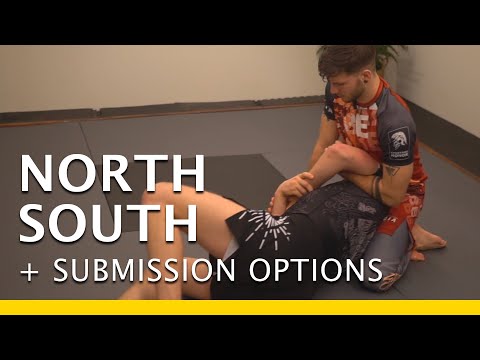
Standard North-South

SubFamily

Translation: standard north-south

Range & classification

Category
Strike & defenceLocksClose rangeFighting multiple people
Distance
CloseMiddleLong

Overview

The Standard North-South subfamily covers the basic north-south control position where the top fighter lies chest-to-chest in opposite orientation, using bodyweight and arm control to pin the opponent. [1] Standard north-south is primarily a controlling and transitional position, used to maintain dominance while setting up attacks or transitions to other positions. [1],[2] The standard north-south uses underhook control on both sides to prevent the bottom fighter from creating frames or turning. [2],[3]

Also known as
Basic North-South[1]Kami Shiho Gatame (δΈŠε››ζ–Ήε›Ίγ‚)JP[2]Standard NS[3]

History & Origin

Standard north-south control derives from judo's kami-shiho-gatame, one of the traditional pinning techniques in judo's osaekomi-waza. [1] BJJ adopted and adapted the position as part of its ground control system. [2],[3]

Country of originΒ· shown in random order

  • BrazilBJJ, MMA, Submission Grappling
  • Japanγ‚Ήγ‚Ώγƒ³γƒ€γƒΌγƒ‰ε—εŒ—(Sutandādo Nanboku)BJJ, Judo, Submission Grappling
  • USAMMA, Submission Grappling, Catch Wrestling
  • EnglandCatch Wrestling

Effectiveness

The standard north-south position provides strong chest-to-chest pressure control with access to kimura, arm attacks, and chokes. [1],[2]

Lineage

North-south control is a fundamental BJJ top position. [1]

Competition Record

North-south is used in both BJJ and MMA competition. [1]

Images

No images yet for this technique.

Sign in to suggest an image.

Biomechanical Mechanism

Primary Action β€” Perpendicular chest-to-chest control β€” pinning the opponent's upper body while maintaining mobility
Joints Involved β€” Attacker's chest (primary contact), hips (sprawled or driving), opponent's near shoulder and hip (controlled)
Force Vector β€” Downward and lateral β€” chest pressure pins the opponent while hip positioning prevents escape
Positional Mechanic β€” Crossface and underhook combination controls the opponent's head and near arm, preventing bridging or turning

Position & Entry

From side control (walking around) β€” Walk around the opponent's head from side control to north-south position, sprawling chest on their chest
From kimura attempt β€” When the opponent defends the kimura from side control, transition to north-south to maintain pressure

Videos

North South

0
Standard North-SouthΒ·Energia Martial Arts

North South We take a look at the north south position, some submissions (the north south choke and the scorpion death l…

1 video

Learn This Technique

No instructional courses yet for this technique.

Sign in to suggest a course.

Ratings

Danger Rating

Risk of injury to the person this technique is applied to

3
Moderate3/10

Top positions enable pressure and striking; rib compression risk under heavy pressure

Difficulty

Skill level needed to execute this technique reliably

Intermediate
Competition Legality

Whether this technique is allowed under major competition rule sets

β€” IBJJF β€” Legal, mount scores 4 points β€” highest-scoring po...
IBJJF Rules Book v6.0, June 2024PDF
β€” ADCC β€” Legal, mount scores 2 points
ADCC Rules Update, April 2025PDF
β€” Unified MMA β€” Legal dominant position
Unified Rules of MMA, August 2025PDF
β€” UWW β€” Legal, back exposure scores points, pin ends match ...
UWW International Wrestling Rules, January 2026PDF
β€” FIAS Sport Sambo β€” Legal, pin scores points
FIAS International Sambo Competition RulesPDF

Training Notes

βœ“Standard north-south subfamily covers the fundamental configurations of the head-to-head control position β€” the primary north-south holds and controls (Saulo Ribeiro, Jiu-Jitsu University, 2008)
βœ“Standard north-south control: chest on the opponent's chest, arms controlling their arms (overhooks or underhooks), head beside their hip, and hips low
βœ“The standard north-south is the platform for: the north-south choke (kimura grip around the neck), side-to-side transitions, and far-side attacks
βœ“North-south pressure is uniquely suffocating: the entire upper body weight drives straight down into the opponent's chest
βœ“Standard north-south requires constant adjustment: the opponent will try to create angles; follow their movement to maintain the chest-to-chest alignment
βœ“The arms in standard north-south: typically both arms underhook the opponent's arms, controlling their elbows against your ribs
βœ“Drill: from side control, transition to north-south and hold β€” 2-minute rounds with partner attempting escapes

Common Mistakes

!Not maintaining chest-to-chest alignment β€” the chest must stay centred on the opponent's chest
!Keeping the arms in a weak position β€” the arms should control the opponent's arms snugly
!Not driving the hips toward the mat β€” low hips provide the base for the chest pressure
!Staying centred when the opponent creates an angle β€” follow their angle to re-establish alignment
!Not threatening the north-south choke β€” the choke threat keeps the opponent defensive
!Transitioning to north-south without purpose β€” have a specific attack or transition plan before moving to north-south
!Not practising the north-south transition β€” the walk from side control to north-south is a specific skill

Related Techniques

Counter Techniques

Setup Chain

1Achieve Position β€” transition into this position through passing, sweeping, or scrambling
2Stabilize β€” establish controlling grips and weight distribution
3Maintain β€” adjust to the opponent's escape attempts to hold position
4Attack β€” launch offensive techniques from the stabilized position

Sources & References

Primary Source

Brazilian Jiu-Jitsu: Theory and Technique (Renzo Gracie & Royler Gracie, 2001)

1BookJiu-Jitsu University (Ribeiro, 2008)

Alias sources β€” [1] IBJJF Rules (2024) [2] Kodokan Judo (Kano, 1986) [3] Jiu-Jitsu University (Ribeiro, 2008)

2BookBrazilian Jiu-Jitsu: Theory and Technique (Gracie & Gracie, 2001)

Effectiveness sources β€” [1] Jiu-Jitsu University (Ribeiro, 2008) [2] Mastering Jujitsu (Gracie & Danaher, 2003)

3OtherJapanese Martial Arts Hybrid Terminology

Mixed Japanese-Western terminology β€” combines traditional Japanese terms with katakana loanwords

4CitationJiu-Jitsu University (Ribeiro, 2008)

Alias sources β€” [1] IBJJF Rules (2024) [2] Kodokan Judo (Kano, 1986) [3] Jiu-Jitsu University (Ribeiro, 2008)

5CitationBrazilian Jiu-Jitsu: Theory and Technique (Gracie & Gracie, 2001)

Effectiveness sources β€” [1] Jiu-Jitsu University (Ribeiro, 2008) [2] Mastering Jujitsu (Gracie & Danaher, 2003)

Community

Athletics

Requires

body awareness, stability, control of weight distribution

Favours

athletic build with good proprioception

Key muscles

core, hips, legs for base stability

Sub-techniques

Find by what a technique does β€” not its name

Every move, in any martial art, shares a few universal traits. Mix and match below to pinpoint the right tool β€” or compare equivalents across styles.

Category
Distance

Frequently Asked Questions

How do I transition from side control to north-south position?

From side control, switch your underhook with your cross-face arm, then block the opponent's hip with the entire length of your arm rather than just your hand. Lean down and walk toward the position while keeping the switch quick to prevent escape.

What's the key body positioning in north-south?

Keep your ribs tight against the opponent's neck underneath their armpit, stay as low as possible on their head, and position yourself higher on their body toward their feet. The lower and tighter you are, the less space they have to escape with their legs.

How do I defend against the opponent turning their chin to escape the choke?

Stay close with your ribs, walk your body down the mat, and keep your head next to the opponent on the mat while slowly following their body position. This prevents them from creating the space needed to turn their chin and escape the choke.

When should I use north-south as a reactive position?

Use north-south reactively as soon as you feel the opponent escaping your side control, such as when they get their elbow in to attempt an underhook or ab escape. Once you sense you're losing the position, quickly switch your grips and block to transition to north-south.

How does the Standard North-South work?

The Standard North-South subfamily covers the basic north-south control position where the top fighter lies chest-to-chest in opposite orientation, using bodyweight and arm control to pin the opponent. Standard north-south is primarily a controlling and transitional position, used to maintain dominance while setting up attacks or transitions to other positions.

Where does the Standard North-South come from?

Standard north-south control derives from judo's kami-shiho-gatame, one of the traditional pinning techniques in judo's osaekomi-waza. BJJ adopted and adapted the position as part of its ground control system.

Is the Standard North-South legal in competition?

IBJJF: legal β€” Legal, mount scores 4 points β€” highest-scoring position; IJF: legal β€” Legal, osaekomi (pin) β€” 10-19 seconds scores waza-ari, 20 seconds scores ippon; ADCC: legal β€” Legal, mount scores 2 points; Unified MMA: legal β€” Legal dominant position; UWW: legal β€” Legal, back exposure scores points, pin ends match by fall; FIAS Sport Sambo: legal β€” Legal, pin scores points

How dangerous is the Standard North-South?

Danger rating 3/10. Moderate β€” top positions enable pressure and striking; rib compression risk under heavy pressure

How do I set up the Standard North-South?

The standard setup chain: Achieve Position β†’ Stabilize β†’ Maintain β†’ Attack.

How do I defend against the Standard North-South?

Standard counters include: Bridge (Upa) β€” explosive hip elevation to off-balance the top player / Elbow-Knee Escape (Shrimp) β€” create space by driving elbow to knee and hip-escaping / Frame β€” establish forearm frames to prevent the top player from settling weight.

What are the variants of the Standard North-South?

Common variants: Standard variation (primary positioning for control and attack); Offensive variation (configured for submission or striking opportunities); Transitional variation (positioned for quick movement to the next position); Defensive variation (prioritising stability and control over attack).

How effective is the Standard North-South in competition?

North-south is used in both BJJ and MMA competition.

What are common mistakes when doing the Standard North-South?

Top errors to watch for: Not maintaining chest-to-chest alignment β€” the chest must stay centred on the opponent's chest / Keeping the arms in a weak position β€” the arms should control the opponent's arms snugly / Not driving the hips toward the mat β€” low hips provide the base for the chest pressure / Staying centred when the opponent creates an angle β€” follow their angle to re-establish alignment.

What are other names for the Standard North-South?

The Standard North-South is also known as Sutandādo Nanboku, Basic North-South, Kami Shiho Gatame (δΈŠε››ζ–Ήε›Ίγ‚), Standard NS.