Ways to use Mini Stomp, 10th Planet Orange Park Jiu Jitsu
0
The Stomp Position·10th Planet Orange Park
Ways to use Mini Stomp, 10th Planet Orange Park, #10thplanetjiujitsu #10thplanet https://www.10porangepark.com/ Che…
Translation: The stomp position
The Stomp Position is entered when the opponent achieves double underhooks from inside guard; the bottom player uses the position to set up stomps, sweeps, and the Godfather series. [1]
The Stomp Position is part of Eddie Bravo's 10th Planet Jiu-Jitsu system, developed for no-gi and MMA competition. [1]
Proven in professional MMA and no-gi grappling competition by 10th Planet practitioners. [1]
10th Planet Jiu-Jitsu; Eddie Bravo lineage. [1]
Used in professional MMA and EBI competition
No images yet for this technique.
Sign in to suggest an image.
Not yet documented
Ways to use Mini Stomp, 10th Planet Orange Park, #10thplanetjiujitsu #10thplanet https://www.10porangepark.com/ Che…
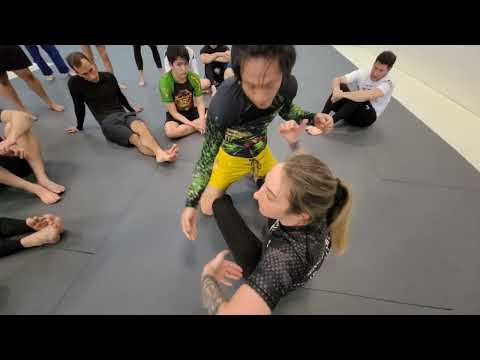
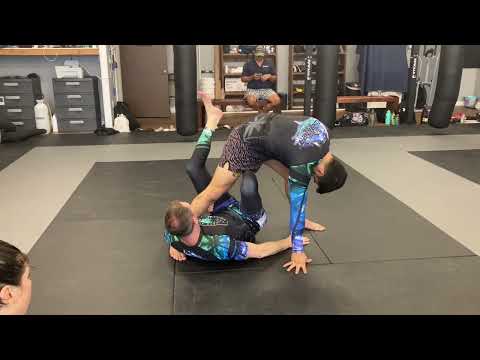
The Stomp Position is a half-guard control mechanism used to establish a stable base and transition to offensive guard positions, particularly in 10th Planet Jiu-Jitsu. Both instructors emphasize precise foot placement and upper-body control as foundational elements. 10th Planet Orange Park stresses catching the opponent's knee as they step in, positioning the outside foot first beneath the leg before layering the inside foot on top to create a sandwich effect, with elbows tucked tight to the hips to prevent cross-face attacks and enable underhook access. This positioning enables transitions to wrestling-style takedowns, leg attacks, or butterfly guard entries. 10th Planet Denver Jiu Jitsu describes a sequential foot progression—pre-stomp, stomp, and super-stomp—executed with precise hand control (overhook and "pimp arm" on the opponent's knee) before transitioning to butterfly guard or the 50/50 position called "kookoo." While Orange Park focuses on timing the foot placement during the opponent's knee movement and emphasizes wrestling-up sequences and leg lock opportunities, Denver emphasizes the protective function of the stomp series against passing attempts and the importance of maintaining proper hip positioning when transitioning to butterfly. Both agree on the critical timing of catching the position early before the opponent's knee reaches the mat and the necessity of elbow-to-hip positioning for control.
Synthesized from 2 instructors
No instructional courses yet for this technique.
Sign in to suggest a course.
Risk of injury to the person this technique is applied to
Guard control position
Skill level needed to execute this technique reliably
Whether this technique is allowed under major competition rule sets
Mastering the Rubber Guard (Bravo, 2006)
[1] Bravo, Mastering the Rubber Guard (2006) — technique description and application
Requires above-average hip flexibility
Good grip endurance
The stomp position is documented in Mastering the Rubber Guard as a 10th Planet control position. Part of Bravo's systematic approach to no-gi grappling from half guard and rubber guard. (Bravo, Mastering the Rubber Guard, 2006)
Place your outside foot first, then bring your inside foot over the top to create a sandwich fold. Keep your elbows inside your hips throughout for a tight position.
If they won't fall, attack their exposed limbs instead. You can push their knee down, circle around, and transition to submissions like the truck or arm triangle guillotine.
The knee-to-shoulder contact is the most important part. Using only a foot-to-heel connection will be loose and allow your opponent to pull their arm free.
An over-hook gives you more defensive options and makes it harder for your opponent to push you away, whereas an under-hook leaves them in a stronger defensive position.
The Stomp Position is entered when the opponent achieves double underhooks from inside guard; the bottom player uses the position to set up stomps, sweeps, and the Godfather series.
The Stomp Position is part of Eddie Bravo's 10th Planet Jiu-Jitsu system, developed for no-gi and MMA competition.
IBJJF: legal — Legal — guard is fundamental to BJJ, sweeps from guard score 2 points; IJF: restricted — Guard pulling penalized as non-combativity — groundwork from guard permitted …; ADCC: legal — Legal, guard pull penalized -1 point in points portion; Unified MMA: legal — Legal — no penalty for playing guard; FIAS Sport Sambo: legal — Legal
Danger rating 3/10. Guard control position
The standard setup chain: Closed guard → Break posture → The Stomp Position → Submission or sweep.
Standard counters include: Posture up / Stack / Strip the leg control.
Used in professional MMA and EBI competition
Top errors to watch for: Insufficient hip flexibility / Losing head control / Not maintaining posture break.
The The Stomp Position is also known as Za Sutonpu Pojishon, Stomp, Failed Double Underhook Recovery.