Cyberdojang.com: Positioning - Transitioning to Side Mounts
0
TKD Mount Transition·Hwa Rang Do
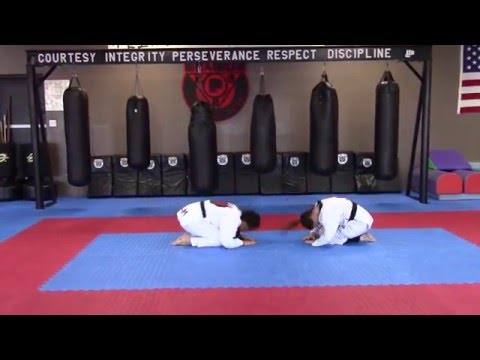
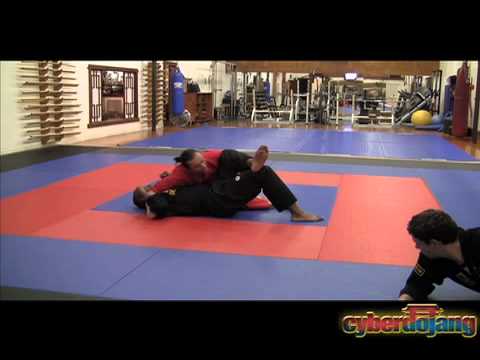
Here's the preview of the latest Cyberdojang.com lessons taught by Hwa Rang Do Grandmaster Taejoon Lee. In this session,…
Translation: Taekwondo mount transition
Cross-style technique adapted for modern combat sports. [1]
Effective in modern MMA and cross-style competition. [1]
Cross-style martial arts. [1]
Used in modern MMA and combat sports
No images yet for this technique.
Sign in to suggest an image.
Not yet documented
Here's the preview of the latest Cyberdojang.com lessons taught by Hwa Rang Do Grandmaster Taejoon Lee. In this session,…
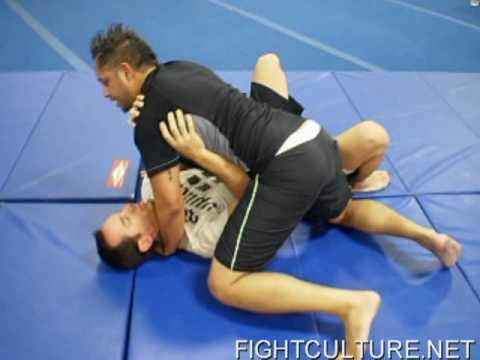
Fightculture.net presents: Excellent way to catch your opponent off guard and take the mount position...
Advanced Green Belt- Taekwondo- Reversing Mount & Passing Guard at Maximum Martial Arts Center, Las Cruces, NM 88005
The TKD mount transition technique involves moving from side mount to full mount position through a controlled hip switch and leg placement. Hwa Rang Do emphasizes maintaining constant downward pressure and chest-to-chest contact throughout the transition, using head and arm control to prevent escape. The instructor stresses keeping weight distributed on the opponent while lifting the hip slightly off the ground, then sliding the knee through while checking the opponent's legs to prevent them from establishing a strong block. FightCultureVision describes a similar principle but frames it as escaping a "dead zone" position where neither grappler has advantage. This instructor highlights baiting the opponent's arm movement inward before switching hips and bringing the top leg heavily across the opponent's arms to establish mount. A critical detail from FightCultureVision is ensuring the opponent's arms remain on the inside before passing, as arms on the outside allow defensive blocking. Both Hwa Rang Do and FightCultureVision agree on the importance of hip switching and weight distribution as fundamental mechanics. Maximum Martial Arts University provides demonstration footage but limited verbal instruction. The techniques converge on the principle of controlling limbs first, using hip mobility to reposition, and maintaining pressure to prevent reversal or escape during the transition.
Synthesized from 3 instructors
No instructional courses yet for this technique.
Sign in to suggest a course.
Risk of injury to the person this technique is applied to
Technique varies by application
Skill level needed to execute this technique reliably
Whether this technique is allowed under major competition rule sets
Lukasz, T. Taekwondo Grappling Techniques: Hone Your Competitive Edge for Mixed Martial Arts.
[1] Lukasz, Taekwondo Grappling Techniques — technique description and application
Good timing
Explosive movement
The TKD mount transition is documented in Lukasz's Taekwondo Grappling Techniques — transitioning to the mount position using TKD-specific mechanics. Part of the effort to make TKD more complete for MMA competition. (Lukasz, Taekwondo Grappling Techniques)
Keep your chest on your opponent at all times while you slide your foot up and maintain pressure, never breaking contact as you move into the side mount position.
You need to be heavy on the side you're passing to—if you're not, your opponent can block and stop the pass. Make sure your weight is distributed on the side where you're bringing your leg over.
Lift your hip slightly off the ground and push it downward rather than sliding it, while maintaining a tight hide (connection) with your opponent to prevent your shoulder from touching the ground.
From the side mount position, you can drop to your knee and step it around, or switch to the other side, depending on your opponent's reactions and positioning.
TKD Mount Transition teaches taekwondo practitioners how to transition to and maintain the mount position from standing knockdowns.
Cross-style technique adapted for modern combat sports.
IBJJF: legal — Legal — guard is fundamental to BJJ, sweeps from guard score 2 points; IJF: restricted — Guard pulling penalized as non-combativity — groundwork from guard permitted …; ADCC: legal — Legal, guard pull penalized -1 point in points portion; Unified MMA: legal — Legal — no penalty for playing guard; FIAS Sport Sambo: legal — Legal
Danger rating 4/10. Technique varies by application
The standard setup chain: Engagement → TKD Mount Transition → Follow-up.
Standard counters include: Sprawl / Block / Counter-attack.
Used in modern MMA and combat sports
Top errors to watch for: Poor timing / Over-committing.
The TKD Mount Transition is also known as Tekondō Maunto Toranjishon, TKD to Mount, Taekwondo Mount.