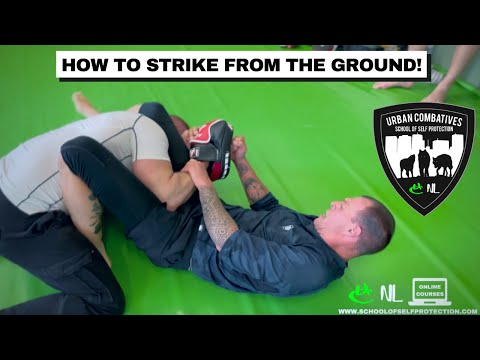
HOW TO STRIKE FROM THE GROUND!
0
TKD Ground Position·URBAN COMBATIVES: SCHOOL OF SELF-PROTECTION
ONLINE COURSES AND MORE INFO: www.schoolofselfprotection.com NEW COURSE ONLINE! https://schoolofselfprotection.thinkif…
Translation: Taekwondo ground position
The TKD Ground Position family covers ground fighting positions and techniques within Taekwondo's curriculum, which though primarily a striking and kicking art, includes ground awareness and basic positional skills for self-defence application. [1] Traditional Taekwondo (particularly ITF-style under General Choi Hong Hi's system) includes some ground fighting elements influenced by Japanese jujutsu and judo, while modern Olympic-style (WT/WTF) Taekwondo focuses almost exclusively on kicking. [1],[2] TKD ground positions primarily cover getting back to standing after being taken down, basic ground control concepts, and defensive ground awareness rather than submission grappling — reflecting Taekwondo's philosophy that the fight should be conducted standing. [2],[3]
Taekwondo's ground elements derive from the art's historical connections to Japanese martial arts. [1] General Choi Hong Hi's ITF Taekwondo included self-defence techniques (hosin sul) that addressed ground scenarios, influenced by Choi's training in Shotokan karate and Korean martial traditions. [1],[2] Modern Olympic TKD has largely eliminated ground fighting from its curriculum in favour of sport-specific kicking. [2],[3]
TKD ground positions are basic survival tools — they provide rudimentary ground awareness but are not comparable to dedicated grappling systems like BJJ or wrestling for ground fighting effectiveness. [1] Their value lies in providing kicking-focused martial artists with minimum ground survival skills for self-defence. [2]
TKD ground positions are not used in modern Olympic Taekwondo competition, which restarts after falls. ITF tournaments may include limited ground scenarios. [1]
No images yet for this technique.
Sign in to suggest an image.
ONLINE COURSES AND MORE INFO: www.schoolofselfprotection.com NEW COURSE ONLINE! https://schoolofselfprotection.thinkif…
No instructional courses yet for this technique.
Sign in to suggest a course.
Risk of injury to the person this technique is applied to
TKD ground positions are basic defensive postures focused on returning to standing
Skill level needed to execute this technique reliably
Whether this technique is allowed under major competition rule sets
Encyclopedia of Taekwon-Do (Choi Hong Hi, 1983)
Description sources — [1] Encyclopedia of Taekwon-Do (Choi, 1983) on hosin sul ground techniques [2] ITF vs WT curriculum differences [3] Modern TKD competition evolution
Description sources — [1] Encyclopedia of Taekwon-Do (Choi, 1983) on hosin sul ground techniques [2] ITF vs WT curriculum differences [3] Modern TKD competition evolution
basic ground awareness, ability to technical standup
athletic ability, leg strength for push-kicks from ground
core (sitting up from ground), legs (push-kicks and standing up), arms (posting and framing)
Every move, in any martial art, shares a few universal traits. Mix and match below to pinpoint the right tool — or compare equivalents across styles.
TKD Ground Control adapts basic pinning and control concepts for taekwondo practitioners who find themselves on the ground in MMA. [1]
TKD Mount Transition teaches taekwondo practitioners how to transition to and maintain the mount position from standing knockdowns. [1]
TKD ground positions are documented in Lukasz's Taekwondo Grappling Techniques — adapting ground control concepts for TKD practitioners training for MMA. A relatively modern addition to the TKD curriculum. (Lukasz, Taekwondo Grappling Techniques)
Control is crucial because striking from an uncontrolled position leaves you vulnerable to counterattacks. According to Urban Combatives: School of Self-Protection, you should first secure control of your opponent's limbs and position before attempting any strikes, as attacking from an unprotected stance allows your opponent to strike back with their free hands.
The tool depends on range and position. Urban Combatives emphasizes that from a dominant ground position, you can use palm strikes, hammerfists, elbows, or fists, with palm strikes often being preferable due to range and defensive positioning considerations.
You should work to stand up as soon as possible, as the ground environment is unforgiving due to weapons, multiple attackers, and hazards. Urban Combatives stresses getting off the floor quickly rather than prolonging ground engagement.
The TKD Ground Position family covers ground fighting positions and techniques within Taekwondo's curriculum, which though primarily a striking and kicking art, includes ground awareness and basic positional skills for self-defence application. Traditional Taekwondo (particularly ITF-style under General Choi Hong Hi's system) includes some ground fighting elements influenced by Japanese jujutsu and judo, while modern Olympic-style (WT/WTF) Taekwondo focuses almost exclusively on kicking.
Taekwondo's ground elements derive from the art's historical connections to Japanese martial arts. General Choi Hong Hi's ITF Taekwondo included self-defence techniques (hosin sul) that addressed ground scenarios, influenced by Choi's training in Shotokan karate and Korean martial traditions.
IBJJF: legal — Legal — guard is fundamental to BJJ, sweeps from guard score 2 points; IJF: restricted — Guard pulling penalized as non-combativity — groundwork from guard permitted …; ADCC: legal — Legal, guard pull penalized -1 point in points portion; Unified MMA: legal — Legal — no penalty for playing guard; FIAS Sport Sambo: legal — Legal
Danger rating 2/10. Low — TKD ground positions are basic defensive postures focused on returning to standing
The standard setup chain: Fall or Be Taken Down → Protect → Face Opponent → Create Distance → Stand Up → Re-engage.
Standard counters include: These positions are themselves defensive counters — they address the problem of a kicking specialist being taken to t… / The primary 'counter' is the technical standup to return to standing / Push-kicks from the ground maintain distance from the approaching opponent.
Common variants: Defensive guard from ground (sitting with feet toward opponent, hands up, ready to pus…); Technical standup (rising from the ground to standing position while maintai…); Ground block (blocking kicks or strikes while on the ground using TKD b…); Mount escape (basic) (fundamental escape concepts for self-defence application).
TKD ground positions are not used in modern Olympic Taekwondo competition, which restarts after falls. ITF tournaments may include limited ground scenarios.
Top errors to watch for: Staying on the ground — TKD ground positions are transitional; the goal is always to stand up quickly / Turning away from the opponent on the ground — always face the opponent with feet toward them / Not practicing falls — proper ukemi (breakfalling) prevents injuries from takedowns and trips / Attempting to grapple without grappling training — TKD ground positions are defensive/transitional, not a grappling s….
The TKD Ground Position is also known as Tekondō Newaza Pojishon, Taekwondo Ground Position, TKD Ground Technique, Korean Ground Fighting.