Intro to Sit Up Guard Part 1: Sweeping
0
Standard Sit-Up Guard·Dedeco BJJ·Added by Admin
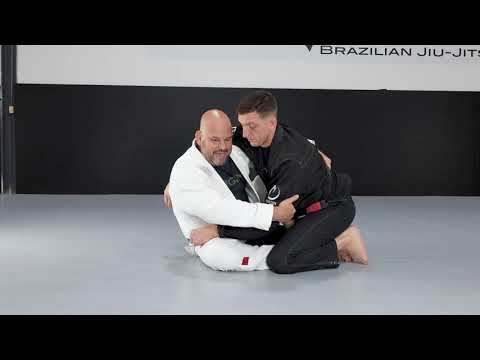
This week we are beginning our 4 part series on sit up guard, starting with one of Dedeco's favorite sweeps! If you lik…
Translation: standard sit-up guard
The Standard Sit-Up Guard establishes the basic sit-up position with one foot on the opponent's hip, the other leg ready for sweeps or entries, and hands controlling the opponent's arms or collar. [1] The upright seated posture provides a platform for arm drags, single leg attacks, and transitions to butterfly guard, shin-on-shin, and other guard positions. [1],[2] The standard sit-up guard is valued for its flexibility and its ability to link to both wrestling-style attacks and guard-based techniques. [2],[3]
The standard sit-up guard is the fundamental seated guard position. [1]
Developed in modern competitive BJJ. [1]
Widely used in BJJ competition. [1]
No images yet for this technique.
Sign in to suggest an image.
This week we are beginning our 4 part series on sit up guard, starting with one of Dedeco's favorite sweeps! If you lik…
We're back again with another informative jiu jitsu video. This time we're talking about bjj positions and the objective…
✅ BJJ Beginner Course: https://bjjbeginnercourse.com ✅ Jiu-Jitsu Theory Course: https://jiujitsutheorycourse.com 📩 Ne…
The standard sit-up guard is a fundamental open-guard position where the bottom player sits upright with at least one leg hooked around the opponent's torso, typically with the foot on the mat for base and the other leg extended or positioned for control. According to Dedeco BJJ, entry is most effective from the three-point guard by controlling the opponent's pants, sitting up while maintaining shoulder pressure, and positioning the body at an angle rather than directly in front to maintain space and leverage. The critical positioning detail emphasized by Dedeco BJJ is keeping the knee outside the opponent's ribs to prevent easy guard passage, and using the bottom foot (the non-hooking foot) actively on the mat to generate turning pressure during sweeps. Basic sweeping mechanics from this position involve controlling the opponent's belt or sleeve with the upper body while leaning into the shoulder, then driving the hook to execute the sweep while the bottom foot provides rotational base. Will Brooks Official contextualizes the sit-up guard within the broader framework of guard positions as offensive, where the bottom player has numerical leg advantage and should focus on sweeps and submissions. Jordan Teaches Jiujitsu provides theoretical underpinning, explaining that guard effectiveness depends on the feet's ability to grip and frame—the sit-up guard's strength lies in the hook grip establishing control while frames prevent the passer from taking inside position. All three instructors agree the position requires active engagement and technical precision rather than pure strength.
Synthesized from 3 instructors
No instructional courses yet for this technique.
Sign in to suggest a course.
Risk of injury to the person this technique is applied to
Guard positions are defensive; injury risk comes from transitions, not the position itself
Skill level needed to execute this technique reliably
Whether this technique is allowed under major competition rule sets
Advanced Brazilian Jiu-Jitsu Techniques (Marcelo Garcia, 2011)
Alias sources — [1] Jiu-Jitsu University (Ribeiro, 2008) [2] The Guard (Moreira & Beneville, 2003)
Effectiveness sources — [1] Mastering Jujitsu (Gracie & Danaher, 2003)
Standard katakana transliteration of Western martial arts terminology (外来語) — used in Japanese MMA, boxing, and BJJ communities
Alias sources — [1] Jiu-Jitsu University (Ribeiro, 2008) [2] The Guard (Moreira & Beneville, 2003)
Effectiveness sources — [1] Mastering Jujitsu (Gracie & Danaher, 2003)
hip flexibility, active legs, grip management
long legs for distance control and guard retention
hip flexors, adductors, quadriceps, core, grip
Control your opponent's pants first before you sit up. Dedeco BJJ emphasizes that controlling the pants prevents your opponent from moving away from you, which is a common problem when transitioning into sit-up guard.
Don't sit directly in front of your opponent. Instead, sit at an angled position with your elbow open over your hook, rather than facing them head-on.
You can enter sit-up guard either through butterfly guard or from the three-shield guard, according to Dedeco BJJ.
The Standard Sit-Up Guard establishes the basic sit-up position with one foot on the opponent's hip, the other leg ready for sweeps or entries, and hands controlling the opponent's arms or collar. The upright seated posture provides a platform for arm drags, single leg attacks, and transitions to butterfly guard, shin-on-shin, and other guard positions.
The standard sit-up guard is a widely used open guard position in modern no-gi and gi competition, valued for its dynamic transitional capabilities. It is particularly popular in no-gi competition where its wrestling integration is most effective.
IBJJF: legal — Legal — guard is fundamental to BJJ, sweeps from guard score 2 points; IJF: restricted — Guard pulling penalized as non-combativity — groundwork from guard permitted …; ADCC: legal — Legal, guard pull penalized -1 point in points portion; Unified MMA: legal — Legal — no penalty for playing guard; FIAS Sport Sambo: legal — Legal
Danger rating 2/10. Low — guard positions are defensive; injury risk comes from transitions, not the position itself
The standard setup chain: Achieve Guard Contact → Control Grips → Manage Distance → Threaten Submissions/Sweeps.
Standard counters include: Guard Pass — systematically work to clear the legs and establish a dominant position / Leg Pin — control one or both legs to neutralize guard retention / Pressure Passing — use heavy chest pressure to flatten and immobilize the guard player.
Common variants: Standard butterfly guard (both feet hooked inside the opponent's thighs); Single butterfly hook (one hook in while the other leg posts or controls); Butterfly with overhook (combining the hooks with an overhook for sweep setups).
Widely used in BJJ competition.
Top errors to watch for: Not maintaining the post when the opponent pushes — the post hand must adjust to maintain balance / Gripping without using the feet — the feet and grips form a coordinated system / Sitting up without a specific transition target — always have a plan: arm drag, shin-on-shin, or butterfly / Allowing the opponent to control both legs — at least one leg must remain free and active.
The Standard Sit-Up Guard is also known as Sutandādo Shitto Appu Gādo, Basic Sit-Up Guard, Classic Sitting Guard.