Back Clinch & Rear Sit Out
0
Standard Seated Rear Mount·P3 Martial Arts·Added by Admin
Translation: standard seated rear mount
The Standard Seated Rear Mount establishes full back control with the controlling fighter sitting upright behind the opponent, hooks or body triangle secured, seatbelt grip established, with the opponent flattened or leaning forward. [1] This is the classic rear mount position that represents the pinnacle of grappling's positional hierarchy. [1],[2] From standard seated rear mount, the controlling fighter can attack with rear naked chokes, collar chokes (in gi), and transition to mounted positions. [2],[3]
The standard seated rear mount is the prototypical dominant grappling position, established as the highest-scoring position in BJJ competition and widely recognised as the most advantageous position in MMA ground fighting. [1] It represents the ultimate positional achievement in the grappling hierarchy. [2],[3]
The standard seated rear mount is the fundamental seated back control position. [1]
A standard BJJ back control variant. [1]
Scored as back control in IBJJF competition. [1]
No images yet for this technique.
Sign in to suggest an image.
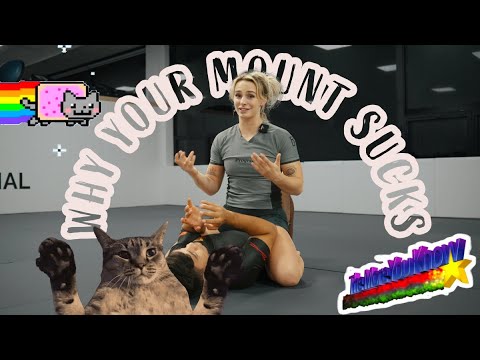
Here are a few of my favourite tips on controlling from the mount position, and why you may be struggling in this positi…
When you first start Jiu Jitsu, you're gonna be getting stuck in the bottom of mount. A lot. Even by people who aren't v…
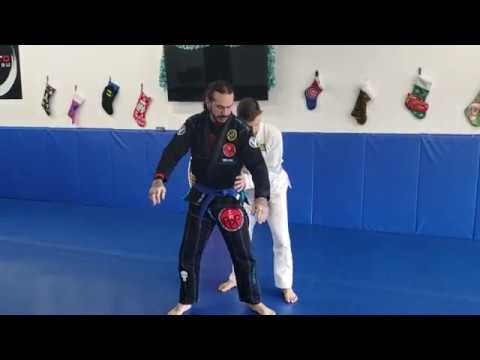
The standard seated rear mount is a dominant grappling position achieved after successfully controlling an opponent from behind. P3 Martial Arts emphasizes the entry mechanics: capitalizing when an opponent throws an overextended punch (particularly a loopy lead hook), the attacker changes level and steps in like a double-leg takedown, hugging the hip while driving the crown of the head into the opponent's armpit to avoid guillotine vulnerability. The rear clinch is then established with a grip around the belt. The takedown itself involves positioning one leg directly behind the opponent's corresponding leg, leaning to the opposite side to create a dragging motion that trips the opponent to the mat, while posting on a hand to maintain momentum and transition quickly into full mount. Ffion Davies provides complementary control details for the mounted position: maintaining head control via cross-face with deep arm placement reaching to the armpit, controlling the upper elbow to prevent bridge escapes, and positioning hips slightly above the opponent's hips to neutralize bridging power. Davies emphasizes blanket pressure distribution across the entire body rather than pinpoint force, keeping knees wide for base stability, and bailing out intelligently if the opponent gains momentum rather than clinging desperately. Brandon McCaghren's contribution focuses on escape mechanics from mount, detailing three common defensive responses (bridge and roll, knee-elbow escape, kipping escape) that a mounted grappler must anticipate and counter. Together, these instructors provide entry, control, and defensive awareness for the position.
Synthesized from 3 instructors
No instructional courses yet for this technique.
Sign in to suggest a course.
Risk of injury to the person this technique is applied to
Back control is dominant position; enables rear chokes (Danaher 2021)
Skill level needed to execute this technique reliably
Whether this technique is allowed under major competition rule sets
Mastering Jujitsu (Renzo Gracie & John Danaher, 2003)
Alias sources — [1] Jiu-Jitsu University (Ribeiro, 2008) [2] Mastering Jujitsu (Gracie & Danaher, 2003)
Effectiveness sources — [1] Jiu-Jitsu University (Ribeiro, 2008)
Mixed Japanese-Western terminology — combines traditional Japanese terms with katakana loanwords
Alias sources — [1] Jiu-Jitsu University (Ribeiro, 2008) [2] Mastering Jujitsu (Gracie & Danaher, 2003)
Effectiveness sources — [1] Jiu-Jitsu University (Ribeiro, 2008)
base stability, heavy hips, ride ability
heavier build with strong hips for pressure
hip adductors, core, glutes, quadriceps
The bridge and roll is the easiest mount escape for beginners. You trap both of your opponent's arms on one side of their body, bridge your hips upward, look back over your shoulder like you're doing a backwards roll, and execute the escape as one fluid movement rather than separate steps to improve your success rate.
Don't trap the foot from the center because your opponent can stay low and hide the foot trap. Instead, shift your hip over, turn your knees toward their leg, and pull your heel to your butt to create a much more effective trap.
Keep your elbow on the inside and hide the underhook from your opponent so they cannot manipulate it into an arm triangle. This defensive posture is important to maintain throughout the escape.
Keep your head up with the crown of your head positioned in your opponent's armpit, and drive your head straight into their armpit rather than keeping it down, which prevents them from executing a standing guillotine.
The Standard Seated Rear Mount establishes full back control with the controlling fighter sitting upright behind the opponent, hooks or body triangle secured, seatbelt grip established, with the opponent flattened or leaning forward. This is the classic rear mount position that represents the pinnacle of grappling's positional hierarchy.
The standard seated rear mount is the prototypical dominant grappling position, established as the highest-scoring position in BJJ competition and widely recognised as the most advantageous position in MMA ground fighting. It represents the ultimate positional achievement in the grappling hierarchy.
IBJJF: legal — Legal, mount scores 4 points — highest-scoring position; IJF: legal — Legal, osaekomi (pin) — 10-19 seconds scores waza-ari, 20 seconds scores ippon; ADCC: legal — Legal, mount scores 2 points; Unified MMA: legal — Legal dominant position; UWW: legal — Legal, back exposure scores points, pin ends match by fall; FIAS Sport Sambo: legal — Legal, pin scores points
Danger rating 4/10. Moderate — back control is dominant position; enables rear chokes (Danaher 2021)
The standard setup chain: Pass the Guard → Settle Weight → Control Arms → Threaten Submissions.
Standard counters include: Bridge (Upa) — explosive hip elevation to off-balance the top player / Elbow-Knee Escape (Shrimp) — create space by driving elbow to knee and hip-escaping / Frame — establish forearm frames to prevent the top player from settling weight.
Common variants: Low mount (hips heavy on the opponent's belly, grapevines in for sta…); High mount (knees under the armpits, arms isolated for submissions); S-mount (one knee high under the armpit, other leg across for arm …); Technical mount (one leg hooked, one knee posted, modified for back-take t…).
Scored as back control in IBJJF competition.
Top errors to watch for: Not establishing all three elements (hooks, seatbelt, chest contact) — all three are required for stable control / Sitting too far from the opponent's hips — close the gap for maximum control / Not engaging the core — the seated position collapses without core activation / Attacking before the position is fully established — secure all elements first.
The Standard Seated Rear Mount is also known as Sutandādo Zai Ushiro Kijōi, Upright Back Mount, Sitting Rear Mount.