The Mount Position Problem for Smaller Grapplers
Many smaller grapplers, particularly women, struggle to maintain the mount position effectively because they lack sufficient control to prevent escapes. Rather than progressing to mount, they often prefer to maintain side control or take the back where their relative disadvantage is minimized. Understanding and addressing the technical deficiencies in mount control transforms this position into a dominant, sustainable control point.
Head Control: Preventing Directional Bridge Escapes
The opponent's head position determines which direction they can bridge to escape. By applying a deep cross-face with the chest rather than just shoulder pressure, the instructor controls the opponent's head direction and forces them into compromised bridge angles. This technique involves reaching deep to the armpit and drawing the elbow back, allowing the entire chest to apply distributed pressure rather than isolated shoulder force.
Weight Distribution: Blanketing vs. Pinpointing Pressure
Applying focused, pointed pressure through the shoulders allows the opponent to move and generate leverage, while distributing body weight across a wider surface area pins the opponent more effectively. The mounted grappler should open their body and blanket their weight across the opponent rather than concentrating force in a single point. This distribution exhausts the bottom player while minimizing their escape options.
Elbow Control: Neutralizing the Bridge-to-Knees Escape
Elevating the opponent's elbow off the mat prevents them from generating enough leverage to bridge up to their knees, a critical escape position. By keeping the elbow disconnected from the mat surface, the mounted grappler removes one of the most effective mechanical advantages the bottom player possesses. This control can be maintained by collecting the elbow and positioning it high on the mounted grappler's body.
Arm Trapping: The High Arm Placement and Head Post
After elevating the opponent's elbow, the mounted grappler can scoop under their arm, walk it up, and replace their head against the opponent's tricep while posting a hand on the far side. This configuration keeps the opponent's head centered and facing upward, forcing inefficient vertical bridges that waste energy without producing positional advancement. The trapped arm remains vulnerable to submissions like the arm triangle while maintaining control.
Hip Positioning: The High Mount Advantage
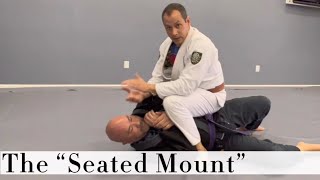
Positioning the hips slightly higher than the opponent's hips prevents them from leveraging a powerful glute bridge to throw the mounted grappler's weight. With hips level or lower, the opponent can generate significant upward force; with hips positioned high, the opponent bridges into empty space and wastes energy. This high mount positioning is safe only when the mounted grappler maintains upper body control of one or both arms.
Why Your Mount SUCKS
Key Takeaways
- •The Mount Position Problem for Smaller Grapplers
- •Head Control: Preventing Directional Bridge Escapes
- •Weight Distribution: Blanketing vs. Pinpointing Pressure
- •Elbow Control: Neutralizing the Bridge-to-Knees Escape
Here are a few of my favourite tips on controlling from the mount position, and why you may be struggling in this position! Let me know your thoughts in the comments, as well as any other technique breakdowns you'd like to see in the future! Thank you to @progressjiujitsu for sponsoring this video ❤️ Links to sponsors, instructionals, and more - https://linktr.ee/Ffioneiradavies
Frequently Asked Questions
What does this video teach about standard seated rear mount?
This video covers the mount position problem for smaller grapplers, head control: preventing directional bridge escapes, weight distribution: blanketing vs. pinpointing pressure. It provides detailed instruction from Ffion Davies.
How long does it take to learn standard seated rear mount?
The basic mechanics can be understood in a single session, but developing reliable execution requires consistent drilling over weeks of practice. This 6-part breakdown helps structure your training by isolating each phase of the technique.
What are the key details for finishing standard seated rear mount?
After elevating the opponent's elbow, the mounted grappler can scoop under their arm, walk it up, and replace their head against the opponent's tricep while posting a hand on the far side. This configuration keeps the opponent's head centered and facing upward, forcing inefficient vertical bridges that waste energy without producing positional advancement. The trapped arm remains vulnerable to submissions like the arm triangle while maintaining control.