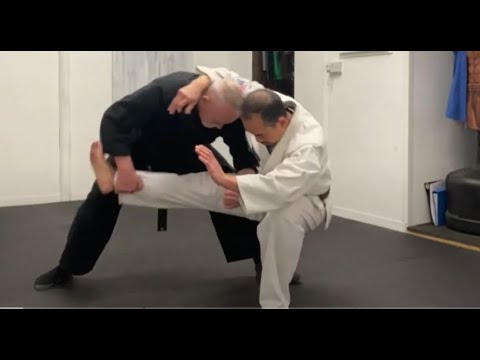
Single Hook

Genus

シングルフック(Shinguru Fukku)

Transliteration

Translation: single hook

Overview

The Single Hook back control uses one foot inserted inside the opponent's thigh while the other leg is positioned differently — typically wrapped around the waist, posted on the mat, or in transition. [1] Single hook back control is a transitional or partial back control position that provides less security than double hooks but can be sufficient for attack and may be the available option during transitions. [1],[2] In competition, a single hook combined with upper body control may or may not score back control points depending on the ruleset. [2],[3]

Also known as
One Hook InBoxing[1]Half Back[2]Partial Back Control[3]

History & Origin

The single hook position is recognised as a transitional back control state in BJJ, representing the midpoint between achieving the back and full double-hook establishment. [1] Understanding single hook dynamics is important for both attacking and defending back control transitions. [2],[3]

Effectiveness

The single hook maintains one hook while the other leg controls from a different position (e.g., body triangle, cross-body hook). [1] It can be a transitional position or a deliberate control choice. [1]

Lineage

The single hook is both a transitional position and a deliberate control option developed in modern BJJ competition. [1]

Competition Record

Single hook positions are common during back control transitions in BJJ and MMA. [1]

Images

No images yet for this technique.

Sign in to suggest an image.

Biomechanical Mechanism

Primary ActionPerpendicular chest-to-chest control — pinning the opponent's upper body while maintaining mobility
Joints InvolvedAttacker's chest (primary contact), hips (sprawled or driving), opponent's near shoulder and hip (controlled)
Force VectorDownward and lateral — chest pressure pins the opponent while hip positioning prevents escape
Positional MechanicCrossface and underhook combination controls the opponent's head and near arm, preventing bridging or turning

Position & Entry

From arm drag or duck underCreate an angle behind the opponent, secure seatbelt grip, insert hooks to establish back control
From turtle (opponent turtles)When the opponent turtles to avoid guard pass, take the back by inserting hooks and securing the seatbelt
From sweep (taking the back during the sweep)During a sweep, circle behind and establish back control instead of ending on top

Variants

Back control with hooksboth feet hooked inside the opponent's thighs
Body triangle back controllegs locked in a figure-four around the torso
Rear mountmounted on the back with both hooks, opponent face-down
Chair sit back controlsitting behind the opponent with hooks, upright position

Videos

Leg Throws - defence from a straight punch, single hook, & a right/left hooks - Orange Belt Syllabus

0
Single Hook·Dog Jiu-Jitsu·Added by Admin

Working through 3 variations of leg throws Techniques shown include single & double-handed parry block against a straigh

1 video

Learn This Technique

No instructional courses yet for this technique.

Sign in to suggest a course.

Ratings

Danger Rating

Risk of injury to the person this technique is applied to

4
Moderate4/10

Back control is dominant position; enables rear chokes (Danaher 2021)

Difficulty

Skill level needed to execute this technique reliably

Intermediate
Competition Legality

Whether this technique is allowed under major competition rule sets

IBJJF — Legal, back control with hooks or body triangle s...
IBJJF Rules Book v6.0, June 2024PDF
IJF — Legal — back control leads to pin or submission opp...
IJF Sport and Organisation Rules 2025, Article 27PDF
Unified MMA — Legal — dominant position for ground-and-po...
Unified Rules of MMA, August 2025PDF
UWW — Legal — back exposure is the primary scoring mechan...
UWW International Wrestling Rules, January 2026PDF
FIAS Sport Sambo — Legal
FIAS International Sambo Competition RulesPDF

Training Notes

The single hook position has one foot inserted as a hook while the other leg is used for alternative control (posting, trapping, or transitioning) from back control (Danaher, Back Attacks, 2018)
The single hook often occurs during transitions — one hook is inserted while the attacker works to insert the second
A single hook is less stable than double hooks but still provides meaningful back control
The non-hooking leg can: post on the mat for base, trap the opponent's arm, or begin a body triangle entry
Single hook back control is common in scrambles — securing one hook first and then working for the second
From a single hook, the primary goal is usually to insert the second hook for full back control
The single hook still scores back control points in competition (IBJJF) if maintained with the seatbelt
Use the single hook as a transition state — it's the bridge between taking the back and full back control

Common Mistakes

!Settling for a single hook without working to insert the second — one hook is transitional; get to double hooks
!Not using the free leg productively — the non-hooking leg should be posting, trapping, or transitioning
!Losing the single hook while reaching for the second — secure the first hook before extending for the second
!Attacking submissions from a single hook without stable control — the position is too unstable for reliable attacks
!Not maintaining the seatbelt with a single hook — the seatbelt compensates for the missing hook
!Allowing the opponent to clear the single hook — one hook is easier to clear; be active in maintaining it
!Not recognizing when to transition from single hook to body triangle instead of fighting for the second hook

Related Techniques

Counter Techniques

Setup Chain

1Achieve Positiontransition into this position through passing, sweeping, or scrambling
2Stabilizeestablish controlling grips and weight distribution
3Maintainadjust to the opponent's escape attempts to hold position
4Attacklaunch offensive techniques from the stabilized position

Sources & References

Primary Source

Brazilian Jiu-Jitsu: Theory and Technique (Renzo Gracie & Royler Gracie, 2001)

1BookJiu-Jitsu University (Ribeiro, 2008)

Alias sources — [1] IBJJF Rules (2024) [2] Jiu-Jitsu University (Ribeiro, 2008) [3] Mastering Jujitsu (Gracie & Danaher, 2003)

2BookBrazilian Jiu-Jitsu: Theory and Technique (Gracie & Gracie, 2001)

Effectiveness sources — [1] Jiu-Jitsu University (Ribeiro, 2008)

3OtherJapanese Combat Sports Katakana Convention

Standard katakana transliteration of Western martial arts terminology (外来語) — used in Japanese MMA, boxing, and BJJ communities

4CitationJiu-Jitsu University (Ribeiro, 2008)

Alias sources — [1] IBJJF Rules (2024) [2] Jiu-Jitsu University (Ribeiro, 2008) [3] Mastering Jujitsu (Gracie & Danaher, 2003)

5CitationBrazilian Jiu-Jitsu: Theory and Technique (Gracie & Gracie, 2001)

Effectiveness sources — [1] Jiu-Jitsu University (Ribeiro, 2008)

Community

Athletics

Requires

hook control, seatbelt grip endurance, hip connection

Favours

long legs for deep hooks, strong grip for seatbelt

Key muscles

hip adductors, biceps, forearms, core

Frequently Asked Questions

How do I prevent my opponent's knee from coming up when I throw them with a single hook?

Grab the ankle and push down and up at the same time as you go in with your opponent, which controls their leg and prevents the knee from rising into your face.

What should I do after I've hooked and controlled my opponent's ankle in a single hook throw?

Once you've secured the ankle control, go in with your opponent and apply a full lock by twisting to complete the throw.

How does the Single Hook work?

The Single Hook back control uses one foot inserted inside the opponent's thigh while the other leg is positioned differently — typically wrapped around the waist, posted on the mat, or in transition. Single hook back control is a transitional or partial back control position that provides less security than double hooks but can be sufficient for attack and may be the available option during transitions.

Where does the Single Hook come from?

The single hook position is recognised as a transitional back control state in BJJ, representing the midpoint between achieving the back and full double-hook establishment. Understanding single hook dynamics is important for both attacking and defending back control transitions.

Is the Single Hook legal in competition?

IBJJF: legal — Legal, back control with hooks or body triangle scores 4 points; IJF: legal — Legal — back control leads to pin or submission opportunities; ADCC: legal — Legal, back mount scores 3 points (4 from sweep); Unified MMA: legal — Legal — dominant position for ground-and-pound and rear naked choke; UWW: legal — Legal — back exposure is the primary scoring mechanism in wrestling; FIAS Sport Sambo: legal — Legal

How dangerous is the Single Hook?

Danger rating 4/10. Moderate — back control is dominant position; enables rear chokes (Danaher 2021)

How do I set up the Single Hook?

The standard setup chain: Achieve Position → Stabilize → Maintain → Attack.

How do I defend against the Single Hook?

Standard counters include: Hand Fight — grip-fight the choking hand to prevent the rear naked choke / Shoulder Walk — walk shoulders to the mat to escape back control / Turn into Guard — rotate to face the attacker and recover guard position.

What are the variants of the Single Hook?

Common variants: Back control with hooks (both feet hooked inside the opponent's thighs); Body triangle back control (legs locked in a figure-four around the torso); Rear mount (mounted on the back with both hooks, opponent face-down); Chair sit back control (sitting behind the opponent with hooks, upright position).

How effective is the Single Hook in competition?

Single hook positions are common during back control transitions in BJJ and MMA.

What are common mistakes when doing the Single Hook?

Top errors to watch for: Settling for a single hook without working to insert the second — one hook is transitional; get to double hooks / Not using the free leg productively — the non-hooking leg should be posting, trapping, or transitioning / Losing the single hook while reaching for the second — secure the first hook before extending for the second / Attacking submissions from a single hook without stable control — the position is too unstable for reliable attacks.

What are other names for the Single Hook?

The Single Hook is also known as Shinguru Fukku, One Hook In, Half Back, Partial Back Control.