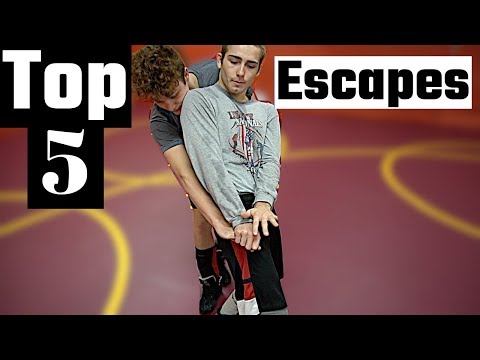
Top 5 Wrestling Moves *ESCAPES*
0
Escape Against Wrestler's Pin·Cayden Henschel
This is my top 5 wrestling moves that are wrestling escapes. These 5 wrestling moves are my favorite because they are fu…
Translation: Escape from wrestler's pin
The Escape Against Wrestler's Pin addresses the specific problem of being pinned by a wrestler who uses cross-face and underhook control rather than traditional BJJ side control grips. [1] Ribeiro demonstrates how to create frames against the wrestler's pressure style, which differs from standard BJJ side control escapes because wrestlers maintain different weight distribution and grip patterns. [1] The escape focuses on preventing the cross-face, creating a frame, and hip escaping to guard recovery. [1]
Essential for BJJ practitioners who face wrestlers in MMA or cross-training environments. [1]
Modern BJJ adaptation for MMA cross-training. [1]
Used in UFC and professional MMA competition
No images yet for this technique.
Sign in to suggest an image.
Not yet documented
This is my top 5 wrestling moves that are wrestling escapes. These 5 wrestling moves are my favorite because they are fu…
Today I'm covering a topic that many beginners struggle with-getting stuck under side control or even mount. We all lear…
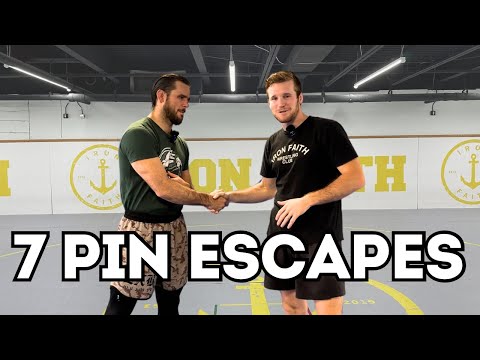
Iron Faith Merch ➡️ https://amptstudio.chipply.com/ifwc/ Join the #1 Online Wrestling Academy in the world ➡️ https://w…
Iron Faith Merch ➡️ https://amptstudio.chipply.com/ifwc/ Join the #1 Online Wrestling Academy in the world ➡️ https://w…
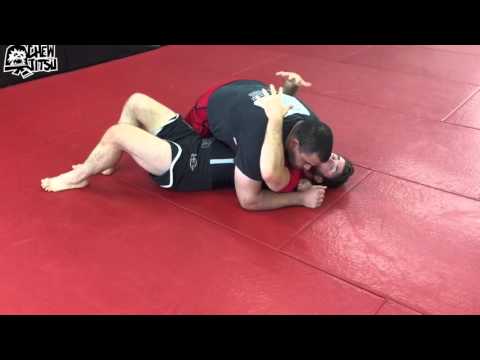
www.Chewjitsu.net Full length post on my website http://www.chewjitsu.net/escape-side-control-against-wrestler/ I got…
Placido Santos Channel: https://youtube.com/@PlaciSantos?si=BbMtab6x54tj4StT Iron Faith Merch ➡️ https://amptstudio.chi…
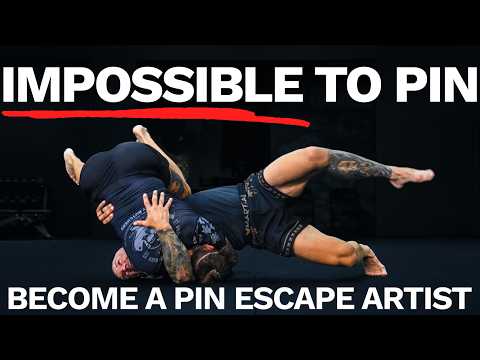
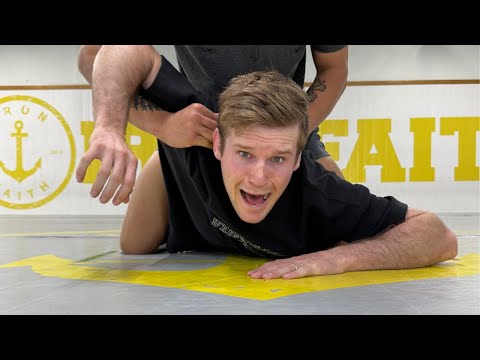
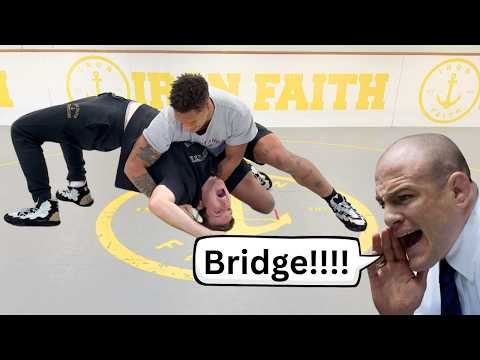
Escaping a wrestler's pin requires a multi-layered approach that prioritizes early intervention and positional control over strength-based resistance. Chewjitsu emphasizes preventing the pin setup entirely by denying the top wrestler's underarm and underhead control during the guard pass—tucking the elbow tight to the face and then securing a deep underhook on the lat rather than the shoulder. Once pinned in tight side control, Chewjitsu recommends relaxing to avoid wasting energy, then wedging a flat hand between the chests and using short bridging motions to create space for an underhook escape, which can transition into half guard. Will Brooks Official teaches two distinct side control escapes: the first collapses the opponent's legs together by pushing hips into their back leg, then grabs the far hamstring and bridges over the body into top control; the second involves collapsing the opponent's head downward to bend their cervical spine, framing the hip, and bridging diagonally (rather than laterally) to conserve energy. For mount escapes, Will Brooks drives a knee into the opponent's back to shift their weight forward, then uses a hip thrust rather than a bench-press motion to create space for knee insertion between the legs. Iron Faith Wrestling stresses that beginners make critical errors by prioritizing wrist control over sealing off space, moving excessively while gassed, and attempting complex sit-outs or switches instead of the fundamental quad pod or tripod standup. Iron Faith emphasizes resisting the top wrestler's pressure in the direction they're applying it and only attacking hand control during the transition to standing, not while flat. Cayden Henschel briefly covers referee's position escapes including the basic standup, Peterson roll, sit-out variations, head grab, and granby roll, though with less detail than the other instructors. All instructors agree that technique and positioning trump strength, particularly against larger opponents.
Synthesized from 4 instructors
No instructional courses yet for this technique.
Sign in to suggest a course.
Risk of injury to the person this technique is applied to
Defensive escape technique
Skill level needed to execute this technique reliably
Whether this technique is allowed under major competition rule sets
Jiu-Jitsu University (Ribeiro & Howell, 2008)
description, historyOrigin: sourced from Ribeiro, S
description, historyOrigin: sourced from Ribeiro, S
Strong frames
Good hip mobility
Core strength
Escaping wrestler's pins requires specific techniques different from BJJ escapes — wrestling pins have a timer (fall in folkstyle/freestyle, 20-second osaekomi in judo), so escape urgency is higher. The granby roll and switch are primary wrestling pin escapes. (Gable, Coaching Wrestling Successfully; wrestling manuals)
According to Chewjitsu, you should relax and not try to fight the pressure, since the wrestler has superior strength and positioning. Once they loosen up slightly, that's when you can execute your escape.
Chewjitsu emphasizes using your elbow to peek out into the opponent's armpit rather than using your hand, then securing a deep underhook by grabbing their lat. Make sure the underhook is positioned high on their back, not on the shoulder.
Chewjitsu teaches two main options: first, perform a hip escape and shoot back into full guard or half guard; second, hook the opponent's ankle with your foot and use an elbow escape to transition to half guard and work toward taking their back.
Chewjitsu advises escaping early because once a heavy opponent settles in and squeezes tight with good positioning and leverage, the escape becomes much harder to execute. Early action prevents them from establishing dominant pressure.
Will Brooks recommends bridging diagonally (toward 10-11 o'clock or 1-2 o'clock) rather than straight left or right, as bridging to 9 or 3 o'clock requires much more strength and will gas your tank quickly.
The Escape Against Wrestler's Pin addresses the specific problem of being pinned by a wrestler who uses cross-face and underhook control rather than traditional BJJ side control grips. Ribeiro demonstrates how to create frames against the wrestler's pressure style, which differs from standard BJJ side control escapes because wrestlers maintain different weight distribution and grip patterns.
This escape was developed as MMA and cross-training brought wrestling pressure into BJJ competition. Ribeiro specifically addresses the challenge of wrestling-style pins for BJJ practitioners.
Unified MMA: legal — Legal defensive/transitional technique; IBJJF: legal — Legal; IJF: legal — Legal; ADCC: legal — Legal; UWW: legal — Legal; FIAS Sport Sambo: legal — Legal
Danger rating 2/10. Defensive escape technique
The standard setup chain: Under wrestler's pin → Frame against cross-face → Hip escape → Recover guard.
Standard counters include: Maintain cross-face pressure / Switch to mount / Transition to north-south.
Used in UFC and professional MMA competition
Top errors to watch for: Trying BJJ escapes against wrestling-specific pressure / Pushing instead of framing / Not addressing the cross-face.
The Escape Against Wrestler's Pin is also known as Resurāzu Pin Esukēpu, Wrestler Pin Escape, Anti-Wrestling Escape.