The Strategic Priority of Pin Escapes
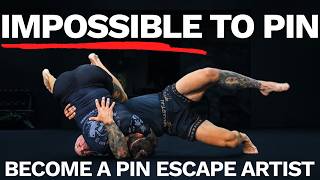
Allowing an opponent to score back points is preferable to being pinned, which ends the match immediately. Pinning an opponent in front of spectators results in a decisive loss and must be avoided at all costs. Understanding this priority shapes all escape strategy.
Perpendicular vs. Parallel Positioning
The fundamental principle of pin defense is maintaining perpendicularity with the opponent, which disrupts their pinning structure. As the bottom wrestler achieves parallel positioning, the pin becomes easier to execute. Wrestlers must constantly work to break this geometric alignment through hip movement and body repositioning.
Hip Movement and the Shrimp Escape
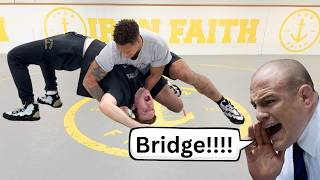
Rather than attempting to bring hips underneath the opponent, the bottom wrestler should walk hips away while simultaneously getting the back off the mat. This prevents the opponent from pursuing the legs while the wrestler achieves a side position. This technique reduces back points while avoiding the pin.
Bridge and Hook Counters to Kesa Gatame
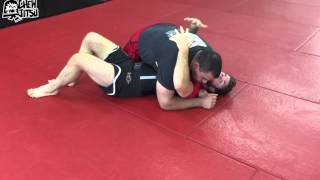
Once hips are walked away, the wrestler can lock the opponent's leg and bridge to throw them over their head. Alternatively, if the opponent's knee is extended, the wrestler can step around and hook the leg while driving hips underneath. Both techniques accomplish the same objective: escaping the pin by reversing position.
Elbow Control and Turning Defense
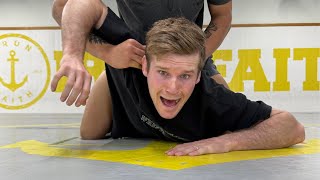
Opponents commonly use an over-wrap on the elbow to prevent the bottom wrestler from turning into them. When the top wrestler controls the elbow, it becomes significantly more difficult to rotate the body. The bottom wrestler must first create space by bringing the elbow inward before executing any turning escape.
Hand Positioning and Pressure Negation
Getting hands between the chest and opponent's chest negates the effectiveness of direct pressure from a pin position. Without chest-to-chest contact, even if the opponent controls other body parts, the pin loses mechanical advantage. This hand position becomes the foundation for all upper-body escape mechanisms.
Side Control Escape: Hand Threading
In side control, the primary goal is to get one hand through to create space and enable turning. Bridging creates temporary separation that allows the wrestler to thread an arm through, but the movement must be executed with precision. Combining bridging with hand movement provides the necessary angles to escape without losing positional control.
Knee Position and Elbow Inside
When the opponent's knees are away from the wrestler's body, creating an elbow inside becomes significantly easier. With knees positioned close to the body, inserting the elbow becomes much more difficult and requires different technical approaches. The wrestler must immediately transition to their side once the elbow clears the opponent's control.
Pin Escapes | Wrestling Moves
Key Takeaways
- •The Strategic Priority of Pin Escapes
- •Perpendicular vs. Parallel Positioning
- •Hip Movement and the Shrimp Escape
- •Bridge and Hook Counters to Kesa Gatame
Placido Santos Channel: https://youtube.com/@PlaciSantos?si=BbMtab6x54tj4StT Iron Faith Merch ➡️ https://amptstudio.chipply.com/ifwc/ Join the #1 Online Wrestling Academy in the world ➡️ https://www.skool.com/iron-faith-academy Intro 00:00 Pin Escape 1: Headlock/Kesa-Gatame 00:19 Pin Escape 2: Side Control 03:54 Pin Escape 3: North/South 09:57 Get Good In The Areas You Fear 13:38 Pin Escape 4: Grapevine 16:06 Pin Escape 5: Leg Turk 19:50 Pin Escape 6: Tilt 23:16 Pin Escape 7: Cradle 24:57
Frequently Asked Questions
What does this video teach about escape against wrestler's pin?
This video covers the strategic priority of pin escapes, perpendicular vs. parallel positioning, hip movement and the shrimp escape. It provides detailed instruction from Iron Faith Wrestling.
How long does it take to learn escape against wrestler's pin?
The basic mechanics can be understood in a single session, but developing reliable execution requires consistent drilling over weeks of practice. This 8-part breakdown helps structure your training by isolating each phase of the technique.
What are the key details for finishing escape against wrestler's pin?
In side control, the primary goal is to get one hand through to create space and enable turning. Bridging creates temporary separation that allows the wrestler to thread an arm through, but the movement must be executed with precision. Combining bridging with hand movement provides the necessary angles to escape without losing positional control.