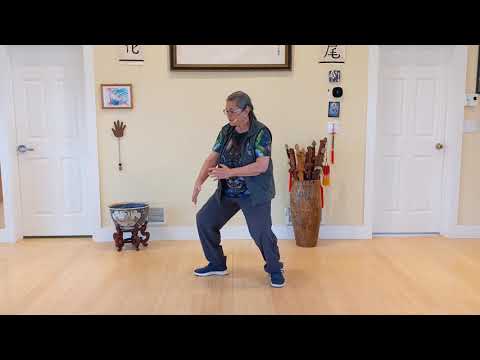
9) Shoulder Strike
0
Standard Shoulder Walk·Rocky Mountain Tai Chi·Added by Admin
Translation: standard shoulder walk
The Standard Shoulder Walk alternates pressing each shoulder into the mat and sliding the body downward, using the shoulder as a pivot point while the hips shift incrementally toward the escape direction. [1] The defender presses one shoulder into the mat, shifts the hips down, then switches to the other shoulder and shifts again, creating a walking motion that gradually extracts them from the back control. [1],[2] Throughout the shoulder walk, the defender maintains hand fighting defence against the choke and works to clear the bottom hook as the hips descend. [2],[3]
The standard shoulder walk is the baseline shoulder-walking back escape. [1]
Adapted from wrestling into BJJ. [1]
Used in BJJ competition. [1]
No images yet for this technique.
Sign in to suggest an image.
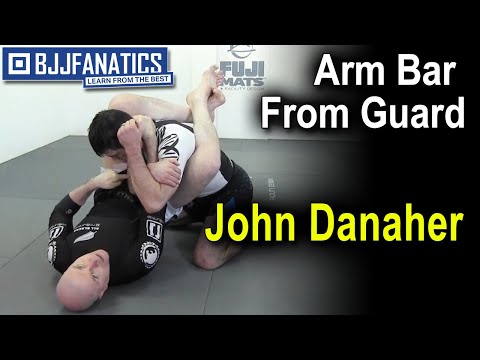
ARM BAR FROM GUARD BY JOHN DANAHER // In this BJJ Moves video, John Danaher demonstrates one of the best Jiu Jitsu Tech…
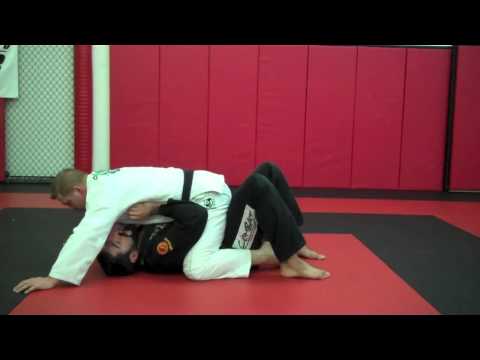
VIdeo available in 720 HD format! This is a nice addition to the standard mount escape in grappling (Brazilian Jiu Jitsu…
The transcripts provided do not contain relevant instructional content for the Standard Shoulder Walk escape technique from rear mount position. Instructor 1 (Rocky Mountain Tai Chi) discusses shoulder strike mechanics from a Tai Chi perspective, focusing on stance, hand positioning, and body mechanics in a striking context unrelated to grappling escapes. Instructor 2 (Submissions101) covers a hook-and-roll mount escape variation with arm and leg trapping, which addresses bottom mount position rather than rear mount escapes. Instructor 3 (BJJ Fanatics) presents armbar setup from guard position, emphasizing head and elbow control mechanics. While Instructor 2's content involves mount escape methodology, none of the three sources directly address the shoulder walk escape technique, which typically involves weight transfer, shoulder positioning, and directional movement to escape from an opponent's rear control. The instructors' content focuses on different positions, techniques, and martial arts disciplines (Tai Chi, Brazilian Jiu-Jitsu applications) that do not intersect with rear-mount shoulder walk escape instruction.
Synthesized from 3 instructors
No instructional courses yet for this technique.
Sign in to suggest a course.
Risk of injury to the person this technique is applied to
Back escapes must address choke threat while escaping; urgency increases injury risk
Skill level needed to execute this technique reliably
Whether this technique is allowed under major competition rule sets
Jiu-Jitsu University (Saulo Ribeiro, 2008)
Alias sources — [1] Jiu-Jitsu University (Saulo Ribeiro, 2008) [2] Back Attacks: Enter the System (John Danaher, 2018)
Effectiveness sources — [1] Jiu-Jitsu University (Ribeiro, 2008)
Standard katakana transliteration of Western martial arts terminology (外来語) — used in Japanese MMA, boxing, and BJJ communities
Alias sources — [1] Jiu-Jitsu University (Saulo Ribeiro, 2008) [2] Back Attacks: Enter the System (John Danaher, 2018)
Effectiveness sources — [1] Jiu-Jitsu University (Ribeiro, 2008)
explosive hip bridge power, shrimping ability, timing
strong glutes and hip extensors for powerful bridges
glutes, hip extensors, core, quadriceps
John Danaher emphasizes that the relationship between your opponent's head, their elbow, and your hip are the three most important elements determining success. You want to bring the elbow toward your center line while controlling the head, ideally positioning their forehead directly over their elbow.
John Danaher explains that without proper head control, even if you bring the opponent's elbow toward your center line, as their head rises it becomes impossible to maintain control and their elbow starts moving away. Advanced armbar execution requires controlling both the head and elbow simultaneously.
John Danaher states that the minimum requirement is getting your opponent's elbow inside your hip, with the ideal being the elbow brought all the way to your center line. This positioning prevents the elbow from escaping and ensures proper leverage.
The Standard Shoulder Walk alternates pressing each shoulder into the mat and sliding the body downward, using the shoulder as a pivot point while the hips shift incrementally toward the escape direction. The defender presses one shoulder into the mat, shifts the hips down, then switches to the other shoulder and shifts again, creating a walking motion that gradually extracts them from the back control.
The standard shoulder walk is a widely taught back escape in BJJ, valued for its systematic approach to escaping even deeply established back control. It has become a standard part of the back escape curriculum at most BJJ academies.
Unified MMA: legal — Legal defensive/transitional technique; IBJJF: legal — Legal; IJF: legal — Legal; ADCC: legal — Legal; UWW: legal — Legal; FIAS Sport Sambo: legal — Legal
Danger rating 4/10. Moderate — back escapes must address choke threat while escaping; urgency increases injury risk
The standard setup chain: Create Space → Disrupt Control → Execute Escape → Recover Position.
Standard counters include: Maintain Pressure — keep consistent weight distribution to limit escape space / Anticipate Direction — read escape attempt direction and block early / Transition — flow to a new position when the current one is threatened.
Common variants: Bridge and roll (upa) (explosive bridge trapping arm and leg to reverse position); Elbow-knee escape (framing and shrimping to recover guard); Foot drag escape (dragging the opponent's foot with the heel to create spac…); Combination escape (bridging to force a reaction, then shrimping when the opp…).
Used in BJJ competition.
Top errors to watch for: Walking too fast and alerting the opponent — maintain a steady rhythm that doesn't telegraph the escape / Not maintaining hand fighting during the walks — the opponent will choke you while you walk / Walking away from the bottom hook — always walk toward the hook you want to clear / Pressing with the upper body only — engage the core and hips for the displacement.
The Standard Shoulder Walk is also known as Sutandādo Shorudā Wōku, Shoulder Walk Back Escape, Basic Shoulder Slide.