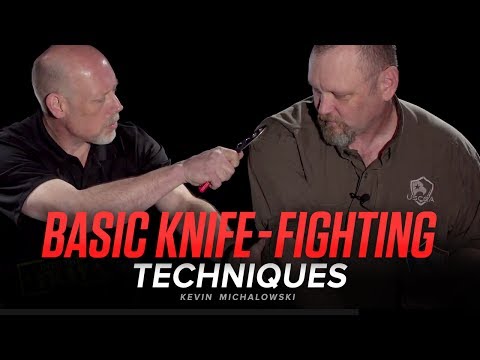
Basic Knife-Fighting Techniques: Into the Fray Episode 168
0
Standard Knife Disarm·USCCA
▶ Gun Law Map (FREE): https://uscca.co/oOyA ▶ Join USCCA: https://uscca.co/Bn62 Thousands of USCCA Members have acted i…
Translation: standard knife disarm
The Standard Knife Disarm secures the attacker's weapon hand with both hands, then applies a wrist lock or leverage strip to force the knife from the attacker's grip. [1] The disarm typically involves trapping the weapon hand, applying a wrist twist that forces the hand open, and stripping the knife while maintaining control of the attacker's arm. [1],[2] The disarm must be followed by creating distance with the weapon or disabling the attacker, as the situation remains dangerous until the threat is fully neutralised. [2],[3]
The standard knife disarm represents a fundamental self-defence technique taught across multiple martial arts traditions, refined through centuries of weapons-based combat training. [1] Modern systems emphasise realistic training conditions to prepare for the stress and chaos of actual knife encounters. [2],[3]
The standard knife disarm is the baseline disarming technique. [1]
From Krav Maga and FMA curricula. [1]
A self-defence technique. [1]
No images yet for this technique.
Sign in to suggest an image.
▶ Gun Law Map (FREE): https://uscca.co/oOyA ▶ Join USCCA: https://uscca.co/Bn62 Thousands of USCCA Members have acted i…
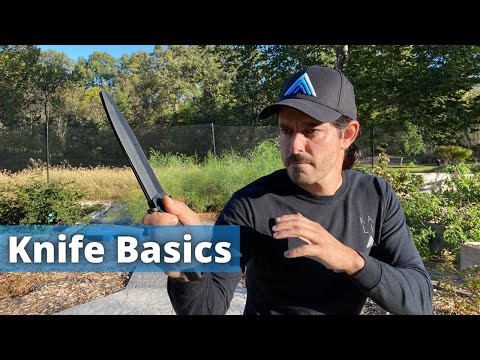
We break down how to use a knife in self defense situations, which basically translates how to use a blade offensively. …
Let's go over essential basics and develop safety skills for the every day non-ninja, non-commando regular average perso…
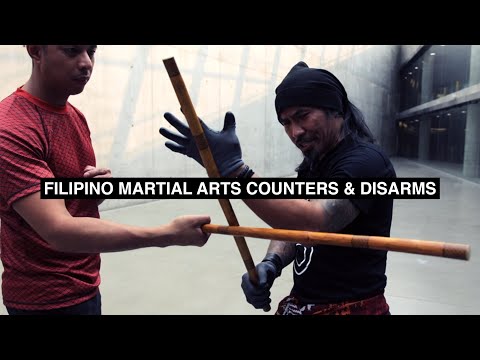
Learn More About The Filipino Martial Art Pintados: https://budobrothers.tv/pages/pintados The best defense is offense …
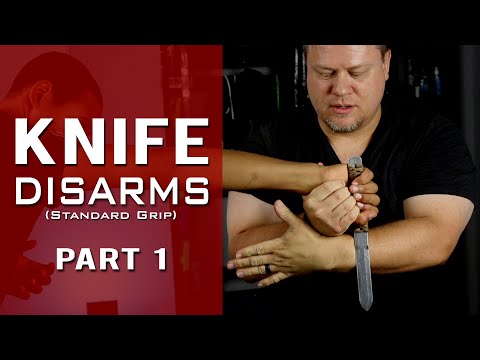
This is a comprehensive lesson on the technical method of a standard grip Knife disarm. We will explore the various type…
Get the NEW Kali Apex training course here: https://www.kaliapex.com/ For 1 on 1 Kali Coaching go here: https://www.pat…
The standard knife disarm represents a foundational defensive technique taught across multiple martial arts systems, with instructors emphasizing prevention and controlled extraction of the weapon as primary objectives. Funker Tactical prioritizes pre-attack indicators and distance management, advocating for disengagement when possible and positioning to manipulate attack trajectories, with parrying and gross motor interceptions (high blocks, covers, bisecting lines) as initial defenses that accept calculated risk and vulnerability. USCCA's Marshall Blade Concepts approach, demonstrated by Mike Janisz, focuses on a master technique responsive to high forehand (angle one) attacks: the defender moves offline while targeting the attacker's grip on the weapon via forearm cuts to disable hand function, followed by tricep cuts to prevent re-chambering, and finally quadricep cuts to eliminate mobility—executed in rapid sequence (approximately two seconds) with logical justification for each target. Stay Safe Martial Arts emphasizes offensive knife positioning and deployment over disarms specifically, but reinforces keeping the blade attached to the hip and maintaining dominant-side-forward stance to minimize exposure and distance. Pinnacle Combat Arts (Sean Elders) teaches two distinct standard grip disarms derived from Filipino Martial Arts: the ejection disarm, where the defender slides the hand up the soft pad of the hand, angles the arm away, and shoots it outward; and the peeling disarm, where the pinky initiates a peel down the blade while the thumb removes the attacker's grip, with follow-up cuts to the bicep if the weapon isn't fully extracted. All instructors stress that disarms require slow, technical drilling before pressure-testing and emphasize adaptation to the opponent's response.
Synthesized from 4 instructors
No instructional courses yet for this technique.
Sign in to suggest a course.
Risk of injury to the person this technique is applied to
Weapon defence scenarios involve lethal threats; failure risk is catastrophic
Skill level needed to execute this technique reliably
Whether this technique is allowed under major competition rule sets
Kodokan Judo (Jigoro Kano, 1986)
Alias sources — [1] The S.P.E.A.R. System (Blauer, 2003) [2] Complete Guide to Krav Maga (Killebrew, 2007) [3] The Filipino Martial Arts (Inosanto, 1980)
Effectiveness sources — [1] Krav Maga: How to Defend Yourself Against Armed Assault (Lichtenfeld & Yanilov, 2001)
Standard katakana transliteration of Western martial arts terminology (外来語) — used in Japanese MMA, boxing, and BJJ communities
Alias sources — [1] The S.P.E.A.R. System (Blauer, 2003) [2] Complete Guide to Krav Maga (Killebrew, 2007) [3] The Filipino Martial Arts (Inosanto, 1980)
Effectiveness sources — [1] Krav Maga: How to Defend Yourself Against Armed Assault (Lichtenfeld & Yanilov, 2001)
grip fighting technique, forearm endurance, timing
strong hands and forearms, quick stripping motions
forearm flexors/extensors, wrist rotators, biceps
Your priority should be to disengage, leave, or run away if possible, and maneuver to a position where you're not in the line of attack. Funker Tactical emphasizes that avoiding the threat entirely is the best defense.
Most knife attacks happen from indexed positions like a grab and stab, so positioning and proximity management can help you intercept these attacks before they develop. Funker Tactical notes that good positioning slightly improves your odds in a dangerous situation.
According to USCCA, your first target should be the attacker's grip on the weapon itself. Once you target and control the grip, you also need to limit their mobility to prevent them from coming back at you with the blade.
The Kali Center recommends mastering two fundamental tactics: slashes or cuts, and thrusts (quick jab-like movements). Practice transitioning between these techniques and varying your rhythm and timing to become unpredictable—start slow, develop clean movements, then gradually increase speed.
The Standard Knife Disarm secures the attacker's weapon hand with both hands, then applies a wrist lock or leverage strip to force the knife from the attacker's grip. The disarm typically involves trapping the weapon hand, applying a wrist twist that forces the hand open, and stripping the knife while maintaining control of the attacker's arm.
The standard knife disarm represents a fundamental self-defence technique taught across multiple martial arts traditions, refined through centuries of weapons-based combat training. Modern systems emphasise realistic training conditions to prepare for the stress and chaos of actual knife encounters.
Unified MMA: legal — Legal defensive technique; IBJJF: legal — Legal; IJF: legal — Legal defensive action; WBC/Boxing: legal — Legal; WKF: legal — Legal; WT: legal — Legal
Danger rating 9/10. Extreme — weapon defence scenarios involve lethal threats; failure risk is catastrophic
The standard setup chain: Anticipate the Attack → Execute Defence → Recover Stance → Counter or Disengage.
Standard counters include: Timing — attack when the defence is recovering or between movements / Feint — use deception to create openings in the defensive structure / Angle Change — attack from an unexpected angle that the defence does not cover.
Common variants: Standard defence (primary defensive technique from the most common position); Reactive defence (triggered by the opponent's attack, minimal movement for …); Proactive defence (anticipating the attack and positioning to neutralise it …); Counter defence (using the defensive movement to create an immediate count…).
A self-defence technique.
Top errors to watch for: Rotating the wrist the wrong direction — rotate toward the thumb; rotating toward the fingers strengthens their grip / Using fine motor movements for the disarm — under adrenaline, only gross motor movements work reliably / Not maintaining constant wrist control during the disarm — any loosening of your grip lets the attacker re-establish … / Disarming with one hand — always use two hands for mechanical advantage.
The Standard Knife Disarm is also known as Sutandādo Naifu Disuāmu, Basic Knife Strip, Standard Blade Disarm, Knife Take-Away.