Foundation: Selecting Your Self-Defense Knife
Before deploying any blade, practitioners must first determine which knife best suits their needs and fighting style. Training seminars with established instructors like Aaron Gennady or Craig Douglas provide hands-on experience with various blade types and configurations. Testing different models reveals which carries and deployments integrate most effectively with an individual's defensive approach.
Fixed vs. Folding Blades: Deployment Considerations
The choice between fixed and folding blades significantly impacts accessibility during high-stress situations. Fixed blades offer immediate deployment without mechanical failure, while certain folding designs auto-open during draw. For serious self-defense applications, fixed blade configurations provide superior reliability and consistency in crisis moments.
Carry Position Strategy
Optimal blade placement depends on body position and existing equipment loadouts. Appendix carry positions allow rapid access while maintaining weapon security during grappling exchanges. Selection should complement existing self-defense tools and accommodate the practitioner's dominant hand positioning.
Hip-Attached Offensive Positioning
Rather than extending the blade outward, Craig Douglas's methodology emphasizes keeping the weapon attached to the hip throughout offensive movements. This positioning protects the arm from isolation while enabling powerful jabs originating from core rotation. The technique mirrors hanging-jab mechanics from boxing, maintaining distance while minimizing exposure to disarm attempts.
Dominant-Side Stance Adjustment
Traditional boxing stances create excessive distance when armed with blades, requiring extended lean-ins for contact. Practitioners should adopt a stance with the dominant leg forward, matching the armed hand position. This eliminates reach discrepancies and enables immediate blade access without compromising structural balance.
Hip Thrust Defense During Clinch
When opponents establish grip control in close range, hip-attached blade positioning enables defensive thrusting motions that create separation. Even partial contact forces opponents to retreat, allowing the defender to execute follow-up strikes or sewing-machine cutting motions. This approach transforms the clinch from a vulnerable position into an offensive opportunity.
Reverse Grip Execution
The reverse grip position enables back-fist or hammer-fist striking patterns while maintaining weapon security. This alternative grip keeps the blade controlled and tight to the body while delivering effective offensive pressure. Practitioners should practice both standard and reverse positions to develop comprehensive blade fighting capability.
How To Use A Knife For Self Defense
Key Takeaways
- •Foundation: Selecting Your Self-Defense Knife
- •Fixed vs. Folding Blades: Deployment Considerations
- •Carry Position Strategy
- •Hip-Attached Offensive Positioning
We break down how to use a knife in self defense situations, which basically translates how to use a blade offensively. #staysafemartialarts #knifeskills #knifedefense #selfdefense
Frequently Asked Questions
What does this video teach about standard knife disarm?
This video covers foundation: selecting your self-defense knife, fixed vs. folding blades: deployment considerations, carry position strategy. It provides detailed instruction from Stay Safe Martial Arts.
How long does it take to learn standard knife disarm?
The basic mechanics can be understood in a single session, but developing reliable execution requires consistent drilling over weeks of practice. This 7-part breakdown helps structure your training by isolating each phase of the technique.
What are the key details for finishing standard knife disarm?
When opponents establish grip control in close range, hip-attached blade positioning enables defensive thrusting motions that create separation. Even partial contact forces opponents to retreat, allowing the defender to execute follow-up strikes or sewing-machine cutting motions. This approach transforms the clinch from a vulnerable position into an offensive opportunity.
Related videos
Filipino Martial Arts Counters & Disarms
Budo Brothers
Basic Knife Fighting Techniques - Self Defense Training
Kali Center
Knife Disarms Part 1 | Sean Elders
PINNACLE COMBAT ARTS
Basic Knife-Fighting Techniques: Into the Fray Episode 168
USCCA
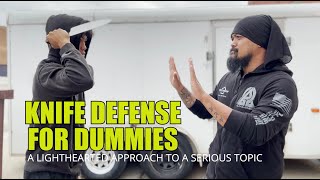
Knife Defense Simplified: Essential Techniques For Everyday Safety
Funker Tactical - Fight Training Videos