Disarm Against Striking Attacks
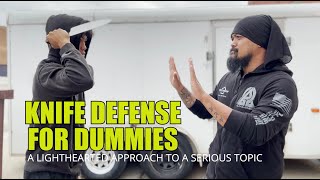
The instructor demonstrates the fundamental disarm response to knife strikes from multiple angles. Using an upward palm deflection, the defender controls the attacker's arm while simultaneously executing the disarm. This technique works against strikes delivered from above, below, or at angles.
Body Mechanics and Control
Proper body mechanics are essential to prevent the attacker from withdrawing their weapon. The defender must maintain control of the armed arm at the correct angle while generating sufficient force to execute the disarm. This positioning ensures the defender remains safe throughout the technique.
Follow-Up and Finishing
After successfully disarming the knife, the defender immediately transitions to a counterattack. A snap motion combined with a punch provides a decisive finish to neutralize the threat. This continuous flow prevents the attacker from regaining control.
Weight Distribution and Footwork
The instructor emphasizes shifting body weight as a critical element of the disarm. By stepping backward while redirecting the attack, the defender changes the mechanical advantage. This weight transfer amplifies the disarming force and improves positioning for follow-up techniques.
Four-Corner Principle
The Filipino martial arts approach recognizes four primary angles of attack from any position. Mastering the disarm against strikes from all four corners makes the technique universally applicable. Understanding the pattern allows practitioners to defend against attacks from any direction with the same fundamental mechanics.
Mutual Disarm Scenarios
When both combatants attempt simultaneous disarms, the outcome depends on timing and commitment. The instructor demonstrates how releasing the weapon at the correct moment can prevent being disarmed while maintaining offensive momentum. Strategic release and re-engagement control the engagement outcome.
Mastery Through Craft Knowledge
Effective disarming depends on understanding the underlying principles rather than memorizing single techniques. Once a practitioner comprehends the core mechanics, they can adapt the disarm to any attack variation. This principle-based approach transforms the technique into a versatile defensive tool in any combative situation.
Filipino Martial Arts Counters & Disarms
Key Takeaways
- •Disarm Against Striking Attacks
- •Body Mechanics and Control
- •Follow-Up and Finishing
- •Weight Distribution and Footwork
Learn More About The Filipino Martial Art Pintados: https://budobrothers.tv/pages/pintados The best defense is offense when it comes to Filipino Martial Arts. GM Oliver explores how to counter-disarm and even takedown your opponent. These concepts are from his online course "Pintados" that he has put together with us. For more videos like this, we have put together an online course with GM Oliver Pintados learn more about it here: https://budobrothers.tv/pages/pintados For training gear visit our store: https://www.budobrothers.com/collections/kali-serrada
Frequently Asked Questions
What does this video teach about standard knife disarm?
This video covers disarm against striking attacks, body mechanics and control, follow-up and finishing. It provides detailed instruction from Budo Brothers.
How long does it take to learn standard knife disarm?
The basic mechanics can be understood in a single session, but developing reliable execution requires consistent drilling over weeks of practice. This 7-part breakdown helps structure your training by isolating each phase of the technique.
What are the key details for finishing standard knife disarm?
When both combatants attempt simultaneous disarms, the outcome depends on timing and commitment. The instructor demonstrates how releasing the weapon at the correct moment can prevent being disarmed while maintaining offensive momentum. Strategic release and re-engagement control the engagement outcome.
Related videos
Basic Knife Fighting Techniques - Self Defense Training
Kali Center
Knife Disarms Part 1 | Sean Elders
PINNACLE COMBAT ARTS
How To Use A Knife For Self Defense
Stay Safe Martial Arts
Basic Knife-Fighting Techniques: Into the Fray Episode 168
USCCA
Knife Defense Simplified: Essential Techniques For Everyday Safety
Funker Tactical - Fight Training Videos