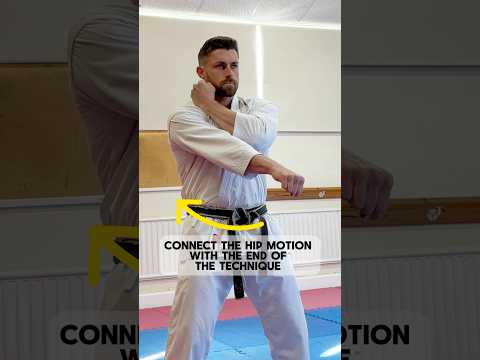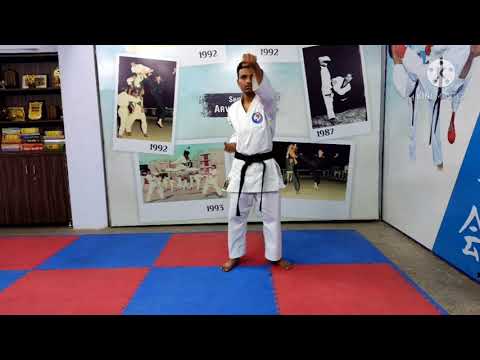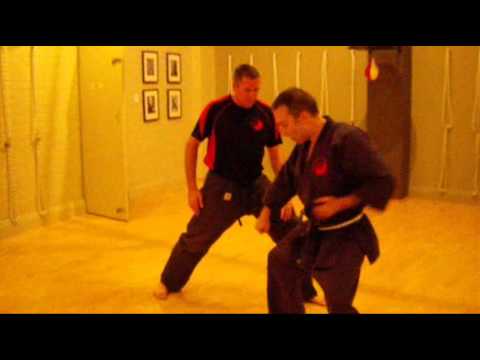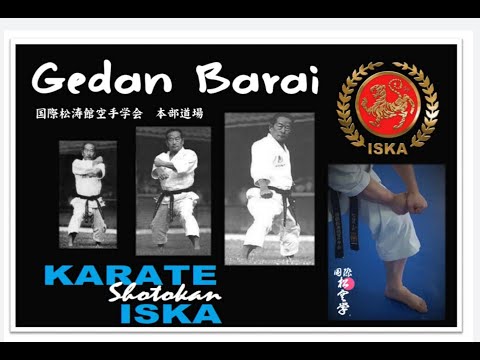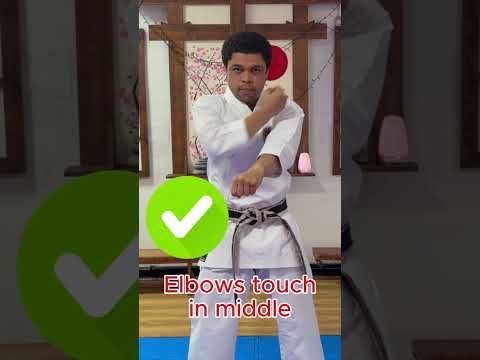
My teaching tips when doing Gedan Barai (Lower Sweeping Block)
0
Seiken Gedan Barai·Zen-Shin Martial Arts
For more information about what we do: Website: www.zen-shin.co.uk Instagram: @zenshinmartialarts Facebook: Zen-Shin Mar…
Translation: Seiken (正拳) = fore-fist, Gedan (下段) = lower level, Barai (払い) = sweep/brush away — a downward sweeping block deflecting low attacks (kicks, low punches, grabs) by brushing them away with the forearm
Seiken Gedan Barai (commonly called Gedan Barai or Low Block) is the fundamental downward sweeping block in traditional karate, deflecting attacks directed at the lower body — low punches, front kicks to the groin, knee strikes, and grabbing attempts — by sweeping the forearm downward and outward across the body to brush the attack away from its target. [1],[2] The block is one of the four foundational defensive techniques in karate and is the VERY FIRST movement taught in the most basic kata (Taikyoku Shodan / Heian Shodan), making it literally the first technique many karate students ever learn. [2] The mechanical execution starts with the blocking arm chambered at the opposite shoulder (fist near the ear on the non-blocking side), then sweeps diagonally downward across the body to finish with the forearm extended below the waist at approximately 45° from vertical, with the outer forearm (ulna) having swept through the path of the incoming low attack. [1],[2] Oyama taught the Gedan Barai as both a defensive and offensive tool: the downward sweep carries sufficient force to not only deflect a low kick but to damage the kicker's shin on contact — a Kyokushin-conditioned forearm sweeping into an incoming front kick's shin produces a collision that punishes the attacker for kicking. [1] The Gedan Barai is the most frequently occurring technique across all karate kata: it appears in every kata from the most basic to the most advanced, reflecting its universal importance as the foundational response to low-line attacks. [2] In practical application, the Gedan Barai also functions as a clearing technique: when an opponent grabs your wrist or lapel at low level, the downward sweep breaks the grip through its powerful diagonal motion. [1],[2]
The Gedan Barai is the most ubiquitous technique in karate, appearing as the first movement in the first kata taught to beginning students (Taikyoku Shodan/Heian Shodan) in virtually every karate school worldwide. [2] This placement is not arbitrary: Gichin Funakoshi and the early karate masters positioned the Gedan Barai first because it embodies ALL the fundamental principles of karate blocking: cross-body motion, hip rotation, hikite, kime, and the block-counter integration. [2] If a student masters the Gedan Barai, they have implicitly learned the mechanical principles that underlie all other blocks. [2] Oyama's Kyokushin refinement added the destructive blocking philosophy: the Gedan Barai should be powerful enough to damage the attacker's limb, not merely redirect it. [1] The technique has been practised in Okinawan martial arts for at least 200-300 years (appearing in the oldest known kata) and has been transmitted to every modern karate style without significant modification — a testament to its biomechanical soundness. [2]
The Gedan Barai is the primary defence against low-line attacks in karate and has been validated through over a century of competitive use. [1],[2] In Kyokushin full-contact competition, the Gedan Barai deflects front kicks and low roundhouse kicks that would otherwise reach the groin, thighs, or lower abdomen. [1] The block's effectiveness comes from its diagonal sweep path: the dual downward-outward deflection ensures that the attack is redirected in two directions simultaneously, making it extremely difficult for the attacker to recover the attack's trajectory toward the original target. [1],[2] The destructive blocking aspect adds a cumulative deterrent: attackers who repeatedly have their kicks swept by a conditioned forearm suffer progressive shin damage that reduces their kicking effectiveness over the course of a fight. [1]
Okinawan te (oldest documented karate technique, present in earliest known kata) → Gichin Funakoshi (Shotokan, placed as first movement of first kata, 1935) → Masutatsu Oyama (Kyokushin, destructive blocking refinement, 1964) → the very first technique taught to every karate student worldwide. [1],[2]
The Gedan Barai is the most frequently practised karate technique in the world (as the first movement of the first kata, it is performed by every karate student at every training session). In Kyokushin competition, it is the primary defence against low kicks. In WKF competition, it defends against low-line scoring attacks. The technique has been used continuously in karate for at least 200 years.
No images yet for this technique.
Sign in to suggest an image.
For more information about what we do: Website: www.zen-shin.co.uk Instagram: @zenshinmartialarts Facebook: Zen-Shin Mar…
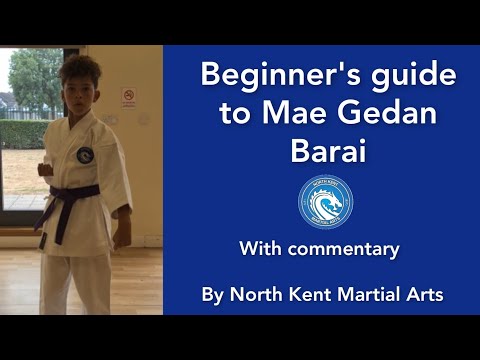
Tutorial on how to do Mae Gedan Barai (front lower level sweep). With commentary and directions throughout this video, y…
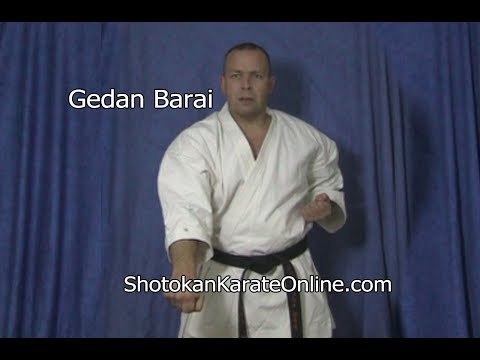
http://shotokankarateonline.com/linden-huckle/gedan-barai-downward-block-from-shizentai-basic-explanation/ The Shotokan …
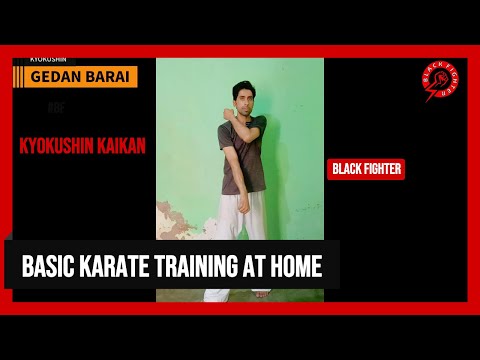
🥋 Kyokushin Karate Home Training – Basic Techniques 🥋 اس ویڈیو میں ہم سیکھیں گے Kyokushin Karate کے چند اہم punches ا…
A video discussing the primary and secondary moves that comprise gedan uke and gedan barai (downward blocks) as practise…
® ISKA “Continuando con el legado” “KARATE PARA TODOS” (Gedan - Barai), con esta serie de tutoriales ISKA quiere llegar…
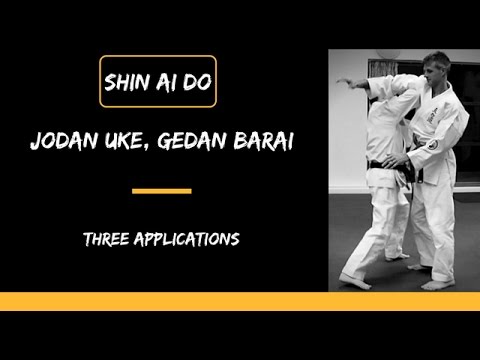
Three types of use for Jodan Uke and UGedan Barai in one sequence, - Off balancing - Joint lock - Strike To learn and p…
For more information about what we do: Website: www.zen-shin.co.uk Instagram: @zenshinmartialarts Facebook: Zen-Shin Mar…
Seiken gedan barai is a foundational karate blocking technique that employs the flat surface of the forearm to defend against low-level attacks, particularly kicks and low punches. Dan Djurdjevic—The Way of Least Resistance provides the most substantive pedagogical content, emphasizing that the technique uses the flat (rather than sharp) part of the arm and can be executed with either the primary or secondary (back-up) arm without sacrificing effectiveness. Djurdjevic notes that the movement finishes with the hand opening back and away from the body, and that both arm configurations should move with identical mechanics—forward or backward motion produces the same terminal position. The technique coordinates with lower-body movement; practitioners can time gedan barai in concert with leg repositioning to generate cumulative defensive and offensive momentum. Black Fighter and Sensei Dhwanil Green both present the technique as part of basic karate curricula within Kyokushin and general karate frameworks respectively, though their transcripts lack detailed mechanical exposition. ISKA Headquarters similarly positions gedan barai as a tutorial fundamental, though linguistic barriers limit detailed analysis of their specific instruction.
Synthesized from 4 instructors
No instructional courses yet for this technique.
Sign in to suggest a course.
Risk of injury to the person this technique is applied to
Primarily defensive. Oyama's destructive blocking principle applies: the downward sweep should carry enough force to damage the attacker's shin when blocking a kick, or to hurt the attacking arm when blocking a low punch. A conditioned Kyokushin forearm sweeping into an incoming front kick can cause bruising, periosteal contusion (bone bruise), and shin pain severe enough to discourage further kicking. [1]
Skill level needed to execute this technique reliably
Whether this technique is allowed under major competition rule sets
This Is Karate (Oyama, 1965)
description: [1] Oyama 1965, [2] Funakoshi 1973
Official karate technique names (和語/漢語)
Established Japanese martial arts naming convention — native Japanese term (和語/漢語)
description: [1] Oyama 1965, [2] Funakoshi 1973
The most accessible karate technique — literally designed to be the first technique a beginner learns
No flexibility requirements
No special conditioning requirements (forearm conditioning develops naturally through training)
Basic coordination (cross-body motion, hip rotation)
Accessible to ALL ages, body types, and fitness levels
The foundation upon which all other blocking technique is built
Gedan barai (downward sweep) appears in 177 passages across our corpus — one of the most documented karate techniques. The forearm sweeps downward to deflect low attacks (kicks, punches to the body). The first block taught in most karate curricula. Appears extensively in Okinawa-Den Goju-Ryu kata documentation (Miyazato, 1978). (177 passages; Miyazato, Okinawa-Den Goju-Ryu; Nakayama, Dynamic Karate)
Seiken Gedan Barai (commonly called Gedan Barai or Low Block) is the fundamental downward sweeping block in traditional karate, deflecting attacks directed at the lower body — low punches, front kicks to the groin, knee strikes, and grabbing attempts — by sweeping the forearm downward and outward across the body to brush the attack away from its target. The block is one of the four foundational defensive techniques in karate and is the VERY FIRST movement taught in the most basic kata (Taikyoku Shodan / Heian Shodan), making it literally the first technique many karate students ever learn.
The Gedan Barai is the most ubiquitous technique in karate, appearing as the first movement in the first kata taught to beginning students (Taikyoku Shodan/Heian Shodan) in virtually every karate school worldwide. This placement is not arbitrary: Gichin Funakoshi and the early karate masters positioned the Gedan Barai first because it embodies ALL the fundamental principles of karate blocking: cross-body motion, hip rotation, hikite, kime, and the block-counter integration.
Unified MMA: legal — Legal defensive technique; WBC/Boxing: legal — Legal — blocking and evasion are core boxing skills; WKF: legal — Legal — blocking is a fundamental karate skill; Kyokushin: legal — Legal; WT: legal — Legal; WAKO: legal — Legal; K: legal — 1/GLORY — Legal; IFMA: legal — Legal
Danger rating 3/10. Primarily defensive. Oyama's destructive blocking principle applies: the downward sweep should carry enough force to damage the attacker's shin when blocking a kick, or to hurt the attacking arm when blocking a low punch. A conditioned Kyokushin forearm sweeping into an incoming front kick can cause bruising, periosteal contusion (bone bruise), and shin pain severe enough to discourage further kicking.
The standard setup chain: Attacker throws a low attack (front kick to groin, low punch, grabbing attempt) → Defender recognises the low trajectory → Forearm sweeps diagonally downward from the opposite shoulder → Outer forearm (ulna) contacts the incoming attack → Dual deflection: downward + outward → Attack is redirected below and to the side of the target → SIMULTANEOUSLY: opposite hand retracts to hip (hikite), loading counter-punch → IMMEDIATELY: counter with Gyaku-Zuki Chudan (reverse punch to body) or Mae Geri (front kick) → Block and counter complete as a single integrated defensive-offensive action.
Standard counters include: Feint low, attack high — feinting a low attack to draw the Gedan Barai, then attacking the now-exposed head / Double-level attack — low punch + high punch simultaneously overwhelms the single-direction block / Kick to the body (not low) — the Gedan Barai defends the low line; a body-level roundhouse is above its sweep path / Circular low attack — the Gedan Barai defends against linear low attacks; a circular leg sweep approaches from a diff….
Common variants: Standard Gedan Barai (the basic downward sweep from opposite shoulder to below …); Quick Gedan Barai (an abbreviated version for fast defensive reactions, with…); Stepping Gedan Barai (blocking while stepping forward or backward (the standard…); Reinforced Gedan Barai (the opposite hand supports the blocking forearm for extra…); Open-hand Gedan Barai (using the open palm for a softer deflection); Nagashi Gedan Barai (a flowing, redirecting version (from Wado-Ryu) that guide…); Double Gedan Barai (both arms sweep downward simultaneously).
The Gedan Barai is the most frequently practised karate technique in the world (as the first movement of the first kata, it is performed by every karate student at every training session). In Kyokushin competition, it is the primary defence against low kicks.
Top errors to watch for: Not starting from the opposite shoulder — shortcutting the sweep by starting from the same side reduces the path leng… / Finishing too high — if the forearm ends above waist level, the groin remains exposed. The finish must be below the w… / Blocking with the inner forearm — the OUTER forearm (ulna) must be the contact surface. The inner forearm (flexor mus… / No hip rotation — sweeping with arm-only motion produces a weak block that cannot deflect a committed kick.
The Seiken Gedan Barai is also known as Seiken Gedan Barai, Lower Level Sweeping Block, Downward Block, Gedan Barai, Low Sweep Block.