Front headlock CHOKES | 5 must know submissions
0
Standard Front Headlock Position·Energia Martial Arts·Added by Admin
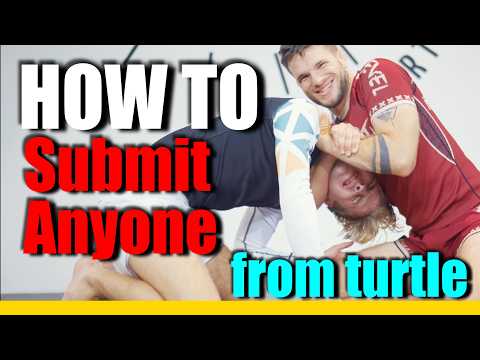
Front headlock submissions | 5 essential CHOKES In a previous video we went down the front headlock as a PIN and postion…
Translation: standard front headlock position
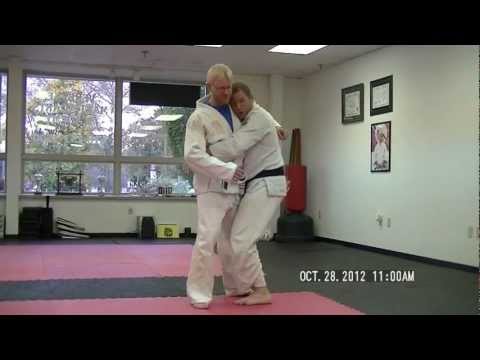
The Standard Front Headlock Position secures the opponent's head under one armpit, with the controlling arm wrapping around the neck so the hand reaches the far side of the opponent's head or chin. [1] The free hand grips the opponent's near wrist or tricep to prevent them from reaching the attacker's legs. [1],[2] The attacker maintains heavy hip pressure, chest driving into the opponent's upper back, keeping the opponent's posture broken and preventing them from standing up or shooting through for a takedown completion. [2],[3]
The standard front headlock position has been a core wrestling technique for generations, serving as the primary defensive-to-offensive transition when an opponent's shot is stopped. [1] The position is now considered one of the most important clinch positions in modern MMA and submission grappling. [2],[3]
The standard front headlock position offers dominant head-and-arm control that enables both wrestling transitions and submission attacks. [1] In MMA, it serves as the primary platform for guillotine choke attempts and go-behinds after a successful sprawl. [1] Welker notes that in collegiate wrestling, scoring from the front headlock (via cement mixer, shuck-by, or go-behind) accounts for a significant proportion of neutral-position points. [2]
The standard front headlock is taught in wrestling from youth level through international competition. [1]
The standard front headlock position is a foundational wrestling and MMA position taught at introductory level and used through professional competition. [1]
No images yet for this technique.
Sign in to suggest an image.
Front headlock submissions | 5 essential CHOKES In a previous video we went down the front headlock as a PIN and postion…
The Clinch
From Issue #5 of JiuJitsu Magazine At the start of a match there's the immediate desire to hook up and get down to busi…
The standard front headlock position is established from the clinch by securing deep control of the opponent's head and upper body. According to Energia Martial Arts, the position requires maintaining pressure on the opponent while controlling postural alignment—the practitioner's body should not fall flat to the mat but instead maintain some form of guard (butterfly, half-guard, or modified body-lock position) to prevent lateral passes. JiuJitsuMag emphasizes clinch fundamentals that precede the front headlock, highlighting the critical importance of the deep underhook, level control, and hip positioning to establish dominance before transitioning into head control. SundarJiuJitsu provides self-defense context, describing how closing distance and establishing a clinch (one arm wrapped around the back, the other controlling the wrist) creates the foundation for head control—the practitioner should maintain tall posture with hips close and head on the opponent's chest rather than bending forward. All three instructors agree that proper positioning involves controlling the opponent's posting arm, preventing escape angles, and maintaining relentless pressure through body weight and leverage rather than arm strength alone. Energia Martial Arts stresses that body mechanics matter more than falling back passively, while both JiuJitsuMag and SundarJiuJitsu underscore that level (hip height relative to the opponent) and distance control are fundamental to converting clinch positioning into effective front headlock control.
Synthesized from 3 instructors
No instructional courses yet for this technique.
Sign in to suggest a course.
Risk of injury to the person this technique is applied to
Head/neck control positions create cervical strain; Muay Thai plum is primary striking platform
Skill level needed to execute this technique reliably
Whether this technique is allowed under major competition rule sets
Freestyle Wrestling: A Complete Guide for Coaches and Wrestlers (Petrov, 1977)
Alias sources — [1] Wrestling Physical Conditioning Encyclopedia (Welker, 2010) [2] NCAA Wrestling Rules and Interpretations (NCAA, 2020) [3] Clinch Fighting for MMA (Couture, 2011)
Effectiveness sources — [1] Clinch Fighting for MMA (Couture, 2011) [2] Wrestling Physical Conditioning Encyclopedia (Welker, 2010)
Standard katakana transliteration of Western martial arts terminology (外来語) — used in Japanese MMA, boxing, and BJJ communities
Alias sources — [1] Wrestling Physical Conditioning Encyclopedia (Welker, 2010) [2] NCAA Wrestling Rules and Interpretations (NCAA, 2020) [3] Clinch Fighting for MMA (Couture, 2011)
Effectiveness sources — [1] Clinch Fighting for MMA (Couture, 2011) [2] Wrestling Physical Conditioning Encyclopedia (Welker, 2010)
downward pressure, grip strength, sprawl endurance
strong upper body, heavy chest for top pressure
deltoids, biceps, pectorals, core, hip extensors
According to Energia Martial Arts, the right time to attempt a guillotine is when your opponent pressures forward and you cannot keep them in the position, flip them over, expose their back, or continue wrestling up. If you feel constant forward pressure and they're attempting a sitout or continuing a double leg, that's when the guillotine becomes the appropriate choice.
Energia Martial Arts emphasizes that it's very important to have some form of guard when going for a guillotine—ideally a butterfly guard, closed guard, or half guard. At minimum, you can use a body lock with a passing knee in front to prevent your opponent from passing to the side where they could counter with a von flute choke.
Energia Martial Arts recommends going deep with a high elbow guillotine (cellotine), placing your elbow underneath the chin and using your obliques and full body to twist rather than just falling backwards and squeezing with your arms. Imagine looping your hand around the neck like a loop choke and inverting your body to the side while crunching, which puts pressure through your entire body instead of just your arms.
Energia Martial Arts suggests that if you cannot insert your hand into the guillotine, you should control the distance by keeping your weight on your opponent's back, maintaining pressure. You can also tripod up to create leverage and improve your positioning before attempting to secure the grip.
The Standard Front Headlock Position secures the opponent's head under one armpit, with the controlling arm wrapping around the neck so the hand reaches the far side of the opponent's head or chin. The free hand grips the opponent's near wrist or tricep to prevent them from reaching the attacker's legs.
The standard front headlock position has been a core wrestling technique for generations, serving as the primary defensive-to-offensive transition when an opponent's shot is stopped. The position is now considered one of the most important clinch positions in modern MMA and submission grappling.
Unified MMA: legal — Legal — clinching is integral to MMA; IJF: legal — Legal — kumi-kata (grip fighting) is fundamental to judo; IBJJF: legal — Legal — standing grip fighting and clinch work permitted; IFMA: legal — Legal — the clinch is a core element of Muay Thai, clinch dominance is highly…; WBC/Boxing: restricted — Holding is technically a foul — referee breaks clinch, excessive holding resu…; K: restricted — 1/GLORY — One attack from clinch allowed, then referee breaks; WAKO: restricted — Clinch generally broken by referee — limited or no clinch fighting in most fo…; UWW: legal — Legal — clinch is fundamental to wrestling, the primary position in Greco-Roman
Danger rating 5/10. High — head/neck control positions create cervical strain; Muay Thai plum is primary striking platform
The standard setup chain: Close Distance → Establish Primary Grip → Position the Hips → Apply Pressure.
Standard counters include: Pummeling — fight for inside position by swimming arms under opponent's grips / Frame and Push — create distance using forearm frames against the chest or neck / Hand Fight — strip grips by peeling fingers or pushing the wrist away / Level Change — change levels to break the collar tie angle and attack the legs.
Common variants: Standard front headlock (arm wrapped around the head from the front); Front headlock with arm (controlling the head and one arm (head-and-arm position)); Short choke front headlock (tight headlock seeking a guillotine or snap-down).
The standard front headlock position is a foundational wrestling and MMA position taught at introductory level and used through professional competition.
Top errors to watch for: Keeping hips high — sprawl them down to maintain weight on the opponent / Allowing the opponent to get to their feet — keep driving them down to the mat / Having your head on the same side as the wrapping arm — head goes to the opposite side / Feet too close together behind you — spread them wide for a stable base.
The Standard Front Headlock Position is also known as Furonto Heddo Rokku Pojishon (Kihon-gata), Basic Front Head-And-Arm, Front Chancery Position, Snap-Down Headlock Position.