Introduction and Context
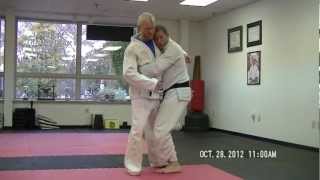
Kenny Johnson and Pedro Munoz demonstrate clinch techniques without gi jackets to ensure clear visibility of hand and arm positioning. This no-gi approach applies directly to wrestling, MMA, and all grappling disciplines where proper mechanics supersede material obstruction.
The Clinch Fundamentals
Clinch proficiency remains uncommon in American wrestling due to its Greco-Roman orientation, where leg contact is prohibited. Mastering clinch positioning dramatically improves takedown effectiveness, opponent control, and strategic dominance throughout a match.
Deep Underhook Position and Control
The deep underhook forms the foundation of clinch control, with fingers placed deep into the opponent's back crease rather than at the love handles. Shoulder positioning must sit slightly below the opponent's shoulder blade to prevent them from generating downward pressure and accessing body locks.
Hip and Leg Control
The underhook-side leg must establish control of the space between the opponent's legs while maintaining forward hip pressure. Common mistakes include keeping hips back or placing the forward leg too wide, both of which create vulnerability to three-point takedowns.
Defending Against Opponent Underhooks
When an opponent achieves an underhook, reaching backward weakens posture and invites double-leg takedowns through knee taps. The proper defense involves pinching the wrist, lowering level, stretching the arm out, and immediately re-establishing control by pulling the arm tight to the opponent's body.
Clinch Movement Strategy
Rather than static positioning, practitioners should move the clinch incrementally—one inch at a time—to set up offensive techniques. Continuous slight pushes combined with step-arounds on the opponent's resistance create angles for takedown attempts while maintaining deep underhook control.
Exploiting Underhook Attacks
When an opponent drives an underhook, their hips naturally move backward before lifting, creating a critical timing window. A skilled clinch player drops their level immediately upon feeling this pressure, positioning their neck in the opponent's arm crease to execute a double-leg takedown.
JiuJitsu Magazine: Technique Takedowns Working the Clinch
Key Takeaways
- •Introduction and Context
- •The Clinch Fundamentals
- •Deep Underhook Position and Control
- •Hip and Leg Control
From Issue #5 of JiuJitsu Magazine At the start of a match there's the immediate desire to hook up and get down to business. But what do you do when you get involved in a clinch situation? Sometimes nerves take over and fighters forget everything they've learned, or worse yet they've never really learned what to do in a clinch situation. Most jiu-jitsu schools only teach the standard Judo style takedowns, if that. So, Kenny Johnson is going to go over positioning in the clinch, how to move in the clinch, and some different moves of the clinch. These technique are useful in the gi, or without.
Frequently Asked Questions
What does this video teach about standard front headlock position?
This video covers introduction and context, the clinch fundamentals, deep underhook position and control. It provides detailed instruction from JiuJitsuMag.
How long does it take to learn standard front headlock position?
The basic mechanics can be understood in a single session, but developing reliable execution requires consistent drilling over weeks of practice. This 7-part breakdown helps structure your training by isolating each phase of the technique.
What are the key details for finishing standard front headlock position?
Rather than static positioning, practitioners should move the clinch incrementally—one inch at a time—to set up offensive techniques. Continuous slight pushes combined with step-arounds on the opponent's resistance create angles for takedown attempts while maintaining deep underhook control.
Related videos
L6S1_The Clinch
SundarJiuJitsu

Front headlock CHOKES | 5 must know submissions
Energia Martial Arts
Front Headlock Attack System Your Coach Wont Show You
Josh Saunders
Safe And Effective Football Front Headlock From 2x NCAA Champ
Earn Your Gold Medal
Guillotine/Marcelotine vs front headlock/sprawl
JM Modern Jiu Jitsu