Aikido: Koryu Dai Roku - 26. Kote-mawashi (Defensive Knife)
0
Mawashi Grip·Kaze Uta Budo Kai / Windsong Dojo·Added by Admin
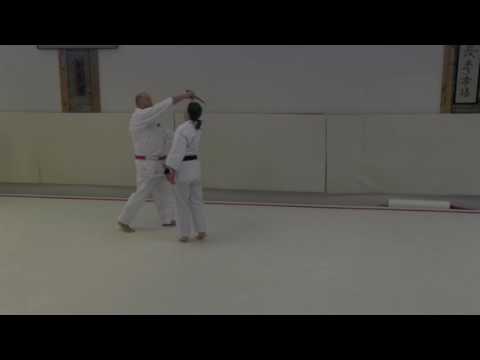
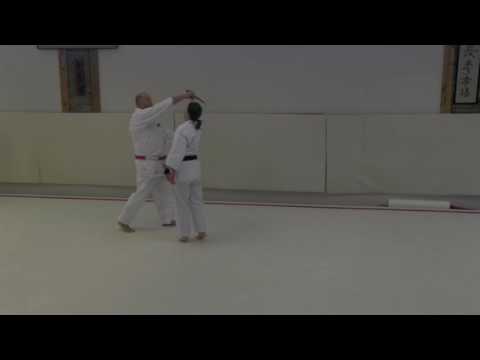
Exploration of the techniques in aikido's Koryu Dai Roku kata. This is the 6th advanced kata in Tomiki aikido. Tanto D…
Translation: sumo belt grip (mawashi)
The Mawashi Grip is the specific belt grip used in sumo wrestling, where both wrestlers grip each other's mawashi (thick cotton loincloth) to control position and execute throws. [1] The mawashi grip involves reaching around the opponent's body to grab the side or back of the mawashi with a firm overhand or underhand grip, using the fabric as an anchor for pulling, lifting, and throwing manoeuvres. [1],[2] In sumo, the quality of the mawashi grip — its depth, position (inside vs. outside), and security — often determines the outcome of the bout. [2],[3]
The mawashi grip is the foundational technique of sumo wrestling, which has been practised in Japan for over 1,500 years. [1] Sumo's entire throwing and pushing system is built around the mawashi grip, making it one of the most historically significant clinch grips in martial arts. [2] The techniques for securing and defending the mawashi grip have been refined through centuries of professional sumo competition. [2],[3]
In sumo, the mawashi grip is the most important technical element — a wrestler who secures a strong belt grip with proper inside position controls the bout. [1] Newton notes that rikishi (sumo wrestlers) who favour yotsu-zumo (belt-wrestling style) typically have higher win rates than those who rely solely on pushing attacks (oshi-zumo), as the belt grip provides more stable control. [1]
The mawashi grip is transmitted through the sumo stable (heya) system in Japan, where young wrestlers learn grip fighting from senior wrestlers and coaches. [1] The grip techniques are part of an unbroken tradition maintained by the Japan Sumo Association since the establishment of professional sumo in the Edo period (1603–1868). [1]
No images yet for this technique.
Sign in to suggest an image.
Exploration of the techniques in aikido's Koryu Dai Roku kata. This is the 6th advanced kata in Tomiki aikido. Tanto D…
Exploration of the techniques in aikido's Koryu Dai Roku kata. This is the 6th advanced kata in Tomiki aikido. Tanto D…
The mawashi grip, taught by Kaze Uta Budo Kai / Windsong Dojo instructors in the context of Aikido Koryu Dai Roku knife defense, involves a rotational wrist control that turns the opponent's shoulder and palm to facilitate disarmament. The foundational principle is to push pressure down the line of the arm rather than attempting to circle behind it. Instructors emphasize that approaching the grip perpendicular to the opponent's arm and keeping the controlling hand flat—rather than reaching around to encircle—proves more effective, particularly against larger or stronger opponents. The technique requires stepping off-line, trading hand position for initial control, then cycling the flat palm backward and forward to achieve the mawashi rotation. A critical refinement emerged from instructor experience: instead of attempting a full circumferential grip, positioning at the end of the arm and maintaining palm-to-palm contact with a rubbing motion generates the shoulder rotation needed to control the weapon hand. The grip's mechanical advantage depends partly on thumb placement in the wrist hinge. The instructors note that hand size and strength variations affect execution ease, and they emphasize gentle practice while acknowledging that real-world scenarios might demand more aggressive follow-ups, such as stomping the opponent's fingers to force weapon release before proceeding to joint locks.
Synthesized from 1 instructor
No instructional courses yet for this technique.
Sign in to suggest a course.
Risk of injury to the person this technique is applied to
Grip fighting is primarily positional; finger/wrist strain risk
Skill level needed to execute this technique reliably
Whether this technique is allowed under major competition rule sets
Kodokan Judo (Jigoro Kano, 1986)
Alias sources — [1] Sumo: A Pocket Guide (Shilling, 2010) [2] Grand Sumo: The Living Sport and Tradition (Newton, 2006) [3] Japan Sumo Association Official Terminology (JSA, 2020)
Effectiveness sources — [1] Grand Sumo: The Living Sport and Tradition (Newton, 2006)
Official Kodokan ground technique classification system
Established Japanese martial arts naming convention — native Japanese term (和語/漢語)
Alias sources — [1] Sumo: A Pocket Guide (Shilling, 2010) [2] Grand Sumo: The Living Sport and Tradition (Newton, 2006) [3] Japan Sumo Association Official Terminology (JSA, 2020)
Effectiveness sources — [1] Grand Sumo: The Living Sport and Tradition (Newton, 2006)
grip strength, upper body endurance, balance under pressure
strong arms and shoulders, stable base
forearms, deltoids, core, hip muscles
Instead of going all the way around the arm, focus on just the end of the arm—you'll find the technique works much better. Keep your hand flat and use a cycling motion back and forward rather than trying to reach around and force it to happen.
Mawashi grip works by pushing down the line of the arm. If you come into alignment with the opponent's arm and rub your hand over their palm, it turns their shoulder over, which allows you to apply downward pressure along that line, especially effectively in dynamic situations.
If their fingers won't open, carefully apply pressure with the heel of your hand on their fingers—this will encourage them to let go of the weapon quickly.
The Mawashi Grip is the specific belt grip used in sumo wrestling, where both wrestlers grip each other's mawashi (thick cotton loincloth) to control position and execute throws. The mawashi grip involves reaching around the opponent's body to grab the side or back of the mawashi with a firm overhand or underhand grip, using the fabric as an anchor for pulling, lifting, and throwing manoeuvres.
The mawashi grip is the foundational technique of sumo wrestling, which has been practised in Japan for over 1,500 years. Sumo's entire throwing and pushing system is built around the mawashi grip, making it one of the most historically significant clinch grips in martial arts.
Unified MMA: legal — Legal — clinching is integral to MMA; IJF: legal — Legal — kumi-kata (grip fighting) is fundamental to judo; IBJJF: legal — Legal — standing grip fighting and clinch work permitted; IFMA: legal — Legal — the clinch is a core element of Muay Thai, clinch dominance is highly…; WBC/Boxing: restricted — Holding is technically a foul — referee breaks clinch, excessive holding resu…; K: restricted — 1/GLORY — One attack from clinch allowed, then referee breaks; WAKO: restricted — Clinch generally broken by referee — limited or no clinch fighting in most fo…; UWW: legal — Legal — clinch is fundamental to wrestling, the primary position in Greco-Roman
Danger rating 2/10. Low — grip fighting is primarily positional; finger/wrist strain risk
The standard setup chain: Close Distance → Establish Primary Grip → Position the Hips → Apply Pressure.
Standard counters include: Pummeling — fight for inside position by swimming arms under opponent's grips / Frame and Push — create distance using forearm frames against the chest or neck / Grip Break — systematically strip the opponent's controlling grips / Posture Up — straighten the spine and drive the hips forward to break clinch control.
Common variants: Standard variation (primary clinch configuration from the most common entry); Gi variation (adapted with collar and sleeve grips for gi-based grappling); No-gi / MMA variation (modified for no-gi or cage fighting conditions); Offensive variation (configured to set up strikes, takedowns, or submissions f…).
Yokozuna Hakuho Sho (69th Yokozuna, 2007–2021) was renowned for his versatile mawashi grip, winning a record 45 top-division tournament championships. He could fight effectively with both left and right inside grips, a flexibility that contributed to his dominance.
Top errors to watch for: Gripping the mawashi too loosely — a firm grip is essential; in sumo, a lost grip means a lost bout / Gripping too far from the knot (outside grip) when the inside grip is available — inside is generally dominant / Not pulling the opponent close after establishing the grip — the mawashi grip's power is in hip control / Standing upright with the grip — sumo gripping requires a low stance with bent knees and forward lean.
The Mawashi Grip is also known as Mawashi, Sumo Belt Grip, Mawashi-Zukuri, Sumo Loincloth Grip.